Results by title
2 books match the query 'Structural Change'
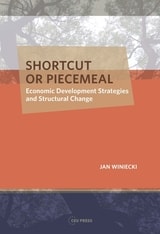
Shortcut or Piecemeal
Economic Development Strategies and Structural ChangeJan Winiecki
Central European University Press, 2016
Alternative strategies of economic development have received little attention in the literature. Academics rarely compare certain strategic features or assess the performance of different strategies in terms of outcomes. This book seeks to address that gap and to provide a theoretical background to the shift from industry to human capital-intensive services as the engine of economic growth. Pioneering studies reveal interesting trends and patterns that point to the growing importance of intangible capital for the level of GDP. They also indicate a much greater role of economic freedom in bringing about this second great structural change than was the case with industrialization. With this perspective on structural change and the role of freedom, Shortcut or Piecemeal also provides an extensive assessment of four key developing countries: Brazil, Russia, India, and China. Subjects: 1. Central planning—History. 2. Economic development—History
[more]
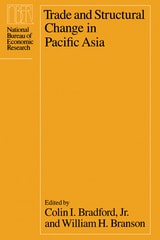
Trade and Structural Change in Pacific Asia
Edited by Colin I. Bradford Jr. and William H. Branson
University of Chicago Press, 1987
The rapid development of Pacific Asia over the past twenty years offers an excellent opportunity to analyze the dynamics of economic growth. Trade and Structural Change in Pacific Asia explores the nature and causes of changes that have occurred in the economic structure of Pacific Asia, the relationship between these changes and economic growth, and the implications of these changes for trading relationships.
Themes in the research reported here includes the sectoral composition of output and trade; rates of structural change in production and exports and their relation to economic growth; the effect of abundant resource endowments on industrialization and manufactured exports; the nature of the mix between active government policies and market forces; and the balance between demand-determined and supply-determined industrialization and exports. Many of the issues explored have important implications for United States foreign economic policy, and the volume includes a look at the basic economic and political forces influencing shifts in United States trade policy in the postwar period.
A timely and informative analysis, the volume probes the causes and consequences of economic growth in Pacific Asia, focusing on the interaction of exports of manufactured goods and the developmental process. The results reported contribute to ongoing research in structural change and economic policy and will be important to economists working on empirical patters in international trade and the process of economic development.
[more]