Results by title
8 books match the query 'Structural analysis'
Morphology of the Folktale
Second EditionBy V. Propp
University of Texas Press, 1968
Structural Analysis
Felix F. Udoeyo
Temple University Press, 2020
Structural Analysis by Felix Udeyo is intended to teach students the methods and techniques for the analysis of structures. A sound knowledge of structures is a prerequisite for their proper design and ensures the structural integrity of civil engineering infrastructural systems. This textbook is comprised of three parts. The first part consists of an overview of structural analysis and introduces several structural loadings that may be considered during the analysis and subsequent design of structures. The second part covers classic methods of the analysis of determinate structures. The final section discusses classic methods for the analysis of indeterminate structures as well as methods for the analysis and construction of influence lines for indeterminate structures.
This textbook is designed for upper-level undergraduates studying civil engineering, construction engineering and management, and architecture. It is also useful for construction professionals seeking licensure in their field of practice.
An enhanced edition of this textbook is available on the Press’s Manifold platform: https://temple.manifoldapp.org/projects/structural-analysis
Structural Analysis of Unistrut Space-Frame Roofs
Part A: Recommended Method for Computation of Safe Roof LoadsPaul H. Coy
University of Michigan Press, 1959
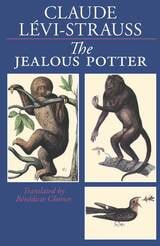
The Jealous Potter
Claude Lévi-Strauss
University of Chicago Press, 1988
"Electrifying. . . . A brilliant demonstration of structural analysis in action. . . . Can be read with pleasure and profit by anyone interested in that aspect of self-discovery that comes through knowledge of the universal and timeless myths that live on in all of us."—Jonathan Sharp, San Francisco Examiner-Chronicle
"A characteristic tour de force. . . . One remains awed by him."—Colin Thubron, Sunday Times
"With all its epistemological depth, the book reads at times like a Simenon or a Lewis Carroll, fusing concise methodology with mastery of style."—Bernadette Bucher, American Ethnologist
"[An] engagingly provocative exploration of mythology in the Americas. . . . Always a good read."—Choice
"A playful, highly entertaining book, fluently and elegantly translated by Bénédicte Chorier."—Wendy Doniger O'Flaherty, New York Times Book Review
The Naked Man
Mythologiques, Volume 4Claude Lévi-Strauss
University of Chicago Press, 1990
"Lévi-Strauss uses the structural method he developed to analyze and 'decode' the mythology of native North Americans, focusing on the area west of the Rockies. . . . [The author] takes the opportunity to refute arguments against his method; his chapter 'Finale' is a defense of structural analysis as well as the closing statement of this four-volume opus which started with an 'Ouverture' in The Raw and the Cooked."—Library Journal
"The culmination of one of the major intellectual feats of our time."—Paul Stuewe, Quill and Quire
The Sacred Meadows
A Structural Analysis of Religious Symbolism in an East African TownAbdul Hamid M. el Zein
Northwestern University Press, 1974
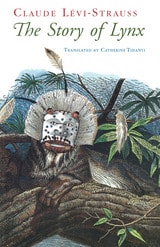
The Story of Lynx
Claude Lévi-Strauss
University of Chicago Press, 1995
So begins the Nez Percé myth that lies at the heart of The Story of Lynx, Claude Lévi-Strauss's most accessible examination of the rich mythology of American Indians. In this wide-ranging work, the master of structural anthropology considers the many variations in a story that occurs in both North and South America, but especially among the Salish-speaking peoples of the Northwest Coast. He also shows how centuries of contact with Europeans have altered the tales.
Lévi-Strauss focuses on the opposition between Wild Cat and Coyote to explore the meaning and uses of gemellarity, or twinness, in Native American culture. The concept of dual organization that these tales exemplify is one of non-equivalence: everything has an opposite or other, with which it coexists in unstable tension. In contrast, Lévi-Strauss argues, European notions of twinness—as in the myth of Castor and Pollux—stress the essential sameness of the twins. This fundamental cultural difference lay behind the fatal clash of European and Native American peoples.
The Story of Lynx addresses and clarifies all the major issues that have occupied Lévi-Strauss for decades, and is the only one of his books in which he explicitly connects history and structuralism. The result is a work that will appeal to those interested in American Indian mythology.
When Our Words Return
Writing, Hearing, and Remembering Oral Traditions from Alasak and the Yukonedited by Phyllis Morrow & William Schneider
Utah State University Press, 1995
The title to this interdisciplinary collection draws on the Yupik Eskimo belief that seals, fish, and other game are precious gifts that, when treated with respect and care, will return to be hunted again. Just so, if oral traditions are told faithfully and respectfully, they will return to benefit future generations. The contributors to this volume are concerned with the interpretation and representation of oral narrative and how it is shaped by its audience and the time, place, and cultural context of the narration. Thus, oral traditions are understood as a series of dialogues between tradition bearers and their listeners, including those who record, write, and interpret.