Results by title
9 books match the query 'Struggle for'

Island No. 10
Struggle for the Mississippi ValleyLynn N. Bock
University of Alabama Press, 1996
A definitive study of strategy, river warfare, and Union triumph in the Mississippi Valley.
Island No. 10: Struggle for the Mississippi Valley is a deeply researched, narrative-driven history of the Civil War New Madrid–Island No. 10 campaign in 1862—an episode overshadowed by Fort Donelson and Shiloh yet vital to Union mastery of the Mississippi River. The authors argue that the campaign was far more consequential than its marginalization in traditional Civil War histories suggests, demonstrating that the fall of Island No. 10 consolidated Union control of the upper Mississippi, accelerated the collapse of Confederate fortunes in the West, and highlighted the transformative power of joint Army–Navy operations.
The book’s strengths lie in its rich use of diaries, letters, official military records, and contemporary press accounts, weaving together strategy, engineering, naval innovation, politics, and the lived experience of soldiers. Vivid descriptions of fortification design, the ironclad flotilla, the dramatic night battery runs, and the grueling canal‑cutting operation offer readers a ground‑level and command‑level view of the campaign. Larry J. Daniel, an acclaimed Civil War historian and award‑winning author of Cannoneers in Gray and Soldiering in the Army of Tennessee, together with Lynn N. Bock, a historian, attorney, and longtime steward of New Madrid’s local history, bring scholarly authority and regional expertise to the subject.
This book will captivate readers interested in Civil War military history, riverine warfare, engineering feats, and the Western theater. It is especially valuable for scholars, buffs seeking a fresh perspective on neglected campaigns, students of joint operations, and anyone exploring how geography, logistics, and technology shaped the course of the war.

Media Reform and the Climate Emergency
Rethinking Communication in the Struggle for a Sustainable FutureDavid J. Park
University of Michigan Press, 2021
Award-winning author David J. Park argues that the battle against global warming is also a fight for media reform. With his new book Media Reform and the Climate Emergency: Rethinking Communication in the Struggle for a Sustainable Future, he critically examines how advertising, the digital infrastructure, and journalism advance the climate emergency and lays out a path of reform to help create a more sustainable world. The production and consumption of goods and services within consumer societies lead to unsustainable greenhouse gas emissions, and Park finds that much of mass communication is either dependent upon or closely tied to the success of this social organization. As a result, he suggests successful environmental movements creatively dismantle or reform institutional infrastructures that extend the planetary global warming crisis and the unsustainable consumption of nature.
Communication policies and industries are part of these infrastructures. Advertising evolved to propel a new consumer society that would encourage the over-consumption of goods and services with harmful and unsustainable production processes. Our digital infrastructure is largely premised upon the surveillance of online consumer habits and preferences, with the goal to create individualized messages to more effectively persuade people to increase their consumption habits. Much of commercial journalism resists the drastic and immediate regulatory changes necessary to address the worst aspects of this crisis. This is because so many of the needed changes challenge the media’s source of income, their libertarian philosophy, and the general status quo, which is preferred by elites. Bound to foster conversations among scholars, activists, politicians, and those who work in the communication industries, this book rethinks mass communication and highlights how immediate reform is needed in the struggle for a sustainable planet.
Quiet Revolution
Struggle for the Democratic Party and the Shaping of Post-Reform PoliticsByron E. Shafer
Russell Sage Foundation, 1983

Struggle for the Gulf Borderlands
The Creek War and the Battle of New Orleans, 1812-1815Frank L. Owsley
University of Alabama Press, 2000
Using American, British, and Spanish documents, many previously unknown, Frank Owsley’s study establishes the Creek War and the struggle to control the Gulf borderlands as integral parts of the War of 1812. The war between the United States and a large part of the Creek nation is usually studied as local or regional history. These documentary sources, however, show the larger picture. They show Spain to have been a major influence in the Creek War and indicate the extent to which the British were aiding the Indians and using them to redirect American troops. On the other hand, Andrew Jackson, in charge of the American forces on the Gulf Coast, emerged from the conflict as a first-rate military commander. His victories on the Gulf gave the West a leader and aided in shifting political power from the eastern seaboard to the South and West.
Owsley concludes that the victories in the Gulf region were of sufficient magnitude to justify the claim that the War of 1812 was not a draw but a decisive American victory and that had there been a general of Jackson's caliber on the northern frontier, the United States might have had a clear-cut victory there.
As a result of the war, the United States held its claim on Louisiana, annexed the Mobile district, forced Spain out of Florida, and broke the power of the southern Indians, thus opening vast lands for settlement from the new nation on the eastern seaboard.
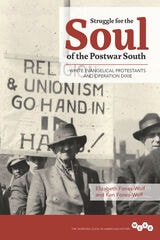
Struggle for the Soul of the Postwar South
White Evangelical Protestants and Operation DixieElizabeth Fones-Wolf and Ken Fones-Wolf
University of Illinois Press, 2015
The authors' nuanced look at working class religion reveals how laborers across the surprisingly wide evangelical spectrum interpreted their lives through their faith. Factors like conscience, community need, and lived experience led individual preachers to become union activists and mill villagers to defy the foreman and minister alike to listen to organizers. As the authors show, however, all sides enlisted belief in the battle. In the end, the inability of northern organizers to overcome the suspicion with which many evangelicals viewed modernity played a key role in Operation Dixie's failure, with repercussions for labor and liberalism that are still being felt today.
Identifying the role of the sacred in the struggle for southern economic justice, and placing class as a central aspect in southern religion, Struggle for the Soul of the Postwar South provides new understandings of how whites in the region wrestled with the options available to them during a crucial period of change and possibility.

The Struggle for an Enlightened Republic
Buenos Aires and RivadaviaKlaus Gallo
University of London Press, 2006

The Struggle for the Georgia Coast
John E. Worth
University of Alabama Press, 2007
In 1733, General James Edward Oglethorpe officially established the colony of Georgia, and within three years had fortified the coast southward toward St. Augustine. Although this region, originally known as the provinces of Guale and Mocama, had previously been under Spanish control for more than a century, territorial fighting had emptied the region of Spanish missionaries, soldiers, and their Indian allies. Spanish officials maintained that the long history of Spanish authority over the territory guaranteed Spain the right to defy and repel the English intruders. By 1739, with diplomatic negotiations failing and the potential for war imminent, King Philip V requested that Don Manuel de Montiano, Governor of Spanish Florida, provide him with every document from both governmental and ecclesiastical sources that would demonstrate prior Spanish presence and control over the region. Original documents and translations were delivered within the year and safely filed for future use--then forgotten. With the outbreak of open war six months earlier, the diplomatic utility of the documents had passed.
For over 250 years, the documents languished safely in the Archive of the Indies in Seville until recognized, recovered, translated, and published by John Worth. Within this volume, Worth brings to light the history of the documents, provides complete translations and full explanations of their contents and a narrative exposition of the Spanish presence along the Atlantic coast never before fully understood. David Hurst Thomas provides an introduction that places Worth's translations and his historical overview into the context of ongoing archaeological excavations on the Georgia coast. With the publication of this volume, one of the least known chapters of Georgia history is finally examined in detail.
The Struggle for the Soul of Journalism
The Pulpit versus the Press, 1833-1923Ronald R. Rodgers
University of Missouri Press, 2018

Unmaking Russia’s Abortion Culture
Family Planning and the Struggle for a Liberal BiopoliticsMichele Rivkin-Fish
Vanderbilt University Press, 2024
Honorable Mention, Davis Center Book Prize in Political and Social Studies, Association for Slavic, East European, and Eurasian Studies, 2025
Honorable Mention, Women’s Forum Book Prize, British Association for Slavonic and East European Studies, 2024
As the predominant form of birth control in Soviet society, abortion reflected key paradoxes of state socialism: women held formal equality but lacked basic needs such as contraceptives. With market reforms, Russians enjoyed new access to Western contraceptives and new pressures to postpone childbearing until economically self-sufficient. But habits of family planning did not emerge automatically—they required extensive physician retraining, public education, and cultural transformation. In Unmaking Russia’s Abortion Culture, author Michele Rivkin-Fish examines the creative strategies of Russians who promoted family planning in place of routine abortion. Rather than emphasizing individual rights, they explained family planning’s benefits to the nation—its potential to strengthen families and prevent the secondary sterility that resulted when women underwent repeat, poor-quality abortions. Still, fierce debates about abortion and contraceptives erupted as declining fertility was framed as threatening Russia’s demographic sovereignty.
Although Russian family planners embraced a culturally meaningful liberalism that would rationalize public policy and reenchant relations, nationalist opponents cast family planning as suspicious for its association with the individualistic, “child-free” West. This book tells the story of how Russian family planners developed culturally salient frameworks to promote the acceptability of contraceptives and help end routine abortion. It also documents how nationalist campaigns for higher fertility denounced family planning and ultimately dismantled its institutions. By tracing these processes, Unmaking Russia’s Abortion Culture demonstrates the central importance of reproductive politics in the struggle for liberalizing social change that preceded Russia’s 2022 descent into war, repression, and global marginalization.