Results by title

4 books match the query 'Struggle for Civil Rights'
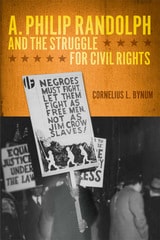
cover of A. Philip Randolph and the Struggle for Civil Rights

A. Philip Randolph and the Struggle for Civil Rights

Cornelius L. Bynum

University of Illinois Press, 2010
A. Philip Randolph's career as a trade unionist and civil rights activist fundamentally shaped the course of black protest in the mid-twentieth century. Standing alongside W. E. B. Du Bois, Marcus Garvey, and others at the center of the cultural renaissance and political radicalism that shaped communities such as Harlem in the 1920s and into the 1930s, Randolph fashioned an understanding of social justice that reflected a deep awareness of how race complicated class concerns, especially among black laborers. Examining Randolph's work in lobbying for the Brotherhood of Sleeping Car Porters, threatening to lead a march on Washington in 1941, and establishing the Fair Employment Practice Committee, Cornelius L. Bynum shows that Randolph's push for African American equality took place within a broader progressive program of industrial reform. Some of Randolph's pioneering plans for engineering change--which served as foundational strategies in the civil rights movement of the 1950s and 1960s--included direct mass action, nonviolent civil disobedience, and purposeful coalitions between black and white workers. Bynum interweaves biographical information on Randolph with details on how he gradually shifted his thinking about race and class, full citizenship rights, industrial organization, trade unionism, and civil rights protest throughout his activist career.
[more]
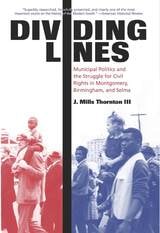
cover of Dividing Lines: Municipal Politics and the Struggle for Civil Rights in Montgomery, Birmingham, and Selma

Dividing Lines

Municipal Politics and the Struggle for Civil Rights in Montgomery, Birmingham, and Selma

J. Mills Thornton, III

University of Alabama Press, 2006

Presents the story of the civil rights movement from the perspective of community-municipal history at the grassroots level

Thornton demonstrates that the movement had powerful local sources in its three birth cities—Montgomery, Birmingham, and Selma. There, the arcane mechanisms of state and city governance and the missteps of municipal politicians and civic leaders—independent of emerging national trends in racial mores—led to the great swell of energy for change that became the civil rights movement.
[more]
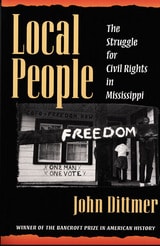
cover of Local People: The Struggle for Civil Rights in Mississippi

Local People

The Struggle for Civil Rights in Mississippi

John Dittmer

University of Illinois Press, 1994

Winner of the Bancroft Prize, the Lillian Smith Book Award, the Mississippi Historical Society McLemore Prize, the Herbert G. Gutman Prize and the Gustavus Myers Center for Study of Human Rights Outstanding Book Prize.

Publication of this book was supported by a grant from DePauw University, Greencastle, Indiana.
[more]
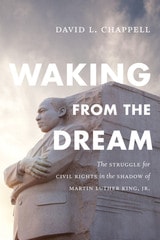
cover of Waking from the Dream: The Struggle for Civil Rights in the Shadow of Martin Luther King, Jr.

Waking from the Dream

The Struggle for Civil Rights in the Shadow of Martin Luther King, Jr.

David L. Chappell

Duke University Press, 2016

In Waking from the Dream David L. Chappell—whose book A Stone of Hope the Atlantic Monthly called "one of the three or four most important books on the civil rights movement"— provides a sweeping history of the fight to keep the civil rights movement alive following Martin Luther King, Jr.’s assassination. Chappell reveals that, far from coming to an abrupt end with King's death, the civil rights movement continued to work to realize King's vision of an equal society. Entering a new phase where historic victories were no longer within reach, the movement's veterans struggled to rally around common goals; and despite moments where the movement seemed to be on the verge of dissolution, it kept building coalitions, lobbying for legislation, and mobilizing activists. Chappell chronicles five key events of the movement's post-King era: the passage of the Fair Housing Act in 1968; the debates over unity and leadership at the National Black Political Conventions; the campaign for full-employment legislation; the establishment of Martin Luther King, Jr. Day; and Jesse Jackson's quixotic presidential campaigns. With Waking from the Dream, Chappell provides a revealing look into a seldom-studied era of civil rights history, examines King's place in American memory, and explains how a movement labored to overcome the loss of its leader.
 
[more]