Results by title
7 books match the query 'Subconsciousness'

Autoaffection
Unconscious Thought in the Age of TechnologyPatricia Ticineto Clough
University of Minnesota Press, 2000
Explores the connection between new theories, new technologies, and new ways of thinking.
In this book, Patricia Ticineto Clough reenergizes critical theory by viewing poststructuralist thought through the lens of "teletechnology," using television as a recurring case study to illuminate the changing relationships between subjectivity, technology, and mass media.
Autoaffection links diverse forms of cultural criticism-feminist theory, queer theory, film theory, postcolonial theory, Marxist cultural studies and literary criticism, the cultural studies of science and the criticism of ethnographic writing—to the transformation and expansion of teletechnology in the late twentieth century. These theoretical approaches, Clough suggests, have become the vehicles of unconscious thought in our time.In individual chapters, Clough juxtaposes the likes of Derridean deconstruction, Deleuzian philosophy, and Lacanian psychoanalysis. She works through the writings of Fredric Jameson, Donna Haraway, Judith Butler, Bruno Latour, Nancy Fraser, Elizabeth Grosz—to name only a few—placing all in dialogue with a teletechnological framework. Clough shows how these cultural criticisms have raised questions about the foundation of thought, allowing us to reenvision the relationship of nature and technology, the human and the machine, the virtual and the real, the living and the inert.
Dark Matter of the Mind
The Culturally Articulated UnconsciousDaniel L. Everett
University of Chicago Press, 2016
Everett sketches a blank-slate picture of human cognition that focuses not on what is in the mind but, rather, what the mind is in—namely, culture. He draws on years of field research among the Amazonian people of the Pirahã in order to carefully scrutinize various theories of cognitive instinct, including Noam Chomsky’s foundational concept of universal grammar, Freud’s notions of unconscious forces, Adolf Bastian’s psychic unity of mankind, and works on massive modularity by evolutionary psychologists such as Leda Cosmides, John Tooby, Jerry Fodor, and Steven Pinker. Illuminating unique characteristics of the Pirahã language, he demonstrates just how differently various cultures can make us think and how vital culture is to our cognitive flexibility. Outlining the ways culture and individual psychology operate symbiotically, he posits a Buddhist-like conception of the cultural self as a set of experiences united by various apperceptions, episodic memories, ranked values, knowledge structures, and social roles—and not, in any shape or form, biological instinct.
The result is fascinating portrait of the “dark matter of the mind,” one that shows that our greatest evolutionary adaptation is adaptability itself.

House of Incest
Anaïs Nin
Ohio University Press, 1958
With an introduction by Allison Pease, this new edition of House of Incest is a lyrical journey into the subconscious mind of one of the most celebrated feminist writers of the twentieth-century.
Originally published in 1936, House of Incest is Anaïs Nin’s first work of fiction. Based on Nin’s dreams, the novel is a surrealistic look within the narrator’s subconscious as she attempts to distance herself from a series of all-consuming and often taboo desires she cannot bear to let go. The incest Nin depicts is a metaphor—a selfish love wherein a woman can appreciate only qualities in a lover that are similar to her own. Through a descriptive exploration of romances and attractions between women, between a sister and her beloved brother, and with a Christ-like man, Nin’s narrator discovers what she thinks is truth: that a woman’s most perfect love is of herself. At first, this self-love seems ideal because it is attainable without fear and risk of heartbreak. But in time, the narrator’s chosen isolation and self-possessed anguish give way to a visceral nightmare from which she is unable to wake.
On the Edge of the Abyss
The Jewish Unconscious before FreudClémence Boulouque
University of Chicago Press, 2025
When Sigmund Freud published his theory of the unconscious, in 1899, he popularized an idea that had fascinated generations of Jewish philosophers before him. In this book, Clémence Boulouque charts the development of the pre-Freudian unconscious from subcultural inquiry to dominant discourse during the long nineteenth century. Although Freud’s scientific notion differed from Schelling’s mythical description of the abyss from which creation springs, its resonance with older ideas was celebrated as an opportunity to express specifically Jewish contributions to modernity. Indeed, Boulouque shows that the pre-Freudian unconscious emerged from conversations in Jewish mysticism about otherness and coexistence. In the hopeful years before World War I, Boulouque argues, such reflections offered the possibility of emancipation not only to Jews but to all.
The User Unconscious
On Affect, Media, and MeasurePatricia Ticineto Clough
University of Minnesota Press, 2018
Wide-ranging essays and experimental prose forcefully demonstrate how digital media and computational technologies have redefined what it is to be human
Over the past decade, digital media has expanded exponentially, becoming an essential part of daily life. The stimulating essays and experimental compositions in The User Unconscious delve into the ways digital media and computational technologies fundamentally affect our sense of self and the world we live in, from both human and other-than-human perspectives.
Critical theorist Patricia Ticineto Clough’s provocative essays center around the motif of the “user unconscious” to advance the challenging thesis that that we are both human and other-than-human: we now live, think, and dream within multiple layers of computational networks that are constantly present, radically transforming subjectivity, sociality, and unconscious processes.
Drawing together rising strains of philosophy, critical theory, and media studies, as well as the political, social, and economic transformations that are shaping the twenty-first-century world, The User Unconscious points toward emergent crises and potentialities in both human subjectivity and sociality. Moving from affect to data, Clough forces us to see that digital media and computational technologies are not merely controlling us—they have already altered what it means to be human.
Unthought
The Power of the Cognitive NonconsciousN. Katherine Hayles
University of Chicago Press, 2017
Marshalling fresh insights from neuroscience, cognitive science, cognitive biology, and literature, Hayles expands our understanding of cognition and demonstrates that it involves more than consciousness alone. Cognition, as Hayles defines it, is applicable not only to nonconscious processes in humans but to all forms of life, including unicellular organisms and plants. Startlingly, she also shows that cognition operates in the sophisticated information-processing abilities of technical systems: when humans and cognitive technical systems interact, they form “cognitive assemblages”—as found in urban traffic control, drones, and the trading algorithms of finance capital, for instance—and these assemblages are transforming life on earth. The result is what Hayles calls a “planetary cognitive ecology,” which includes both human and technical actors and which poses urgent questions to humanists and social scientists alike.
At a time when scientific and technological advances are bringing far-reaching aspects of cognition into the public eye, Unthought reflects deeply on our contemporary situation and moves us toward a more sustainable and flourishing environment for all beings.
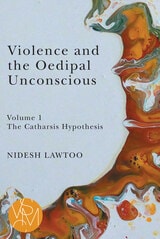
Violence and the Oedipal Unconscious
vol. 1, The Catharsis HypothesisNidesh Lawtoo
Michigan State University Press, 2023