Results by title
10 books match the query 'Substance abuse'
Addiction Trajectories
Eugene Raikhel and William Garriott, eds.
Duke University Press, 2013
Contributors. Nancy D. Campbell, E. Summerson Carr, Angela Garcia, William Garriott, Helena Hansen, Anne M. Lovell, Emily Martin, Todd Meyers, Eugene Raikhel, A. Jamie Saris, Natasha Dow Schüll
Addiction
Entries and ExitsJon Elster
Russell Sage Foundation, 1999
Crime and Justice, Volume 46
Reinventing American Criminal JusticeEdited by Michael Tonry
University of Chicago Press Journals, 2017
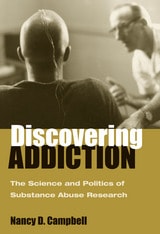
Discovering Addiction
The Science and Politics of Substance Abuse ResearchNancy D. Campbell
University of Michigan Press, 2007
Discovering Addiction brings the history of human and animal experimentation in addiction science into the present with a wealth of archival research and dozens of oral-history interviews with addiction researchers. Professor Campbell examines the birth of addiction science---the National Academy of Sciences's project to find a pharmacological fix for narcotics addiction in the late 1930s---and then explores the human and primate experimentation involved in the succeeding studies of the "opium problem," revealing how addiction science became "brain science" by the 1990s.
Psychoactive drugs have always had multiple personalities---some cause social problems; others solve them---and the study of these drugs involves similar contradictions. Discovering Addiction enriches discussions of bioethics by exploring controversial topics, including the federal prison research that took place in the 1970s---a still unresolved debate that continues to divide the research community---and the effect of new rules regarding informed consent and the calculus of risk and benefit. This fascinating volume is both an informative history and a thought-provoking guide that asks whether it is possible to differentiate between ethical and unethical research by looking closely at how science is made.
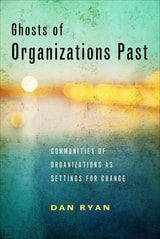
Ghosts of Organizations Past
Communities of Organizations as Settings for ChangeDan Ryan
Temple University Press, 2015
Ryan draws on concepts from the study of organizations, social capital, and social networks to re-think questions such as “What kind of thing is a community?” and “Why is it so difficult to build community initiatives out of organizations?” He provides a social organizational explanation for problems familiar to anyone who has been involved in community programs, issues that are usually understood as personal incompetence, turf wars, greed, or corruption.
Ghosts of Organizations Past describes the challenges of using organizations to create change in places in dire need of it.
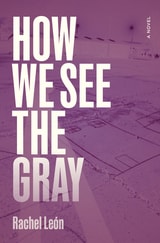
How We See the Gray
A NovelRachel León
Northwestern University Press, 2026
A riveting story about parenthood, substance abuse, and the strength it takes to come back from our mistakes
Foster care is a disaster in Rockford, Illinois. Meredith, a social worker and single mom, is stretched beyond thin but determined to protect her kids: not only her son, but those on her caseload too. When the stress of the job has her breaking her sobriety, the foundations of her life begin to tremble. After drinking too much, she makes a mistake that puts her preschooler in jeopardy, and Meredith finds herself in a situation that mirrors her clients’ as she loses custody of her son. In her fight to get him back, Meredith experiences the system from the outside—while still working for the kids inside of it. Set over the course of a year, this riveting documentary-esque novel is told from multiple perspectives, including those of case workers, birth parents, foster parents, and foster children. Written with the working-class humor and heart that defines the Midwest, How We See the Gray is a story about mistakes, second chances, and trying to do better in a system that seems doomed to fail.
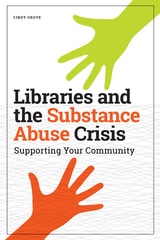
Libraries and the Substance Abuse Crisis
Supporting Your CommunityCindy Grove
American Library Association, 2020
The opioid epidemic, and other behavioral health issues such as alcohol and drug abuse, directly impact every community across the nation; and, by extension, public libraries’ daily work. Because libraries are not only trusted guardians of information but also vital community centers, people struggling with addictive behaviors as well as their family members and friends often turn to the library for help. But many library workers feel overwhelmed, finding themselves unprepared for serving these patrons in an effective and empathetic way. This book encourages readers to turn their fears and uncertainty into strengths and empowerment, offering to-the-point guidance on welcoming people with substance use disorders and their loved ones through policy, materials, outreach, collaboration, programs, and services. Written by a frontline librarian whose personal experiences inform the book, this resource
- explores the library’s role in the fight against addiction and how to become part of the solution by combating stigma;
- provides background on understanding how substance abuse and related behaviors affect different age groups and populations;
- explains how to be proactive regarding library safety and security by carefully crafting library policies and effectively communicating them to staff;
- offers real world guidance on training library staff, including pointers on recognizing observable signs of drug abuse and responding appropriately and safely to uncomfortable or potentially dangerous situations;
- discusses safeguards such as a needle disposal unit, defibrillator, and Naloxone;
- gives tips on marketing, outreach, and programming, from putting together displays of materials and resources to partnering with local organizations; and
- recommends useful websites, documentaries, and additional resources for further learning.
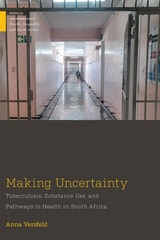
Making Uncertainty
Tuberculosis, Substance Use, and Pathways to Health in South AfricaAnna Versfeld
Rutgers University Press, 2023
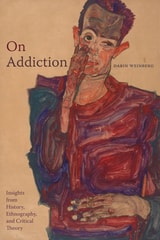
On Addiction
Insights from History, Ethnography, and Critical TheoryDarin Weinberg
Duke University Press, 2024
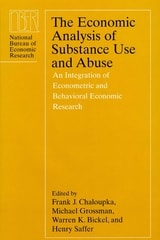
The Economic Analysis of Substance Use and Abuse
An Integration of Econometric and Behavioral Economic ResearchEdited by Frank J. Chaloupka, Michael Grossman, Warren K. Bickel, and Henry Saffer
University of Chicago Press, 1999
The Economic Analysis of Substance Use and Abuse brings these distinctive fields of study together and presents for the first time an integrated assessment of their data and results. Unique and innovative, this multidisciplinary volume will serve as an important resource in the current debates concerning alcohol and drug use and abuse and the impacts of legalizing illicit drugs.