Results by title
53 books match the query 'Success' and 6 start with a

A Book of Consolation
Seeing Our Quests for Love, Success, and Meaning in a New LightAndrew Stark
University of Chicago Press, 2027
An invitation to rest in the mystery that there is no single route to fulfillment, but many—often contradictory, unpredictable, endlessly available.
Our lives are restless. Though we strive for meaning, we are often unfulfilled: our loves fail, our careers stall, and our purpose eludes us. We may temporarily ease our frustration by blaming our methods or embracing our limitations, and we may even embrace the self-defeating lie that we must discover the one, linear path for success in love, work, or life. In A Book of Consolation, Andrew Stark offers a liberating third way between self-abandonment and complacency, revealed through a simple mystery: for each road where someone found fulfillment, someone else walked the opposite path to the same end.
Drawing on literature, popular culture, philosophy, and more, A Book of Consolation invites us to appreciate, even marvel at, the possibility that the routes to love, success, and meaning are so various that even inverse lives can satisfy us. Stark holds up a series of opposing journeys for consideration—from the contradictory loves in modern romantic comedies, to the regrets of Dolly Parton and Ernest Hemingway, to the mindsets behind Tiger Woods and Richard Nixon’s success. In juxtaposing these lives, Stark expands our sense of what counts as fulfillment and what alternatives may be available when our own paths falter. Rich in possibility but without prescription, A Book of Consolation encourages us to navigate the frustrations of our finitude by cultivating a faith that the paths to fulfillment are far more pluralized—and often more contradictory—than we know.
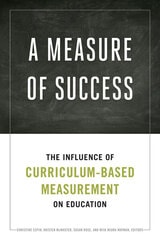
A Measure of Success
The Influence of Curriculum-Based Measurement on EducationChristine A. Espin
University of Minnesota Press, 2012
Simple in concept, far-reaching in implementation, Curriculum-Based Measurement (CBM) was developed in the 1980s as an efficient way to assess the progress of struggling students, including those with disabilities. Today, there are few areas of special education policy and practice that have not been influenced by CBM progress monitoring. The impact of CBM is reflected in recent education reforms that emphasize improvements in assessment and data-based decision making. Gathering an international group of leading researchers and practitioners, A Measure of Success provides a comprehensive picture of the past, present, and possible future of CBM progress monitoring. The book will be instrumental for researchers and practitioners in both general and special education, particularly those involved in the rapidly growing Response to Intervention (RTI) approach, an approach used to determine the performance and placement of students with learning difficulties.
A Measure of Success presents a nuanced examination of CBM progress monitoring in reading, math, and content-area learning to assess students at all levels, from early childhood to secondary school, and with a wide range of abilities, from high- and low-incidence disabilities to no disabilities. This study also evaluates how the approach has affected instructional practices, teacher training, psychology and school psychology, educational policy, and research in the United States and beyond.
Timely and unique, this volume will interest anyone in education who wants to harness the potential advantage of progress monitoring to improve outcomes for students.
Contributors: Laurence Bergeron; Lionel A. Blatchley; Renee Bradley; Mary T. Brownell, U of Florida; Todd W. Busch, U of St. Thomas; Heather M. Campbell, St. Olaf College; Ann Casey; Theodore J. Christ, U of Minnesota; Kelli D. Cummings, U of Oregon; Eric Dion, U du Québec à Montréal; Isabelle Dubé, U du Québec à Montréal; Hank Fien, U of Oregon; Anne Foegen, Iowa State U; Douglas Fuchs, Vanderbilt U; Lynn S. Fuchs, Vanderbilt U; Gary Germann; Kim Gibbons; Roland H. Good III, U of Oregon; Anne W. Graves, San Diego State U; John L. Hosp, U of Iowa; Michelle K. Hosp; Joseph R. Jenkins, U of Washington; Ruth A. Kaminski; Panayiota Kendeou, Neapolis U Pafos, Cyprus; Dong-il Kim, Seoul National U, South Korea; Amanda Kloo, U of Pittsburgh; Danika Landry, U du Québec à Montréal; Erica Lembke, U of Missouri; Francis E. Lentz Jr., U of Cincinnati; Sylvia Linan-Thompson, U of Texas at Austin; Charles D. Machesky; Doug Marston; James L. McLeskey, U of Florida; Timothy C. Papadopoulos, U of Cyprus; Kelly A. Powell-Smith; Greg Roberts, U of Texas at Austin; Margaret J. Robinson; Steven L. Robinson, Minnesota State U, Mankato; Catherine Roux, U du Québec à Montréal; Barbara J. Scierka; Edward S. Shapiro, Lehigh U; Jongho Shin, Seoul National U, South Korea; Mark R. Shinn, National Louis U; James G. Shriner, U of Illinois, Urbana-Champaign; Paul T. Sindelar, U of Florida; Deborah L. Speece, U of Maryland; Pamela M. Stecker, Clemson U; Martha L. Thurlow, U of Minnesota; RenátaTichá, U of Minnesota; Gerald Tindal, U of Oregon; Paul van den Broek, Leiden U, the Netherlands; Sharon Vaughn, U of Texas at Austin; Dana L. Wagner, Augsburg College; Teri Wallace, Minnesota State U, Mankato; Jeanne Wanzek, Florida State U; Mary Jane White, U of Minnesota; Mitchell L. Yell, U of South Carolina; Naomi Zigmond, U of Pittsburgh.
Acres Of Diamonds
Russell Conwell
Temple University Press, 2002
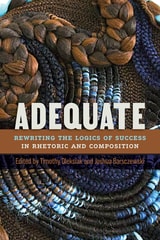
Adequate
Rewriting the Logics of Success in Rhetoric and CompositionTimothy Oleksiak
Utah State University Press, 2025
Fourteen essays from established scholars, ranging from deeply personal, to darkly humorous, to impassioned and blunt, offer theoretical and pragmatic resources for responding to unjust labor extraction and the discipline’s demands that teachers do it all. Drawing on an array of intellectual traditions including labor studies, feminist rhetoric, disability studies, Jewish rhetoric, and theories of writing program administrations, authors assert the reasonable position of being enough and thriving outside of work in the face of growing demands for professional excellence and even perfection.
Adequate reimagines what the concept of adequacy holds for the future of academic work. An invaluable resource for scholars, graduate students, and advanced undergraduate students in the rhetoric and composition field, this volume covers the realities of teaching rhetoric and composition in the modern college environment, as well as potential paths forward for educators in need of a better work-life balance.

After Admission
From College Access to College SuccessJames E. Rosenbaum
Russell Sage Foundation, 2006
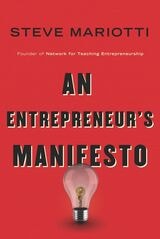
An Entrepreneur’s Manifesto
Steve Mariotti
Templeton Press, 2015
In an increasingly competitive world market, how does the United States rank? Many Americans are worried about the economic state of their nation, especially now that countries like China are becoming ever more economically powerful. What does America need to both stabilize and energize its economy?
Entrepreneurship, Steve Mariotti claims, is vital. An Entrepreneur’s Manifesto is Mariotti’s rallying cry for the world to recognize the potential that business creation holds for the individual and the economy. Mariotti explores how entrepreneurship affects schools and prisons, developed cities and isolated villages, brick-and-mortar stores, and internet-based businesses. He takes a hard look at the research on entrepreneurial education, entrepreneurship, government policy, and the social and cultural attributes most likely to foster successful business creation, incorporating his discussions with some of the best minds on the question of entrepreneurship. Mariotti also examines how the rise of the Internet and Web-based innovations like crowdfunding have both changed—and not changed—the fundamentals of promoting those who take the ultimate gamble of going into business for themselves.
As the author of several leading textbooks on the subject and founder of the Network for Teaching Entrepreneurship (NFTE), a global nonprofit organization that has educated more than 500,000 students and trained more than 5,000 teachers in 50 countries, Mariotti is both an experienced and reliable leader in what he calls the entrepreneurial revolution. Mariotti frequently writes for the Huffington Post and has been recruited by the State Department to discuss his ideas on youth entrepreneurship in Cambodia and other developing countries seeking to escape the shackles of centrally planned economic policies.
Neither a dry recitation of academic theory nor a scattered collection of feel-good stories, An Entrepreneur’s Manifesto builds on Mariotti’s unique perspective to offer a critique that is both inspiring and practical. Riveting stories complement enlightening real-world perspectives, making the work relatable and inspiring.
“There is no more revolutionary act,” Mariotti says, “than starting a business.”