Results by title
29 books match the query 'Suffering'
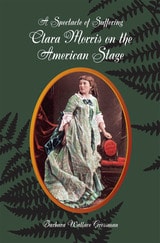
A Spectacle of Suffering
Clara Morris on the American StageBarbara Wallace Grossman
Southern Illinois University Press, 2009
Once called "America's greatest actress," renowned for the passion and power of her performances, Clara Morris (1847-1925) has been largely forgotten. A Spectacle of Suffering: Clara Morris on the American Stage is the first full-length study of the actress's importance as a feminist in the late nineteenth and early twentieth centuries. Detailing her daunting health problems and the changing tastes in entertainment that led to her retirement from the stage, Barbara Wallace Grossman explores Morris's dramatic reinvention as an author. During a second robust career, she published hundreds of newspaper and magazine articles and nine books—six works of fiction and three memoirs.
Grossman draws on the fifty-four-volume diary that Morris kept from 1868 until 1924, as well as on the manuscript fragments and notes of journalist George T. MacAdam, who died in 1929 before completing the actress's biography. Grossman provides a dramatic account of Morris's life and work from her troubled early years, through an unhappy marriage, morphine addiction, and invalidism, to the challenges of touring, the decline of her artistic reputation, and the demands of the writing career she pursued so tenaciously. A Spectacle of Suffering reveals how Morris, even after experiencing blindness and the loss of her home, livelihood, and family, did not succumb to despair and found comfort in the small pleasures of her circumscribed life.
A Spectacle of Suffering recovers an important figure in American theatre and ensures that Morris will be remembered not simply as an actress but as a respected writer and beloved public figure, admired for her courage in dealing with adversity. The book, which is enhanced by twenty-four illustrations, is the only published biography of Clara Morris. It is as much a tribute to the power of the human spirit as it is an effective means of exploring American theatre and society in the Gilded Age.
Consolation to Stagirius
Robert G.T. St. John Chrysostom
Catholic University of America Press, 2025
Don't Explain
Betsy Sholl
University of Wisconsin Press, 1997
Emily Dickinson's Approving God
Divine Design and the Problem of SufferingPatrick J. Keane
University of Missouri Press, 2008
Extremities
Trauma, Testimony, and CommunityEdited by Nancy K. Miller and Jason Tougaw
University of Illinois Press, 2002
How do we come to terms with what can't be forgotten?
How do we bear witness to extreme experiences that challenge the limits of language? This remarkable volume explores the emotional, political, and aesthetic dimensions of testimonies to trauma as they translate private anguish into public space. Nancy K. Miller and Jason Tougaw have assembled a collection of essays that trace the legacy of the Holocaust and subsequent events that have shaped twentieth-century history and still haunt contemporary culture.
Extremities combines personal and scholarly approaches to a wide range of texts that bear witness to shocking and moving accounts of individual trauma: Toni Morrison's Beloved, Sylvia Plath's "Daddy" and "Lady Lazarus," Kathryn Harrison's The Kiss, Tatana Kellner's Holocaust art, Ruth Klüger's powerful memoir Still Alive, and Binjamin Wilkomirski's controversial narrative of concentration camp suffering Fragments. The book grapples with the cultural and social effects of historical crises, including the Montreal Massacre, the Warsaw Ghetto Uprising, and the medical catastrophes of HIV/AIDS and breast cancer.
Developing insights from autobiography, psychoanalysis, feminist theory and gender studies, the authors demonstrate that testimonies of troubling and taboo subjects do more than just add to the culture of confession–-they transform identities and help reimagine the boundaries of community. Extremities offers an original and timely interpretive guide to the growing field of trauma studies. The volume includes essays by Ross Chambers, Sandra M. Gilbert, Susan Gubar, Marianne Hirsch, Wayne Koestenbaum, Eve Kosofsky Sedgwick, and others.
Global Visions of Violence
Agency and Persecution in World ChristianityJason Bruner
Rutgers University Press, 2023
In the Eyes of God
A Study on the Culture of SufferingBy Fernando Escalante Gonzalbo
University of Texas Press, 2006
"Every culture needs to appropriate the universal truth of human suffering," says Fernando Escalante, ". . . to give its own meaning to this suffering, so that human existence is bearable." Originally published in Spanish as La mirada de Dios: Estudios sobre la cultura del sufrimiento, this book is a remarkable study of the evolution of the culture of suffering and the different elements that constitute it, beginning with a reading of Rousseau and ending with the appearance of the Shoah in the Western consciousness—"The memory endures, and this constitutes a fundamental transition for the Western conscience: we have witnessed."
Drawing on writings from the Greeks to Cervantes, Voltaire to Nietzsche, and Freud to William James, Escalante combines his considerable knowledge of politics and political theory with a vast array of literary examples to arrive at an intellectual understanding of the history and meaning of suffering. His investigation encompasses the rise of popular politics, the role of messianism in modern nationalism, and the contemporary implications of the Shoah.
This book will appeal to a wide audience: students of political theory, humanism, and philosophy, as well as the general reader interested in a glimpse into the mind of a highly original Latin American thinker.
Knowing the Suffering of Others
Legal Perspectives on Pain and Its MeaningsAustin Sarat
University of Alabama Press, 2014
From fetal imaging to end-of-life decisions, torts to international human rights, domestic violence to torture, and the law of war to victim impact statements, the law is awash in epistemological and ethical problems associated with knowing and imagining suffering. In each of these domains we might ask: How well do legal actors perceive and understand suffering in such varied domains of legal life? What problems of representation and interpretation bedevil efforts to grasp the suffering of others? What historical, political, literary, cultural, and/or theological resources can legal actors and citizens draw on to understand the suffering of others?
In Knowing the Suffering of Others, Austin Sarat presents legal scholarship that explores these questions and puts the problem of suffering at the center of thinking about law. The contributors to this volume do not regard pain and suffering as objective facts of a universe remote from law; rather they examine how both are discursively constructed in and by law. They examine how pain and suffering help construct and give meaning to the law as we know it. The authors attend to the various ways suffering appears in law as well as the different forms of suffering that require the law’s attention.
Throughout this book law is regarded as a domain in which the meanings of pain and suffering are contested, and constituted, as well as an instrument for inflicting suffering or for providing or refusing its relief. It challenges scholars, lawyers, students, and policymakers to ask how various legal actors and audiences understand the suffering of others.
Contributors
Montré D. Carodine / Cathy Caruth / Alan L. Durham / Bryan K.Fair / Steven H. Hobbs / Gregory C. Keating
/ Linda Ross Meyer / Meredith M. Render / Jeannie Suk / John Fabian Witt
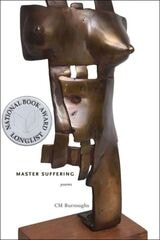
Master Suffering
CM Burroughs
Tupelo Press, 2021
Meaning in Suffering
Caring Practices in the Health ProfessionsEdited by Nancy Johnston and Alwilda Scholler-Jaquish
University of Wisconsin Press, 2007
Memorializing Violence
Transnational Feminist ReflectionsAlison Crosby
Rutgers University Press, 2025
On Suffering
Pathways to Healing and HealthBeverley M. Clarke
Dartmouth College Press, 2011
Patience and Salvation in Third Century North Africa
A Christian Latin ReaderSarah Wear
Catholic University of America Press, 2022
Prophetic Politics
Emmanuel Levinas and the Sanctification of SufferingPhilip J. Harold
Ohio University Press, 2009
In Prophetic Politics, Philip J. Harold offers an original interpretation of the political dimension of Emmanuel Levinas’s thought. Harold argues that Levinas’s mature position in Otherwise Than Being breaks radically with the dialogical inclinations of his earlier Totality and Infinity and that transformation manifests itself most clearly in the peculiar nature of Levinas’s relationship to politics.
Levinas’s philosophy is concerned not with the ethical per se, in either its applied or its transcendent forms, but with the source of ethics. Once this source is revealed to be an anarchic interruption of our efforts to think the ethical, Levinas’s political claims cannot be read as straightforward ideological positions or principles for political action. They are instead to be understood “prophetically,” a position that Harold finds comparable to the communitarian critique of liberalism offered by such writers as Alasdair MacIntyre and Charles Taylor. In developing this interpretation, which runs counter to formative influences from the phenomenological tradition, Harold traces Levinas’s debt to phenomenological descriptions of such experiences as empathy and playfulness.
Prophetic Politics will highlight the relevance of the phenomenological tradition to contemporary ethical and political thought—a long-standing goal of the series—while also making a significant and original contribution to Levinas scholarship.
Seven Ways of Looking at Pointless Suffering
What Philosophy Can Tell Us about the Hardest Mystery of AllScott Samuelson
University of Chicago Press, 2018
It’s right there in the Book of Job: “Man is born unto trouble as the sparks fly upward.” Suffering is an inescapable part of the human condition—which leads to a question that has proved just as inescapable throughout the centuries: Why? Why do we suffer? Why do people die young? Is there any point to our pain, physical or emotional? Do horrors like hurricanes have meaning?
In Seven Ways of Looking at Pointless Suffering, Scott Samuelson tackles that hardest question of all. To do so, he travels through the history of philosophy and religion, but he also attends closely to the real world we live in. While always taking the question of suffering seriously, Samuelson is just as likely to draw lessons from Bugs Bunny as from Confucius, from his time teaching philosophy to prisoners as from Hannah Arendt’s attempts to come to terms with the Holocaust. He guides us through the arguments people have offered to answer this fundamental question, explores the many ways that we have tried to minimize or eliminate suffering, and examines people’s attempts to find ways to live with pointless suffering. Ultimately, Samuelson shows, to be fully human means to acknowledge a mysterious paradox: we must simultaneously accept suffering and oppose it. And understanding that is itself a step towards acceptance.
Wholly accessible, and thoroughly thought-provoking, Seven Ways of Looking at Pointless Suffering is a masterpiece of philosophy, returning the field to its roots—helping us see new ways to understand, explain, and live in our world, fully alive to both its light and its darkness.
Some White Folks
The Interracial Politics of Sympathy, Suffering, and SolidarityJennifer Chudy
University of Chicago Press, 2024
A pioneering exploration of the unexamined roots and effect of racial sympathy within American politics.
There is racial inequality in America, and some people are distressed over it while others are not. This is a book about white people who feel that distress. For decades, political scientists have studied the effects of white racial prejudice, but Jennifer Chudy shows that white racial sympathy for Black Americans’ suffering is also a potent force in modern American politics. Grounded in the history of Black-white relations in America, racial sympathy is unique. It is not equivalent to a low level of racial prejudice or sympathy for other marginalized groups. Some White Folks reveals how racial sympathy shapes a significant number of white Americans’ opinions on policy areas ranging from the social welfare state to the criminal justice system. Under certain circumstances, it can also spur action—although effects on political behavior are weaker and less consistent, for reasons Chudy examines.
Drawing on diverse quantitative and qualitative evidence and integrating insights from multiple disciplines, Chudy explores the origins, importance, and complexity of racial sympathy, as well as the practical implications for political and movement leaders. A companion to the rich literature on prejudice, Some White Folks demonstrates the multifaceted role of race in American politics and public opinion.
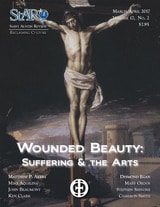
St. Austin Review, Wounded Beauty
Suffering and the Arts, March/April 2017, Vol. 17, No. 2Joseph Pearce
St. Augustine's Press, 2017
Still Here, Still Now
Robert Pack
University of Chicago Press, 2008
The first section of the book contains traditional lyrics that celebrate family ties and seek consolations for the passing of personal and evolutionary time. The poems in this group address a named or unnamed auditor in a voice of intimate engagement. Featuring the most narrative selections in the book, the second section consists of fable-like stories, rich with innuendo and implication. The characters in these poems make choices that press against the events and circumstances that challenge and define them. Embodying what Harold Bloom has called Pack’s “courage to surmount suffering,” the poems of the third section are largely devoted to biblical themes and philosophical speculations on the meaning of happiness and the uses of suffering. Here, Pack’s empathy for the human condition as well as his forebodings about the prospect of human survival are on poignant display. The final section of the book turns to Pack's abiding interest in landscape and the ways in which the place one inhabits contains and animates our individual lives.
Ripe with many years, Pack remains a vital presence in American letters. Still Here, Still Now is an affecting and graceful addition to the oeuvre of a poet whose compelling and distinct voice will continue to resonate among his loyal readers.
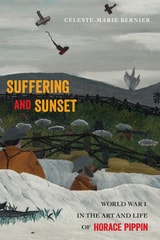
Suffering and Sunset
World War I in the Art and Life of Horace PippinCeleste-Marie Bernier
Temple University Press, 2017
For self-made artist and soldier Horace Pippin—who served in the 369th all-black infantry in World War I until he was wounded—war provided a formative experience that defined much of his life and work. His ability to transform combat service into canvases of emotive power, psychological depth, and realism showed not only how he viewed the world but also his mastery as a painter. In Suffering and Sunset, Celeste-Marie Bernier painstakingly traces Pippin’s life story of art as a life story of war.
Illustrated with more than sixty photographs, including works in various mediums—many in full color—this is the first intellectual history and cultural biography of Pippin. Working from newly discovered archives and unpublished materials, Bernier provides an in-depth investigation into the artist’s development of an alternative visual and textual lexicon and sheds light on his work in its aesthetic, social, and political contexts.
Suffering and Sunset illustrates Pippin’s status as a groundbreaking artist as it shows how this African American painter suffered from but also staged many artful resistances to racism in a white-dominated art world.
Suffering in the Land of Sunshine
A Los Angeles Illness NarrativeAbel, Emily K.
Rutgers University Press, 2006
The history of medicine is much more than the story of doctors, nurses, and hospitals. Seeking to understand the patient’s perspective, historians scour the archives, searching for rare personal accounts. Bringing together a trove of more than 400 family letters by Charles Dwight Willard, Suffering in the Land of Sunshine provides a unique window into the experience of sickness.
A Los Angeles civic leader at the turn of the twentieth century, Willard is well known to historians of the West, but exclusively for his public life as a booster and reformer. Willard’s evocative story offers fresh insights into several critical issues, including how concepts of gender, class, and race shape patients’ representations of their illness, how expectations of cure affect the illness experience, how different cultures constrain the coping strategies of the sick, and why robust health is such an exalted value in certain societies.
Systems of Suffering
Dispersal and the Denial of AsylumJonathan Darling
Pluto Press, 2021
Of the many state-enacted cruelties to which refugees and asylum seekers are subjected, detention and deportation loom largest in popular consciousness. But there is a third practice, perpetrating a slower violence, that remains hidden: dispersal.
Jonathan Darling provides the first detailed account of how dispersal - the system of accommodation and support for asylum seekers and refugees in Britain - both sustains and produces patterns of violence, suffering and social abjection. He explores the evolution of dispersal as a privatized process, from the first outsourced asylum accommodation contracts in 2012 to the renewed wave of outsourcing pursued by the Home Office today.
Drawing on six years of research into Britain's dispersal system, and foregrounding the voices and experiences of refugees and asylum seekers, Darling argues that dispersal has played a central role in the erasure of asylum from public concern. Systems of Suffering is a vital tool in the arsenal of those fighting to hold the government to account for the violence of its asylum policy and practice.
Tears and Saints
E. M. Cioran
University of Chicago Press, 1995
"Who can tell?" he wrote in the first paragraph of this book, first published in Romania in 1937. "To be sure, tears are their trace. Tears did not enter the world through the saints; but without them we would never have known that we cry because we long for a lost paradise." By following in their traces, "wetting the soles of one's feet in their tears," Cioran hoped to understand how a human being can renounce being human. Written in Cioran's characteristic aphoristic style, this flamboyant, bold, and provocative book is one of his most important—and revelatory—works.
Cioran focuses not on martyrs or heroes but on the mystics—primarily female—famous for their keening spirituality and intimate knowledge of God. Their Christianity was anti-theological, anti-institutional, and based solely on intuition and sentiment. Many, such as Catherine of Siena, Teresa of Avila, and Saint John of the Cross, have produced classic works of mystical literature; but Cioran celebrates many more minor and unusual figures as well.
Following Nietzsche, he focuses explicitly on the political element hidden in saints' lives. In his hands, however, their charitable deeds are much less interesting than their thirst for pain and their equally powerful capacity to endure it. Behind their suffering and their uncanny ability to renounce everything through ascetic practices, Cioran detects a fanatical will to power.
"Like Nietzsche, Cioran is an important religious thinker. His book intertwines God and music with passion and tears. . . . [Tears and Saints] has a chillingly contemporary ring that makes this translation important here and now."—Booklist
The Modulated Scream
Pain in Late Medieval CultureEsther Cohen
University of Chicago Press, 2010
In the late medieval era, pain could be a symbol of holiness, disease, sin, or truth. It could be encouragement to lead a moral life, a punishment for wrong doing, or a method of healing. Exploring the varied depictions and descriptions of pain—from martyrdom narratives to practices of torture and surgery—The Modulated Scream attempts to decode this culture of suffering in the Middle Ages.
Esther Cohen brings to life the cacophony of howls emerging from the written record of physicians, torturers, theologians, and mystics. In considering how people understood suffering, explained it, and meted it out, Cohen discovers that pain was imbued with multiple meanings. While interpreting pain was the province only of the rarified elite, harnessing pain for religious, moral, legal, and social purposes was a practice that pervaded all classes of Medieval life. In the overlap of these contradicting attitudes about what pain was for—how it was to be understood and who should use it—Cohen reveals the distinct and often conflicting cultural traditions and practices of late medieval Europeans. Ambitious and wide-ranging, The Modulated Scream is intellectual history at its most acute.
The Right Kind of Suffering
Gender, Sexuality, and Arab Asylum Seekers in AmericaRhoda Kanaaneh
University of Texas Press, 2023
2024 Evelyn Shakir Non-Fiction Academic Award, The Arab American National Museum
An examination of Arab asylum seekers who feel compelled to package their tales of disenfranchisement and suffering to satisfy a deeply reluctant immigration system.
From the overloaded courts with their constantly changing dates and appointments to the need to prove oneself the “right” kind of victim, the asylum system in the United States is an exacting and drawn-out immigration process that itself results in suffering. When anthropologist Rhoda Kanaaneh became a volunteer interpreter for Arab asylum seekers, she learned how applicants were pushed to craft specific narratives to satisfy the system’s requirements.
Kanaaneh tells the stories of four Arab asylum seekers who sought protection in the United States on the basis of their gender or sexuality: Saud, who relived painful memories of her circumcision and police harassment in Sudan and then learned to number and sequence these recollections; Fatima, who visited doctors and therapists in order to document years of spousal abuse without over-emphasizing her resulting mental illness; Fadi, who highlighted the homophobic motivations that provoked his arrest and torture in Jordan, all the while sidelining connected issues of class and racism; and Marwa, who showcased her private hardships as a lesbian in a Shiite family in Lebanon and downplayed her environmental activism. The Right Kind of Suffering is a compelling portrait of Arab asylum seekers whose success stories stand in contrast with those whom the system failed.
They Dragged Them through the Streets
A NovelHilary Plum
University of Alabama Press, 2013
They Dragged Them Through the Streets is a bold meditation on idealism, anger, and the American home front’s experience of today’s wars. This is an innovative work in the great tradition of war literature and a singular chronicle of one generation’s conflicts.
Tragedy Offstage
Suffering and Sympathy in Ancient AthensBy Rachel Hall Sternberg
University of Texas Press, 2006
Humane ideals were central to the image Athenians had of themselves and their city during the classical period. Tragic plays, which formed a part of civic education, often promoted pity and compassion. But it is less clear to what extent Athenians embraced such ideals in daily life. How were they expected to respond, emotionally and pragmatically, to the suffering of other people? Under what circumstances? At what risk to themselves?
In this book, Rachel Hall Sternberg draws on evidence from Greek oratory and historiography of the fifth and fourth centuries BCE to study the moral universe of the ancient Athenians: how citizens may have treated one another in times of adversity, when and how they were expected to help. She develops case studies in five spheres of everyday life: home nursing, the ransom of captives, intervention in street crimes, the long-distance transport of sick and wounded soldiers, and slave torture. Her close reading of selected narratives suggests that Athenians embraced high standards for helping behavior—at least toward relatives, friends, and some fellow citizens. Meanwhile, a subtle discourse of moral obligation strengthened the bonds that held Athenian society together, encouraging individuals to bring their personal behavior into line with the ideals of the city-state.
Traumatic States
Gendered Violence, Suffering, and Care in ChileNia Parson
Vanderbilt University Press, 2013
In Traumatic States, anthropologist Nia Parson explores the development of methods of care and recovery from domestic violence. She interviews and contextualizes the lives of numerous individuals who have confronted these acts, as victims, authorities, and activists. Ultimately, Traumatic States argues that facing the challenges of healing both body and mind, and addressing the fundamental inequalities that make those challenges even more formidable, are part of the same battle.
War Stories
Suffering and Sacrifice in the Civil War NorthFrances M. Clarke
University of Chicago Press, 2011
The American Civil War is often seen as the first modern war, not least because of its immense suffering. Yet unlike later conflicts, it did not produce an outpouring of disillusionment or cynicism, as most people continued to portray the war in highly sentimental and patriotic terms. While scholars typically dismiss this everyday writing as simplistic or naïve, Frances M. Clarke argues that we need to reconsider the letters, diaries, songs, and journalism penned by Union soldiers and their caregivers to fully understand the war’s impact and meaning.
In War Stories, Clarke revisits the most common stories that average Northerners told in hopes of redeeming their suffering and loss—stories that enabled people to make sense of their hardship, and to express their beliefs about religion, community, and personal character. From tales of Union soldiers who died heroically to stories of tireless volunteers who exemplified the Republic’s virtues, War Stories sheds new light on this transitional moment in the history of war, emotional culture, and American civic life.
Well-Being
Foundations of Hedonic PsychologyDaniel Kahneman
Russell Sage Foundation, 1999