Results by title
3 books match the query 'Sullivan, Patrick'
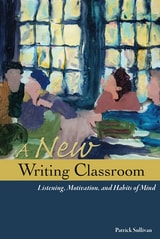
New Writing Classroom
Listening, Motivation, and Habits of MindPatrick Sullivan
Utah State University Press, 2014
In A New Writing Classroom, Patrick Sullivan provides a new generation of teachers a means and a rationale to reconceive their approach to teaching writing, calling into question the discipline's dependence on argument.
Including secondary writing teachers within his purview, Sullivan advocates a more diverse, exploratory, and flexible approach to writing activities in grades six through thirteen. A New Writing Classroom encourages teachers to pay more attention to research in learning theory, transfer of learning, international models for nurturing excellence in the classroom, and recent work in listening to teach students the sort of dialogic stance that leads to higher-order thinking and more sophisticated communication.
The conventional argumentative essay is often a simplistic form of argument, widely believed to be the most appropriate type of writing in English classes, but other kinds of writing may be more valuable to students and offer more important kinds of cognitive challenges. Focusing on listening and dispositions or "habits of mind” as central elements of this new composition pedagogy, A New Writing Classroom draws not just on composition studies but also on cognitive psychology, philosophy, learning theory, literature, and history, making an exciting and significant contribution to the field.
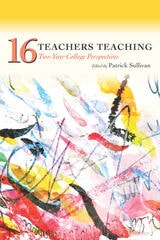
Sixteen Teachers Teaching
Two-Year College PerspectivesPatrick Sullivan
Utah State University Press, 2020
All of these teachers have spent their careers teaching multiple sections of writing classes each semester or term, so this book presents readers with an impressive—and perhaps unprecedented—abundance of pedagogical expertise, teaching knowledge, and classroom experience. Sixteen Teachers Teaching is a book filled with joyfulness, wisdom, and pragmatic advice. It has been designed to be a source of inspiration for high school and college English teachers as they go about their daily work in the classroom.
Contributors: Peter Adams, Jeff Andelora, Helane Adams Androne, Taiyon J. Coleman, Renee DeLong, Kathleen Sheerin DeVore, Jamey Gallagher, Shannon Gibney, Joanne Baird Giordano, Brett Griffiths, Holly Hassel, Darin Jensen, Jeff Klausman, Michael C. Kuhne, Hope Parisi, and Howard Tinberg
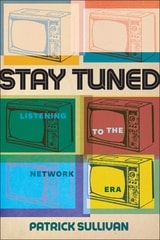
Stay Tuned
Listening to the Network EraPatrick Sullivan
Rutgers University Press, 2026
Since the 1950s, television flooded the American soundscape with not just pictures but sounds, a constant aural stream infiltrating domestic life. In Stay Tuned, Patrick Sullivan treats network-era television sound not as background noise or auxiliary signal but as a formative texture of aesthetic life in postwar America. He theorizes how television’s sonic forms—asynchronous audiovisuals, noises, affective rhythms, what he collectively terms “network aurality”—trouble traditional aesthetic theory. Stay Tuned takes up critiques of television sound and repurposes them as evidence of a deeper philosophical discomfort: Namely, that television sound does something to aesthetic categories that they weren’t built to handle. From the laugh track to the cartoon “boinks,” from noises to the jingle, Sullivan reads television sounds not as cultural detritus but as formal interventions—forcing a redefinition of what aesthetics means when form is mass-produced, commercial, and built for syndication. What emerges is not just a new theory and history of television sound but a reimagined account of aesthetic experience itself—expanded, recalibrated, and a little wacky.