Results by title
7 books match the query 'Sunstein, Cass R.'

Feminism and Political Theory
Edited by Cass R. Sunstein
University of Chicago Press, 1990
How to Humble a Wingnut and Other Lessons from Behavioral Economics
Cass R. Sunstein
University of Chicago Press, 2013
Law and Happiness
Edited by Eric A. Posner and Cass R. Sunstein
University of Chicago Press, 2010
Since the earliest days of philosophy, thinkers have debated the meaning of the term happiness and the nature of the good life. But it is only in recent years that the study of happiness—or “hedonics”—has developed into a formal field of inquiry, cutting across a broad range of disciplines and offering insights into a variety of crucial questions of law and public policy.
Law and Happinessbrings together the best and most influential thinkers in the field to explore the question of what makes up happiness—and what factors can be demonstrated to increase or decrease it. Martha Nussbaum offers an account of the way that hedonics can productively be applied to psychology, Cass R. Sunstein considers the unexpected relationship between happiness and health problems, Matthew Adler and Eric A. Posner view hedonics through the lens of cost-benefit analysis, David A. Weisbach considers the relationship between happiness and taxation, and Mark A. Cohen examines the role crime—and fear of crime—can play in people’s assessment of their happiness, and much more.
The result is a kaleidoscopic overview of this increasingly prominent field, offering surprising new perspectives and incisive analyses that will have profound implications on public policy.
Punitive Damages
How Juries DecideCass R. Sunstein, Reid Hastie, John W. Payne, David A. Schkade, and W. Kip Viscu
University of Chicago Press, 2002
But how do juries actually make decisions about punitive damages? To find out, the authors-experts in psychology, economics, and the law-present the results of controlled experiments with more than 600 mock juries involving the responses of more than 8,000 jury-eligible citizens. Although juries tended to agree in their moral judgments about the defendant's conduct, they rendered erratic and unpredictable dollar awards. The experiments also showed that instead of moderating juror verdicts, the process of jury deliberation produced a striking "severity shift" toward ever-higher awards. Jurors also tended to ignore instructions from the judges; were influenced by whatever amount the plaintiff happened to request; showed "hindsight bias," believing that what happened should have been foreseen; and penalized corporations that had based their decisions on careful cost-benefit analyses. While judges made many of the same errors, they performed better in some areas, suggesting that judges (or other specialists) may be better equipped than juries to decide punitive damages.
Using a wealth of new experimental data, and offering a host of provocative findings, this book documents a wide range of systematic biases in jury behavior. It will be indispensable for anyone interested not only in punitive damages, but also jury behavior, psychology, and how people think about punishment.
The Bill of Rights in the Modern State
Edited by Geoffrey R. Stone, Richard A. Epstein, and Cass R. Sunstein
University of Chicago Press, 1992
The contributors to this volume are among the most prominent constitutional scholars in the country. Most of the essays are grouped in pairs, each of which offers conflicting positions on current constitutional controversies, including property rights, freedom of religion, freedom of speech, levels of generality in constitutional interpreation, and unemumerated rights.
The contributors are: Bruce Ackerman, Mary E. Becker, Ronald Dworkin, Frank H. Easterbrook, Richard A. Epstein, Charles Fried, Mary Ann Glendon, Philip B. Kurland, Frank J. Michaelman, Michael W. McConnell, Richard A. Posner, Kathleen M. Sullivan, John Paul Stevens, David A. Strauss, and Cass R. Sunstein.
"A thoughtful and well coordinated set of exchanges between leading modern constitutional theorists about the most significant issues related to the Bill of Rights and the Welfare State. These issues are debated through penetrating essays by opposing theorists who get to the heart of these issues and provide significant answers to their debate opponents' points."—Thomas R. Van Dervort, Southeastern Political Review
The Vote
Bush, Gore, and the Supreme CourtEdited by Cass R. Sunstein and Richard A. Epstein
University of Chicago Press, 2001
The contributors to this volume were highly visible in the national media while the controversy raged, and here they present fully fleshed-out arguments for the positions they promoted on the airwaves. Readers will find in The Vote equally impassioned defenses for and indictments of the Court's actions, and they will come to understand the practical and theoretical implications of the Court's ruling in the realms of both law and politics. No doubt a spate of books will appear on the 2000 presidential election, but none will claim as distinguished a roster of contributors better qualified to place these recent events in their appropriate historical, legal, and political contexts.
Leading constitutional scholars render their verdicts on the 2000 presidential election controversy
Contributors:
Richard A. Epstein
Elizabeth Garrett
Samuel Issacharoff
Pamela S. Karlan
Michael W. McConnell
Frank I. Michelman
Richard H. Pildes
Richard A. Posner
David A. Strauss
Cass R. Sunstein
John Yoo
An earlier electronic edition of The Vote was available on the University of Chicago Press Web site.
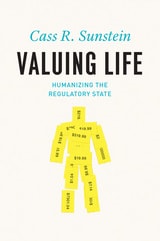
Valuing Life
Humanizing the Regulatory StateCass R. Sunstein
University of Chicago Press, 2014
As OIRA Administrator, Sunstein helped oversee regulation in a broad variety of areas, including highway safety, health care, homeland security, immigration, energy, environmental protection, and education. This background allows him to describe OIRA and how it works—and how it can work better—from an on-the-ground perspective. Using real-world examples, many of them drawn from today’s headlines, Sunstein makes a compelling case for improving cost-benefit analysis, a longtime cornerstone of regulatory decision-making, and for taking account of variables that are hard to quantify, such as dignity and personal privacy. He also shows how regulatory decisions about health, safety, and life itself can benefit from taking into account behavioral and psychological research, including new findings about what scares us, and what does not. By better accounting for people’s fallibility, Sunstein argues, we can create regulation that is simultaneously more human and more likely to achieve its goals.
In this highly readable synthesis of insights from law, policy, economics, and psychology, Sunstein breaks down the intricacies of the regulatory system and offers a new way of thinking about regulation that incorporates human dignity– and an insistent focus on the consequences of our choices.