Results by title
11 books match the query 'Superheroes in literature'
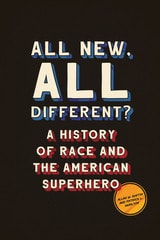
All New, All Different?
A History of Race and the American SuperheroBy Allan W. Austin and Patrick L. Hamilton
University of Texas Press, 2019
Winner, John G. Cawelti Award for the Best Textbook/Primer, Popular Culture Association/American Culture Association, 2019
MPCA/ACA Book Award, Midwest Popular Culture Association / Midwest American Culture Association, 2020
Taking a multifaceted approach to attitudes toward race through popular culture and the American superhero, All New, All Different? explores a topic that until now has only received more discrete examination. Considering Marvel, DC, and lesser-known texts and heroes, this illuminating work charts eighty years of evolution in the portrayal of race in comics as well as in film and on television.
Beginning with World War II, the authors trace the vexed depictions in early superhero stories, considering both Asian villains and nonwhite sidekicks. While the emergence of Black Panther, Black Lightning, Luke Cage, Storm, and other heroes in the 1960s and 1970s reflected a cultural revolution, the book reveals how nonwhite superheroes nonetheless remained grounded in outdated assumptions. Multiculturalism encouraged further diversity, with 1980s superteams, the minority-run company Milestone’s new characters in the 1990s, and the arrival of Ms. Marvel, a Pakistani-American heroine, and a new Latinx Spider-Man in the 2000s. Concluding with a discussion of contemporary efforts to make both a profit and a positive impact on society, All New, All Different? enriches our understanding of the complex issues of racial representation in American popular culture.
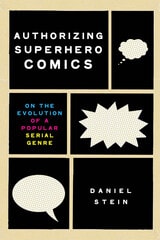
Authorizing Superhero Comics
On the Evolution of a Popular Serial GenreDaniel Stein
The Ohio State University Press, 2021
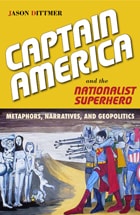
Captain America and the Nationalist Superhero
Metaphors, Narratives, and GeopoliticsJason Dittmer
Temple University Press, 2012
Nationalist superheroes—such as Captain America, Captain Canuck, and Union Jack—often signify the “nation-state” for readers, but how do these characters and comic books address issues of multiculturalism and geopolitical order? In his engaging book Captain America and the Nationalist Superhero, geographer Jason Dittmer traces the evolution of the comic book genre as it adapted to new national audiences. He argues that these iconic superheroes contribute to our contemporary understandings of national identity, the righteous use of power, and the role of the United States, Canada, and Britain in the world.
Tracing the nationalist superhero genre from its World War II origins to contemporary manifestations throughout the world, Captain America and the Nationalist Superhero analyzes nearly one thousand comic books and audience responses to those books. Dittmer also interviews key comic book writers from Stan Lee and J. M. DeMatteis to Steve Englehart and Paul Cornell.
At a time when popular culture is saturated with superheroes and their exploits, Captain America and the Nationalist Superhero highlights the unique relationship between popular culture and international relations.
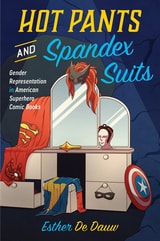
Hot Pants and Spandex Suits
Gender Representation in American Superhero Comic BooksEsther De Dauw
Rutgers University Press, 2021
Hot Pants and Spandex Suits offers a far-reaching look at how masculinity and femininity have been represented in American superhero comics, from the Golden and Silver Ages to the Modern Age. Scholar Esther De Dauw contrasts the bulletproof and musclebound phallic bodies of classic male heroes like Superman, Captain America, and Iron Man with the figures of female counterparts like Wonder Woman and Supergirl, who are drawn as superhumanly flexible and plastic. It also examines the genre’s ambivalent treatment of LGBTQ representation, from the presentation of gay male heroes Wiccan and Hulkling as a model minority couple to the troubling association of Batwoman’s lesbianism with monstrosity. Finally, it explores the intersection between gender and race through case studies of heroes like Luke Cage, Storm, and Ms. Marvel.
Hot Pants and Spandex Suits is a fascinating and thought-provoking consideration of what superhero comics teach us about identity, embodiment, and sexuality.
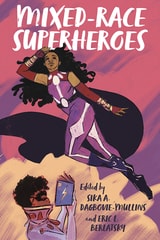
Mixed-Race Superheroes
Sika A. Dagbovie-Mullins
Rutgers University Press, 2021
The essays in this collection contend with the multitude of ways that racial mixedness has been presented in superhero comics, films, television, and literature. They explore how superhero media positions mixed-race characters within a genre that has historically privileged racial purity and propagated images of white supremacy. The book considers such iconic heroes as Superman, Spider-Man, and The Hulk, alongside such lesser-studied characters as Valkyrie, Dr. Fate, and Steven Universe. Examining both literal and symbolic representations of racial mixing, this study interrogates how we might challenge and rewrite stereotypical narratives about mixed-race identity, both in superhero media and beyond.
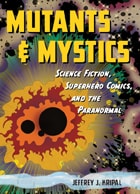
Mutants and Mystics
Science Fiction, Superhero Comics, and the ParanormalJeffrey J. Kripal
University of Chicago Press, 2011
But that's just scratching the surface, says Jeffrey Kripal. In Mutants and Mystics, Kripal offers a brilliantly insightful account of how comic book heroes have helped their creators and fans alike explore and express a wealth of paranormal experiences ignored by mainstream science. Delving deeply into the work of major figures in the field—from Jack Kirby’s cosmic superhero sagas and Philip K. Dick’s futuristic head-trips to Alan Moore’s sex magic and Whitley Strieber’s communion with visitors—Kripal shows how creators turned to science fiction to convey the reality of the inexplicable and the paranormal they experienced in their lives. Expanded consciousness found its language in the metaphors of sci-fi—incredible powers, unprecedented mutations, time-loops and vast intergalactic intelligences—and the deeper influences of mythology and religion that these in turn drew from; the wildly creative work that followed caught the imaginations of millions. Moving deftly from Cold War science and Fredric Wertham's anticomics crusade to gnostic revelation and alien abduction, Kripal spins out a hidden history of American culture, rich with mythical themes and shot through with an awareness that there are other realities far beyond our everyday understanding.
A bravura performance, beautifully illustrated in full color throughout and brimming over with incredible personal stories, Mutants and Mystics is that rarest of things: a book that is guaranteed to broaden—and maybe even blow—your mind.
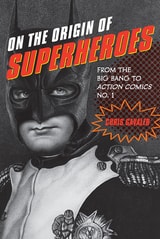
On the Origin of Superheroes
From the Big Bang to Action Comics No. 1Chris Gavaler
University of Iowa Press, 2015
From the creation of the universe, through mythological heroes and gods, to folklore, ancient philosophy, revolutionary manifestos, discarded scientific theories, and gothic monsters, the sweep and scale of the superhero’s origin story is truly epic. We will travel from Jane Austen’s Bath to Edgar Rice Burroughs’s Mars to Owen Wister’s Wyoming, with some surprising stops along the way. We’ll meet mad scientists, Napoleonic dictators, costumed murderers, diabolical madmen, blackmailers, pirates, Wild West outlaws, eugenicists, the KKK, Victorian do-gooders, detectives, aliens, vampires, and pulp vigilantes (to name just a few). Chris Gavaler is your tour guide through this fascinating, sometimes dark, often funny, but always surprising prehistory of the most popular figure in pop culture today. In a way, superheroes have always been with us: they are a fossil record of our greatest aspirations and our worst fears and failings.
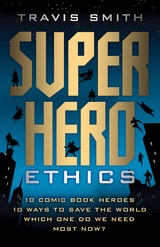
Superhero Ethics
10 Comic Book Heroes; 10 Ways to Save the World; Which One Do We Need Most Now?Travis Smith
Templeton Press, 2018
Although these outlandish figures—in their capes, masks, and tights, with their unbelievable origins and preternatural powers—are often dismissed as juvenile amusements, they really are profound metaphors for different approaches to shaping one’s character and facing the challenges of life.
But, given the choice, which superhero should we follow today? Who is most worthy of our admiration? Whose goals are most noble? Whose ethics should we strive to emulate?
To decide, Travis Smith takes ten top superheroes and pits them one against another, chapter by chapter. The hero who better exemplifies how we ought to live advances to the final round. By the end of the book, a single superhero emerges victorious and is crowned most exemplary for our times.
How, then, shall we live?
- How can we overcome our beastly nature and preserve our humanity? (The Hulk vs. Wolverine)
- How far can we rely on our willpower and imagination to improve the human condition? (Iron Man vs. Green Lantern)
- What limits must we observe when protecting our neighborhood from crime and corruption? (Batman vs. Spider-Man)
- Will the pursuit of an active life or a contemplative life bring us true fulfillment? (Captain America vs. Mr. Fantastic)
- Should we put our faith in proven tradition or in modern progress to achieve a harmonious society? (Thor vs. Superman)
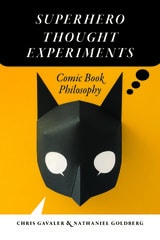
Superhero Thought Experiments
Comic Book PhilosophyChris Gavaler and Nathaniel Goldberg
University of Iowa Press, 2019
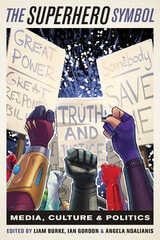
The Superhero Symbol
Media, Culture, and PoliticsLiam Burke
Rutgers University Press, 2020
It is hard to imagine a time when superheroes have been more pervasive in our culture. Today, superheroes are intellectual property jealously guarded by media conglomerates, icons co-opted by grassroots groups as a four-color rebuttal to social inequities, masks people wear to more confidently walk convention floors and city streets, and bulletproof banners that embody regional and national identities. From activism to cosplay, this collection unmasks the symbolic function of superheroes.
Bringing together superhero scholars from a range of disciplines, alongside key industry figures such as Harley Quinn co-creator Paul Dini, The Superhero Symbol provides fresh perspectives on how characters like Captain America, Iron Man, and Wonder Woman have engaged with media, culture, and politics, to become the “everlasting” symbols to which a young Bruce Wayne once aspired.
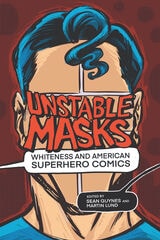
Unstable Masks
Whiteness and American Superhero ComicsEdited by Sean Guynes and Martin Lund
The Ohio State University Press, 2020
In Unstable Masks: Whiteness and American Superhero Comics, Sean Guynes and Martin Lund bring together a series of essays that contextualize the histories and stakes of whiteness studies, superhero comics, and superhero studies for academics, fans, and media-makers alike. The volume illustrates how the American comic book superhero is fundamentally a figure of white power and white supremacy and ultimately calls for diversity in superhero comics as well as a democratized media culture.
Contributors not only examine superhero narratives but also delve into the production, distribution, audience, and reception of those narratives, highlighting the imbrication of forces that have helped to create, normalize, question, and sometimes even subvert American beliefs about whiteness and race. Unstable Masks considers the co-constitutive nature of identity, representation, narrative, production and consumption, and historical and cultural contexts in forging the stereotypes that decide who gets to be a superhero and who gets to be American on the four-color pages of comic books.