Results by title
4 books match the query 'Survive'

Breakthrough Branding
Positioning Your Library to Survive and ThriveKent Jackson
American Library Association, 2013
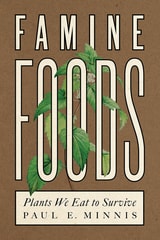
Famine Foods
Plants We Eat to SurvivePaul E. Minnis
University of Arizona Press, 2021
How people eat today is a record of food use through the ages—and not just the decadent, delicious foods but the less glamorous and often life-saving foods from periods of famine as well. In Famine Foods, Paul E. Minnis focuses on the myriad plants that have sustained human populations throughout the course of history, unveiling the those that people have consumed, and often still consume, to avoid starvation. For the first time, this book offers a fascinating overview of famine foods—how they are used, who uses them, and, perhaps most importantly, why they may be critical to sustain human life in the future.
In addition to a broader discussion of famine foods, Minnis includes fourteen short case studies that examine the use of alternative foods in human societies throughout the world, from hunter-gatherers to major nations. When environmental catastrophes, war, corrupt governments, annual hunger seasons, and radical agricultural policies have threatened to starve populations, cultural knowledge and memories of food shortages have been crucial to the survival of millions of people.Famine Foods dives deeply into the cultural contexts of famine food use, showing the curious, strange, and often unpleasant foods people have turned to in order to get by. There is not a single society or area of the world that is immune to severe food shortages, and gaining a deeper knowledge of famine foods will be relevant for the foreseeable future of humanity.
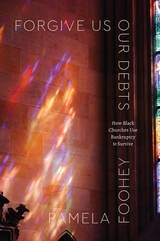
Forgive Us Our Debts
How Black Churches Use Bankruptcy to SurvivePamela Foohey
University of Chicago Press, 2026
A revelatory study of how Black churches turn the financial system back against predatory lenders.
When American churches face financial difficulties, a disproportionately high number of Black churches reorganize under chapter 11 bankruptcy. There are no easy explanations for this distinction: not location, denomination, leadership structure, or the reasons for the loans. In Forgive Us Our Debts, legal scholar Pamela Foohey asks why, then, Black churches account for two-thirds of all congregations that file for chapter 11 bankruptcy every year.
Drawing on case studies of six Black churches and one white church, and 150 interviews with church leaders, members, and attorneys, Foohey finds answers in a long history of predatory lending. Unable to negotiate with recalcitrant loan officers, Black churches turn to the legal system to force reasonable concessions from lenders to prevent the stripping of their wealth and the destruction of their communities. While the structural discrimination remains, these churches have found in the bankruptcy system a refuge and some power to fight back.
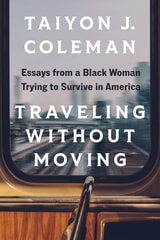
Traveling without Moving
Essays from a Black Woman Trying to Survive in AmericaTaiyon J. Coleman
University of Minnesota Press, 2024
A stunning lyrical commentary on the constructions of race, gender, and class in the fraught nexus of a Black woman’s personal experience and cultural history
The Fair Housing Act passed in 1968, and more than fifty years later, yours seems to be the only Black family on your block in Minneapolis. You and your Black African husband, both college graduates, make less money than some White people with a felony record and no high school diploma. You’re the only Black student in your graduate program. You just aren’t working hard enough. You’re too sensitive. Sandra Bland? George Floyd? Don't take everything so personally. Amid the White smiles of Minnesota Nice and the Minnesota Paradox—the insidious racism of an ostensibly inclusive place to live—what do you do? If you’re Taiyon J. Coleman, you write.
In Traveling without Moving, Coleman shares intimate essays from her life: her childhood in Chicago—growing up in poverty with four siblings and a single mother—and the empowering decision to leave her first marriage. She writes about being the only Black student in a prestigious and predominantly White creative writing program, about institutional racism and implicit bias in writing instruction, about the violent legacies of racism in the U.S. housing market, about the maternal health disparities seen across the country and their implication in her own miscarriage. She explores what it means to write her story and that of her family—an act at once a responsibility and a privilege—bringing forth the inherent contradictions between American ideals and Black reality.
Using a powerful blend of perspectives that move between a first-person lens of lived experience and a wider-ranging critique of U.S. culture, policy, and academia, Coleman’s writing evinces how a Black woman in America is always on the run, always Harriet Tubman, traveling with her babies in tow, seeking safety, desperate to survive, thrive, and finally find freedom.
Retail e-book files for this title are screen-reader friendly.