Results by title
20 books match the query 'Surviving'
Confident Pluralism
Surviving and Thriving through Deep DifferenceJohn D. Inazu
University of Chicago Press, 2016
In Confident Pluralism, John D. Inazu analyzes the current state of the country, orients the contemporary United States within its broader history, and explores the ways that Americans can—and must—strive to live together peaceably despite our deeply engrained differences. Pluralism is one of the founding creeds of the United States—yet America’s society and legal system continues to face deep, unsolved structural problems in dealing with differing cultural anxieties and differing viewpoints. Inazu not only argues that it is possible to cohabitate peacefully in this country, but also lays out realistic guidelines for our society and legal system to achieve the new American dream through civic practices that value toleration over protest, humility over defensiveness, and persuasion over coercion.
The paperback edition includes a new preface that addresses the election of Donald Trump, the decline in civic discourse after the election, the Nazi march in Charlottesville, and more, this new edition of Confident Pluralism is an essential clarion call during one of the most troubled times in US history. Inazu argues for institutions that can work to bring people together as well as political institutions that will defend the unprotected. Confident Pluralism offers a refreshing argument for how the legal system can protect peoples’ personal beliefs and differences and provides a path forward to a healthier future of tolerance, humility, and patience.
Confident Pluralism
Surviving and Thriving through Deep DifferenceJohn D. Inazu
University of Chicago Press, 2018
In Confident Pluralism, John D. Inazu analyzes the current state of the country, orients the contemporary United States within its broader history, and explores the ways that Americans can—and must—strive to live together peaceably despite our deeply engrained differences. Pluralism is one of the founding creeds of the United States—yet America’s society and legal system continues to face deep, unsolved structural problems in dealing with differing cultural anxieties and differing viewpoints. Inazu not only argues that it is possible to cohabitate peacefully in this country, but also lays out realistic guidelines for our society and legal system to achieve the new American dream through civic practices that value toleration over protest, humility over defensiveness, and persuasion over coercion.
With a new preface that addresses the election of Donald Trump, the decline in civic discourse after the election, the Nazi march in Charlottesville, and more, this new edition of Confident Pluralism is an essential clarion call during one of the most troubled times in US history. Inazu argues for institutions that can work to bring people together as well as political institutions that will defend the unprotected. Confident Pluralism offers a refreshing argument for how the legal system can protect peoples’ personal beliefs and differences and provides a path forward to a healthier future of tolerance, humility, and patience.
Confident Pluralism
Surviving and Thriving through Deep DifferenceJohn D. Inazu
University of Chicago Press, 2018
In the years since Donald Trump first announced his plans to run for president, the United States seems to become more dramatically polarized and divided with each passing month. There are seemingly irresolvable differences in the beliefs, values, and identities of citizens across the country that too often play out in our legal system in clashes on a range of topics such as the tensions between law enforcement and minority communities. How can we possibly argue for civic aspirations like tolerance, humility, and patience in our current moment?
In Confident Pluralism, John D. Inazu analyzes the current state of the country, orients the contemporary United States within its broader history, and explores the ways that Americans can—and must—strive to live together peaceably despite our deeply engrained differences. Pluralism is one of the founding creeds of the United States—yet America’s society and legal system continues to face deep, unsolved structural problems in dealing with differing cultural anxieties and differing viewpoints. Inazu not only argues that it is possible to cohabitate peacefully in this country, but also lays out realistic guidelines for our society and legal system to achieve the new American dream through civic practices that value toleration over protest, humility over defensiveness, and persuasion over coercion.
With a new preface that addresses the election of Donald Trump, the decline in civic discourse after the election, the Nazi march in Charlottesville, and more, this new edition of Confident Pluralism is an essential clarion call during one of the most troubled times in US history. Inazu argues for institutions that can work to bring people together as well as political institutions that will defend the unprotected. Confident Pluralism offers a refreshing argument for how the legal system can protect peoples’ personal beliefs and differences and provides a path forward to a healthier future of tolerance, humility, and patience.
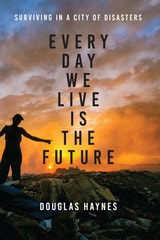
Every Day We Live Is the Future
Surviving in a City of DisastersBy Douglas Haynes
University of Texas Press, 2017
When she was only nine, Dayani Baldelomar left her Nicaraguan village with nothing more than a change of clothes. She was among tens of thousands of rural migrants to Managua in the 1980s and 1990s. After years of homelessness, Dayani landed in a shantytown called The Widows, squeezed between a drainage ditch and putrid Lake Managua. Her neighbor, Yadira Castellón, also migrated from the mountains. Driven by hope for a better future for their children, Dayani, Yadira, and their husbands invent jobs in Managua’s spreading markets and dumps, joining the planet’s burgeoning informal economy. But a swelling tide of family crises and environmental calamities threaten to break their toehold in the city.
Dayani’s and Yadira’s struggles reveal one of the world’s biggest challenges: by 2050, almost one-third of all people will likely live in slums without basic services, vulnerable to disasters caused by the convergence of climate change and breakneck urbanization. To tell their stories, Douglas Haynes followed Dayani’s and Yadira’s families for five years, learning firsthand how their lives in the city are a tightrope walk between new opportunities and chronic insecurity. Every Day We Live Is the Future is a gripping, unforgettable account of two women’s herculean efforts to persevere and educate their children. It sounds a powerful call for understanding the growing risks to new urbanites, how to help them prosper, and why their lives matter for us all.
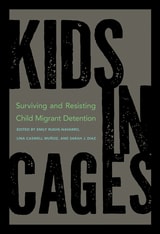
Kids in Cages
Surviving and Resisting Child Migrant DetentionEdited by Emily Ruehs-Navarro, Lina Caswell Muñoz, and Sarah J. Diaz
University of Arizona Press, 2024
In recent years, the plight of immigrant children has been in the national spotlight. A primary issue of concern is the experience of child migrants in detention by the U.S. government.
The authors in this volume approach the topic of child migrant detention from a range of perspectives. Some authors, particularly those who provide a legal perspective, chronicle the harms of detention, arguing that despite governmental assurances of child protection, detention is fundamentally a state-sanctioned form of violence. The social scientists in the volume have worked closely with detained youth themselves; in these chapters, authors highlight the ways in which youth survive detention, often through everyday acts of resistance and through the formation of temporary relationships. Practitioners including psychologists, activists, and faith leaders look at forms of resistance to detention. From retheorizing psychological interventions for detained youth to forming hospitality homes that act as alternatives to detention, these practitioners highlight ways forward for advocates of youth. At the heart of these narratives lies a crucial debate: the tension between harm-reduction strategies and abolition.
This interdisciplinary work brings together voices from the legal realm, the academic world, and the on-the-ground experiences of activists and practitioners.
Contributors
Stella Akello
Jessica Alaniz
Aireen Grace Andal
Samuel Arroyo
Corey Brost
Lina Caswell Muñoz
Marisa Chumil
Patricia Crowley
Iman Dadras
Sarah J. Diaz
Sandra Espinoza
Jacqueline Florian
Michael Gosch
Darlene Gramigna
Lisa Jacobs
Katherine Kaufka Walts
Corinne Kentor
Jenn M. Lilly
Kathlyn Mulcahy
Jennifer Nagda
Vida Opoku
Silvia Rodriguez Vega
Emily Ruehs-Navarro
Herlin Soto-Matute
Luis Edward Tenorio
Jajah Wu
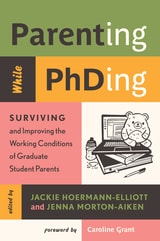
Parenting While PhDing
Surviving and Improving the Working Conditions of Graduate Student ParentsJackie Hoermann-Elliott
Rutgers University Press, 2025
Featuring contributions from more than forty current and former graduate students raising children, Parenting While PhDing offers valuable advice for students and administrators. Parents will get practical recommendations on both child care and self-care, learning how to form supportive personal and professional networks while establishing a healthy work/life balance. The collection also offers thoughtful suggestions on how to make graduate programs less toxic and more inclusive.
Recognizing that not all graduate students have similar backgrounds or needs, Parenting While PhDing features a diverse range of viewpoints, including queer, trans, disabled, BIPOC, immigrant, and first-generation college students. The authors represent a variety of disciplines, from the natural and social sciences to the humanities and health care professions. Together, they share fresh perspectives on the experiences of graduate students with children and offer strategies they can use to navigate the dual pressures of the academy and parenting.
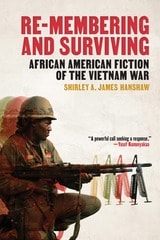
Re-Membering and Surviving
African American Fiction of the Vietnam WarShirley A. James Hanshaw
Michigan State University Press, 2020
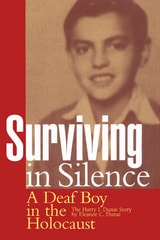
Surviving in Silence
A Deaf Boy in the Holocaust, The Harry I. Dunai StoryEleanor C. Dunai
Gallaudet University Press, 2002
Izrael Zachariah Deutsch was born on March 15, 1934, in Komjata, Czechoslovakia. The second youngest child, Izrael lived a bucolic existence with nine brothers and sisters on a farm, differing from them only in that he was deaf. When he was six, his mother took him to Budapest, Hungary, and enrolled him in a Jewish school for deaf children, where he thrived. Soon, however, the Nazi regime in Germany and the Arrow Cross fascists in Hungary destroyed Izrael’s world forever.
Izrael realized that by being both Jewish and deaf, he faced a double threat of being exported to the gas chambers in Poland. But at every lethal junction, he found a way to survive, first by buying and reselling pastries for extra money that later saved his life in the Budapest ghetto. Still, Izrael was close to death from starvation when he was liberated by Russian soldiers on January 18, 1945.
Izrael survived the war only to learn that his parents and two brothers had been murdered by the Nazis. The rest of his brothers and sisters scattered to distant parts of the world. Forced to remain in Budapest, Izrael finished school and became an accomplished machinist. He avoided any part in the Hungarian uprising in 1956 so that he could secure a visa to leave for Sweden. From Sweden he traveled throughout Europe and Israel, using an amazing network of Holocaust survivors, relatives, and deaf friends to ease his journey. He finally settled in Los Angeles, where he married a deaf Jewish woman he had met years before. Along the way, he changed his name from Izrael Deutsch to Harry Dunai.
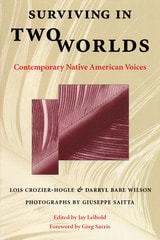
Surviving in Two Worlds
Contemporary Native American VoicesBy Lois Crozier-Hogle and Darryl Babe Wilson
University of Texas Press, 1997
Surviving in Two Worlds brings together the voices of twenty-six Native American leaders. The interviewees come from a variety of tribal backgrounds and include such national figures as Oren Lyons, Arvol Looking Horse, John Echohawk, William Demmert, Clifford Trafzer, Greg Sarris, and Roxanne Swentzell.
Their interviews are divided into five sections, grouped around the themes of tradition, history and politics, healing, education, and culture. They take readers into their lives, their dreams and fears, their philosophies and experiences, and show what they are doing to assure the survival of their peoples and cultures, as well as the earth as a whole. Their analyses of the past and present, and especially their counsels for the future, are timely and urgent.

Surviving the Age of Virtual Reality
Thomas Langan
University of Missouri Press, 2000
As the technological phenomenon known as the worldwide web permeates civilization, it creates some cultures and destroys others. In this pioneering book, philosopher Thomas Langan explores "virtual reality"Can inherently contradictory phrase"and the effects of technology on our very being. In our present-day high- technology environment, making simple, everyday decisions is difficult because the virtual world we've created doesn't necessarily operate according to the old "common sense." To retain our intellectual fitness, we must, Langan argues, consider these essential questions: If virtual reality is, in fact, reality, what is this life that we are caught up in? What is being within the context of virtual reality? How can we establish a system for distinguishing truth from fiction?
Although technology minimizes distances between people and makes the information they seek more accessible, it simultaneously blurs the line dividing fact from falsehood and real from virtual. An individual's intellectual survival is threatened as technological advancement challenges our collective understanding of what reality is. Because much of the information that is presented as fact simply works to fulfill a specific agenda, we cannot accept as truth everything that appears on the internet or in the media. To survive, we must learn to manage our lives and resources despite the flood of information we are bombarded with daily.
Addressing the general educated reader, Surviving the Age of Virtual Reality expertly interweaves the worlds of technology and philosophy, pushing the analysis of this technological and human phenomenon to new depths.
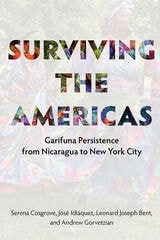
Surviving the Americas
Garifuna Persistence from Nicaragua to New York CitySerena Cosgrove, José Idiáquez, Leonard Joseph Bent, and Andrew Gorvetzian
University of Minnesota Press, 2020
In Surviving the Americas, Serena Cosgrove, José Idiáquez, Leonard Joseph Bent, and Andrew Gorvetzian shed light on what it means to be Garifuna today, particularly in Nicaragua. Their research includes over nine months of fieldwork in Garifuna communities in the Pearl Lagoon on the southern Caribbean coast of Nicaragua and in New York City. The resulting ethnography illustrates the unique social issues of the Nicaraguan Garifuna and how their culture, traditions, and reverence for their ancestors continues to persist.
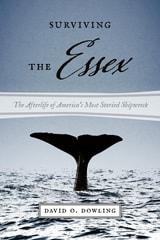
Surviving the Essex
The Afterlife of America's Most Storied ShipwreckDavid O. Dowling
University Press of New England, 2016
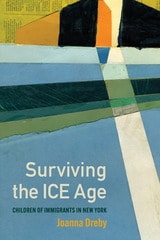
Surviving the ICE Age
Children of Immigrants in New YorkJoanna Dreby
Russell Sage Foundation, 2025
Dreby shows that a restrictive approach to immigration creates problems over time and across generations. These issues occur regardless of one’s citizenship status and go beyond deportations. Despite having pride in their heritage, her interviewees did not talk much about immigration. She refers to this unwillingness—and at times, inability—to speak about immigration as silencing. Silencing in a community or family is often intended to protect children, but this can leave them with little information about their backgrounds and status, leading to fear and anxiety instead. Self-silencing often resulted from traumatic experiences tied to enforcement episodes, which sometimes took the form of memory loss or emotional withholding. Dreby finds that experiences with the immigration system that disrupted relationships in a child’s household arising from family separations, moves, or changing roles in the family had especially long-term effects, causing, at times, ongoing mental health issues. Even the risk of immigration involvement left some young adults feeling vulnerable and undermined their sense of safety and security as U.S. citizens.
Dreby also highlights stories that offer hope. Young adults developed strategies to persevere, and children who grew up in communities and families that openly talked about migration felt empowered and fared much better, especially when they had access to resources, such as adequate food and shelter, mental health services, and community support. Dreby calls for policies and practices to mitigate the harms of restrictive migratory control on children’s wellbeing, such avoiding the arrest of parents in front of children and ensuring that U.S. citizen children’s interests are considered in immigration court without their direct involvement.
Surviving the ICE Age details the generational harms caused by U.S. immigration policy and offers suggestions for a better way forward.
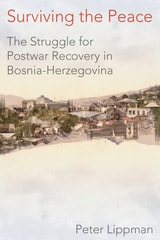
Surviving the Peace
The Struggle for Postwar Recovery in Bosnia-HerzegovinaPeter Lippman
Vanderbilt University Press, 2019
Essential reading for students of the former Yugoslavia and anyone interested in postwar or post-genocide studies, Surviving the Peace is an instant classic of long-form reporting, an impossible accomplishment without a lifetime of dedication to a place and people.
Peter Lippman's website is http://survivingthepeace.org/.
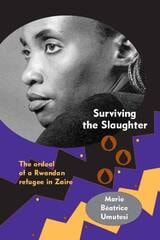
Surviving the Slaughter
The Ordeal of a Rwandan Refugee in ZaireMarie Beatrice Umutesi; Foreword by Catharine Newbury
University of Wisconsin Press, 2004
Though the world was stunned by the horrific massacres of Tutsi by the Hutu majority in Rwanda beginning in April 1994, there has been little coverage of the reprisals that occurred after the Tutsi gained political power. During this time hundreds of thousands of Hutu were systematically hunted and killed.
Surviving the Slaughter: The Ordeal of a Rwandan Refugee in Zaire is the eyewitness account of Marie Béatrice Umutesi. She tells of life in the refugee camps in Zaire and her flight across 2000 kilometers on foot. During this forced march, far from the world’s cameras, many Hutu refugees were trampled and murdered. Others died from hunger, exhaustion, and sickness, or simply vanished, ignored by the international community and betrayed by humanitarian organizations. Amidst this brutality, day-to-day suffering, and desperate survival, Umutesi managed to organize the camps to improve the quality of life for women and children.
In this first-hand account of inexplicable brutality, day-to-day suffering, and survival, Marie Béatrice Umutesi sheds light on a backlash of violence that targeted the Hutu refugees of Rwanda after the victory of the Rwandan Patriotic Front in 1994. Umutesi’s documentation of the flight and terror of these years provides the world a veritable account of a history that is still widely unknown. After translations from its original French into three other languages, this important book is available in English for the first time. It is more than a testimony to the lives and humanity lost; it is a call for those politicians, military personnel, and humanitarian organizations responsible for the atrocious crimes—and the devastating silence—to be held accountable.
“Umutesi’s tale, told with honesty and eloquence, is a tribute to the human spirit, a searing indictment of the agents who perpetrated these horrors, and a reproach to those who turned away.”—Catharine Newbury, African Studies Review
“Restores a human dimension that has been lacking in the history of the genocide and massacres in Rwanda.”—Danielle de Lame, African Studies Review
“A vivid account of the grueling nightmare experienced by tens of thousands of Rwandan civilians whom the world had deliberately forsaken. . . . An outstanding call for justice.”—Aloys Habimama, African Studies Review
“A towering work. . . . An epic for our times, a tale to ponder for the lessons it conveys, testimony so powerful and moving that it reaches an unintended literary greatness.”—Jan Vansina, African Studies Review
“Of all the current books and films ten years after the Rwandan genocide, none is more effective than Surviving the Slaughter . . . . This book carries one along, often as if running with the refugees.”—Anne Serafin, Multicultural Review
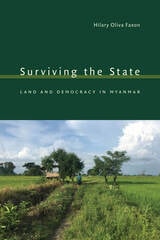
Surviving the State
Land and Democracy in MyanmarHilary Oliva Faxon
Duke University Press, 2026

Surviving the Upheaval of Arctic War
Evacuation and Return of the Sámi People in Sápmi and Finland During and After the Second World WarVeli-Pekka Lehtola
University of Alaska Press, 2021

The Hand Book
Surviving in a Germ-Filled WorldMiryam Z. Wahrman
Brandeis University Press, 2016
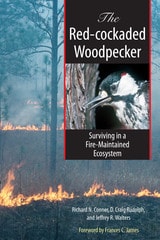
The Red-cockaded Woodpecker
Surviving in a Fire-Maintained EcosystemBy Richard Conner, D. Craig Rudolph, and Jeffrey R. Walters
University of Texas Press, 2001
Though small among its woodpecker relatives, the Red-cockaded Woodpecker poses a huge dilemma for its human neighbors. Uniquely adapted to live in the old-growth pine forests of the southeastern United States, the Red-cockaded Woodpecker has nearly disappeared as the forests have been cleared for agricultural, commercial, and residential uses over the last two centuries. Today, it waits at a crossroads. Scientific management practices could restore the woodpecker's habitat and population, but the imperative to convert old-growth forests to other uses remains.
In this book, three of the leading experts on the Red-cockaded Woodpecker offer a comprehensive overview of all that is currently known about its biology and natural history and about the ecology of the fire-maintained forests it requires for survival. As the most visible endangered species in the Southeast, and the one whose conservation impacts the largest land area, the Red-cockaded Woodpecker holds a compelling interest not only for ornithologists, but also for wildlife managers, foresters, developers, environmentalists, and government officials. For all of these groups, this book will be the essential resource for learning more about the Red-cockaded Woodpecker and ensuring its survival.

Woman Of The Boundary Waters
Canoeing, Guiding, Mushing, and SurvivingJustine Kerfoot
University of Minnesota Press, 1994