Results by title
4 books match the query 'Sweat'
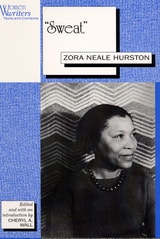
"Sweat"
Written by Zora Neale HurstonWall, Cheryl A
Rutgers University Press, 1997
Now frequently anthologized, Zora Neale Hurston's short story "Sweat" was first published in Firell, a legendary literary magazine of the Harlem Renaissance, whose sole issue appeared in November 1926. Among contributions by Gwendolyn Bennett, Countee Cullen, Langston Hughes, and Wallace Thurman, "Sweat" stood out both for its artistic accomplishment and its exploration of rural Southern black life. In "Sweat" Hurston claimed the voice that animates her mature fiction, notably the 1937 novel Their Eyes Were Watching God; the themes of marital conflict and the development of spiritual consciousness were introduced as well. "Sweat" exemplifies Hurston's lifelong concern with women's relation to language and the literary possibilities of black vernacular.
This casebook for the story includes an introduction by the editor, a chronology of the author's life, the authoritative text of "Sweat," and a second story, "The Gilded Six-Bits." Published in 1932, this second story was written after Hurston had spent years conducting fieldwork in the Southern United States. The volume also includes Hurston's groundbreaking 1934 essay, "Characteristics of Negro Expression," and excerpts from her autobiography, Dust Tracks on a Road. An article by folklorist Roger Abrahams provides additional cultural contexts for the story, as do selected blues and spirituals. Critical commentary comes from Alice Walker, who led the recovery of Hurston's work in the 1970s, Robert Hemenway, Henry Louis Gates, Gayl Jones, John Lowe, Kathryn Seidel, and Mary Helen Washington.
Blood, Sweat, and Fear
Violence at Work in the North American Auto Industry, 1960-80Jeremy Milloy
University of Illinois Press, 2017
Explosive and original, Blood, Sweat, and Fear brings historical perspective to contemporary debates about North American workplace violence.
By the Sweat of the Brow
Literature and Labor in Antebellum AmericaNicholas K. Bromell
University of Chicago Press, 1993
In chapters on Thoreau, Melville, Hawthorne, Rebecca Harding Davis, Susan Warner, Harriet Beecher Stowe, and Frederick Douglass, Nicholas Bromell argues that American writers generally sensed a deep affinity between the mental labor of writing and such bodily labors as blacksmithing, house building, housework, mothering, and farming. Combining literary and social history, canonical and noncanonical texts, primary source material, and contemporary theory, Bromell establishes work as an important subject of cultural criticism.
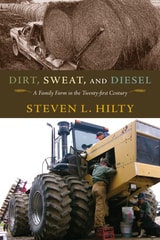
Dirt, Sweat, and Diesel
A Family Farm in the Twenty-first CenturySteven L. Hilty
University of Missouri Press, 2016
With very few people engaged in agriculture today, it is no surprise that most Americans have little understanding of the challenges that modern farmers face. This book provides readers a glimpse into life on a modern Missouri farm where a variety of grains, grass seed, corn, and cattle are produced. All of the conversations, events, and descriptions are drawn from the author’s experience working alongside and observing this father and son family farm operation during the course of a year.
Farming today is technologically complex and requires a broad set of skills that range from soil conservation, animal husbandry, and mechanics to knowledge of financial markets and computer technology. The focus on skills, in addition to the size of the financial risks, and the number of unexpected challenges along the way provides readers with a new perspective and appreciation for modern farm life.