Results by title
2 books match the query 'Swirski, Peter'
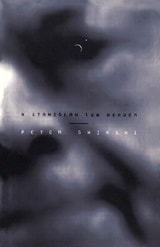
A Stanislaw Lem Reader
Peter Swirski
Northwestern University Press, 1997
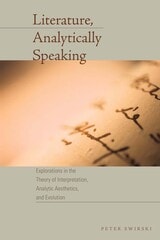
Literature, Analytically Speaking
Explorations in the Theory of Interpretation, Analytic Aesthetics, and EvolutionBy Peter Swirski
University of Texas Press, 2010
In a new approach to interdisciplinary literary theory, Literature, Analytically Speaking integrates literary studies with analytic aesthetics, girded by neo-Darwinian evolution. Scrutinizing narrative fiction through a lens provided by analytic philosophy, revered literary theorist Peter Swirski puts new life into literary theory while fashioning a set of practical guidelines for critics in the interpretive trenches.
Dismissing critical inquirers who deny intention its key role in the study of literary reception, Swirski extends the defense of intentionality to art and to human behavior in general. In the process, Swirski takes stock of the recent work in evolutionary theory, arguing that the analysis of narrative truth may be grounded in the neo-Darwinian paradigm which forms the empirical backbone behind his analytic approach. Literature, Analytically Speaking provides a series of precepts designed to capture the ways in which we do interpret (and ought to interpret) works of literature. Reflecting a resounding shift from the poststructuralist paradigm, Swirski's lively and colorful presentation, backed up by a dazzling variety of examples and case studies, reconceptualizes the aesthetics of literature and literary studies.