Results by title
5 books match the query 'Synagogues'
Alternatives to Assimilation
The Response of Reform Judaism to American Culture, 1840–1930Alan Silverstein
Brandeis University Press, 1995
Explores the influence of American culture and history on the development of Reform Jewish institutions. Brandeis Series in American Jewish History, Culture, and Life.
[more]
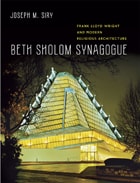
Beth Sholom Synagogue
Frank Lloyd Wright and Modern Religious ArchitectureJoseph M. Siry
University of Chicago Press, 2011
In a suburb just north of Philadelphia stands Beth Sholom Synagogue, Frank Lloyd Wright’s only synagogue and among his finest religious buildings. Designated a National Historic Landmark in 2007, Beth Sholom was one of Wright’s last completed projects, and for years it has been considered one of his greatest masterpieces.
But its full story has never been told. Beth Sholom Synagogue provides the first in-depth look at the synagogue’s conception and realization in relation to Wright’s other religious architecture. Beginning with his early career at Adler and Sullivan’s architectural firm in Chicago and his design for Unity Temple and ending with the larger works completed just before or soon after his death, Joseph M. Siry skillfully depicts Wright’s exploration of geometric forms and structural techniques in creating architecture for worshipping communities. Siry also examines Wright’s engagement with his clients, whose priorities stemmed from their denominational identity, and the effect this had on his designs—his client for Beth Sholom, Rabbi Mortimer Cohen, worked with Wright to anchor the building in the traditions of Judaism even as it symbolized the faith’s continuing life in postwar America. With each of his religious projects, Wright considered questions of social history and cultural identity as he advanced his program for an expressive, modern American architecture. His search to combine these agendas culminated in Beth Sholom, where the interplay of light, form, and space create a stunning and inspiring place of worship.
Filled with over three hundred illustrations, this remarkable book takes us deep inside the synagogue’s design, construction, and reception to bring us an illuminating portrait of the crowning achievement of this important aspect of Wright’s career.
[more]

Invention of the First-Century Synagogue
Lidia D. Matassa
SBL Press, 2018
[more]
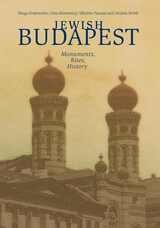
Jewish Budapest
Monuments, Rites, HistoryGéza Komoróczy
Central European University Press, 1999
As a painting by Chagall unfolds layer upon layer when viewed carefully, so does the city in Jewish Budapest. Neither a guidebook or a history in the traditional sense, this book is about the Jewish face of Budapest from medieval times to the present. To get the broadest possible perspective, this book is not only about the Hungarian capital as a Jewish city but, as befits a cosmopolitan metropolis, delves into its myriad elements. There was and is, as Jewish Budapest strikingly reveals, a Roman and a Greek – Catholic Budapest, a Lutheran and a Calvinist Budapest, a German, a Serbian and a Gypsy Budapest. All these are brought into play as backdrop to the main narrative about the history of Jews in Buda, Obuda, and Pest. Past and present Jewish life as an organic part of the life of the Hungarian capital Budapest – be it memory or living reality. Richly illustrated with wonderfully evocative literary line drawings and photos, the book includes a lavish, full-colour section of artwork that enhances the text. Here is a book at once personal and universal. It is about everyday Jewish life, the humor, the pathos, the human condition, which is the same or very similar anywhere in the Diaspora. Every image and incident, every happening is filtered through the strong sensibilities of the key citizens of the city throughout the past few centuries. Remarkable citizens personified by the likes of Theodor Herzl and Joseph Pulitzer. The city is itself the central character of this book. The authors write only about those parts where there is a story to tell. They talk about places where history is still visible, where it can be located, where its traces still exist, where it can be tasted, savoured, and where it surrounds us as part of life in Budapest today. Jewish Budapest amasses huge amounts of lore about the city, its monuments and relics, its language and scholarship, its cultural heart, and its intellectual core. Jewish Budapest proceeds according to the chronological sequence of the birth of the Jewish quarters in the city, focusing on patterns of settlement and occupation, and demography, and unfolds finally into a vision of the future of Jewish life in this remarkably vibrant, venerable city. The book includes a section of detailed comments on the illustrations with an explanation of the abbreviations throughout as well as a bibliography, an index of personal names, an index of cities and towns, and an index of Budapest street addresses.
[more]
Pennies for Heaven
The History of American Synagogues and MoneyDaniel Judson
Brandeis University Press, 2018
In the annals of American Jewish history, synagogue financial records have been largely overlooked. But as Daniel Judson shows in his examination of synagogue ledgers from 1728 to the present, these records provide an array of new insights into the development of American synagogues and the values of the Jews who worshipped in them. Looking at the history of American synagogues through an economic lens, Judson examines how synagogues raised funds, financed buildings, and paid clergy. By “following the money,” he reveals the priorities of the Jewish community at a given time. Throughout the book, Judson traces the history of capital campaigns and expenditures for buildings. He also explores synagogue competition and debates over previously sold seats, what to do about wealthy widows, the breaking down of gender norms, the hazan “bubble” (which saw dozens of overpaid cantors come to the United States from Europe), the successful move to outlaw “mushroom synagogues,” and the nascent synagogue-sharing economy of the twenty-first century. Judson shows as well the ongoing relationship of synagogue and church financing as well as the ways in which the American embrace of the free market in all things meant that the basic rules of supply and demand ultimately prevailed in the religious as well as the commercial realm.
[more]