Results by title
34 books match the query 'Syria'

A Bed for the King's Daughter
Stories by Shahla Ujayli; translated by Sawad Hussain
University of Texas Press, 2020
A groundbreaking collection of experimental short fiction by award-winning Syrian author and Booker International Prize for Arabic Fiction nominee Shahla Ujayli, A Bed for the King’s Daughter uses surrealism and irony to examine such themes as women’s agency, the decline of collective life and imagination under modernity, and the effects of social and political corruption on daily life. In “The Memoir of Cinderella’s Shoes,” Cinderella uses her famous glass slipper as a weapon in order to take justice into her own hands. In “Tell Me About Surrealism,” an art history professor’s writing assignment reveals the slipperiness of storytelling, and in “Merry Christmas,” the realities of apartheid interfere with one family’s celebration. Through twenty-two short stories, Ujayli animates—with brevity and inventiveness—themes relevant to both the particularities of life in the Arab world and life outside it.
A Theory of ISIS
Political Violence and the Global OrderMohammad-Mahmoud Ould Mohamedou
Pluto Press, 2017
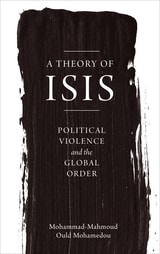
Against these established narratives, Mohammad-Mahmoud Ould Mohamedou now presents his new theory of ISIS. Tracing the genealogy of ISIS and documenting its evolution in Iraq and Syria, he argues that ISIS has actually transcended Osama Bin Laden’s original scheme of Al Qaeda, mutating into a unprecedented hybrid between postcolonial violence, postmodernity, and postglobalization. A Theory of ISIS offers an original take on the militant group. Mohamedou explains the proliferation of terrorist attacks on the West and deepens our understanding of the group's impact on the very nature of contemporary political violence.
A Woman in the Crossfire
Diaries of the Syrian RevolutionSamar Yazbek
Haus Publishing, 2012
Ambiguities of Domination
Politics, Rhetoric, and Symbols in Contemporary SyriaLisa Wedeen
University of Chicago Press, 1999
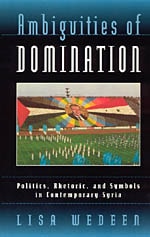
Wedeen concludes that Asad's cult acts as a disciplinary device, generating a politics of public dissimulation in which citizens act as if they revered their leader. By inundating daily life with tired symbolism, the regime exercises a subtle, yet effective form of power. The cult works to enforce obedience, induce complicity, isolate Syrians from one another, and set guidelines for public speech and behavior. Wedeen's ethnographic research demonstrates how Syrians recognize the disciplinary aspects of the cult and seek to undermine them. Provocative and original, Ambiguities of Domination is a significant contribution to comparative politics, political theory, and cultural studies.
Ambiguities of Domination
Politics, Rhetoric, and Symbols in Contemporary SyriaLisa Wedeen
University of Chicago Press, 2015
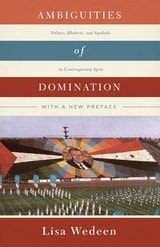
Wedeen shows how such flagrantly fictitious claims were able to produce a politics of public dissimulation in which citizens acted as if they revered the leader. By inundating daily life with tired symbolism, the regime exercised a subtle, yet effective form of power. The cult worked to enforce obedience, induce complicity, isolate Syrians from one another, and set guidelines for public speech and behavior. Wedeen‘s ethnographic research demonstrates how Syrians recognized the disciplinary aspects of the cult and sought to undermine them. In a new preface, Wedeen discusses the uprising against the Syrian regime that began in 2011 and questions the usefulness of the concept of legitimacy in trying to analyze and understand authoritarian regimes.
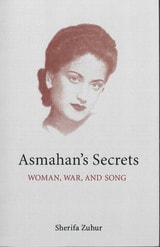
Asmahan's Secrets
Woman, War, and SongBy Sherifa Zuhur
University of Texas Press, 2001
The great Arab singer Asmahan was the toast of Cairo song and cinema in the late 1930s and early 1940s, as World War II approached. She remained a figure of glamour and intrigue throughout her life and lives on today in legend as one of the shaping forces in the development of Egyptian popular culture. In this biography, author Sherifa Zuhur does a thorough study of the music and film of Asmahan and her historical setting.
A Druze princess actually named Amal al-Atrash, Asmahan came from an important clan in the mountains of Syria but broke free from her traditional family background, left her husband, and became a public performer, a role frowned upon for women of the time.
This unique biography of the controversial Asmahan focuses on her public as well as her private life. She was a much sought-after guest in the homes of Egypt's rich and famous, but she was also rumored to be an agent for the Allied forces during World War II.
Through the story of Asmahan, the reader glimpses not only aspects of the cultural and political history of Egypt and Syria between the two world wars, but also the change in attitude in the Arab world toward women as public performers on stage. Life in wartime Cairo comes alive in this illustrated account of one of the great singers of the Arab world, a woman who played an important role in history.
Authoritarian Apprehensions
Ideology, Judgment, and Mourning in SyriaLisa Wedeen
University of Chicago Press, 2019
Drawing on extensive fieldwork and a variety of Syrian artistic practices, Wedeen lays bare the ideological investments that sustain ambivalent attachments to established organizations of power and contribute to the ongoing challenge of pursuing political change. This masterful book is a testament to Wedeen’s deep engagement with some of the most troubling concerns of our political present and future.
Disease and Diplomacy
Weaponizing Medical Aid to Syrian Refugees in JordanSigrid Lupieri
University of Michigan Press, 2026
When millions of Syrians fled civil war after 2011, international donors and humanitarian organizations mobilized to provide assistance to neighboring countries. Focusing on Jordan—one of the world’s largest refugee hosting states—Disease and Diplomacy investigates how medical aid to refugees operates as an instrument of diplomacy and control within the global refugee system. It argues that health, far from being an apolitical humanitarian good, is a bargaining tool that states commodify to extract resources and concessions.
Drawing on years of field research, interviews, and policy analysis, the book shows how the Jordanian government, international donors, and humanitarian agencies turned healthcare for refugees into a tool for negotiating power, resources, and responsibility. In these cases, refugees, caught within these negotiations, often found their access to care determined not by medical need, but by political calculation. Developing the concept of the weaponization of medical aid, the book extends theories of migration diplomacy and refugee rentierism to show how global power dynamics shape who receives healthcare. The analysis identifies a self-reinforcing “crisis loop” that privileges short-term, highly visible responses while neglecting chronic and long-term needs. Disease and Diplomacy advances an interdisciplinary framework for understanding how humanitarian practices reinforce global inequalities and argues for more equitable approaches to refugee health and responsibility-sharing in the international system.
Displacing Territory
Syrian and Palestinian Refugees in JordanKaren Culcasi
University of Chicago Press, 2023
Based on fieldwork with Palestinian and Syrian refugees in Jordan, Displacing Territory explores how the lived realities of refugees are deeply affected by their imaginings of what constitutes territory and their sense of belonging to different places and territories. Karen Culcasi shows how these individual conceptualizations about territory don’t always fit the Western-centric division of the world into states and territories, thus revealing alternative or subordinated forms and scales of territory. She also argues that disproportionate attention to “refugee crises” in the Global North has diverted focus from other parts of the world that bear the responsibility of protecting the majority of the world’s refugees. By focusing on Jordan, a Global South state that hosts the world’s second-largest number of refugees per capita, this book provides insights to consider alternate ways to handle the situation of refugees elsewhere. In the process, Culcasi brings the reader into refugees’ diverse realities through their own words, inherently arguing against the tendency of many people in the Global North to see refugees as aberrant, burdensome, or threatening.
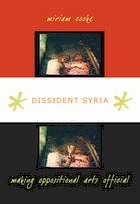
Dissident Syria
Making Oppositional Arts Officialmiriam cooke
Duke University Press, 2007
A renowned scholar of Arab cultures, cooke spent six months in Syria during the mid-1990s familiarizing herself with the country’s literary scene, particularly its women writers. While she was in Damascus, dissidents told her that to really understand life under Hafiz Asad, she had to speak with playwrights, filmmakers, and, above all, the authors of “prison literature.” She shares what she learned in Dissident Syria. She describes touring a sculptor’s studio, looking at the artist’s subversive work as well as at pieces commissioned by the government. She relates a playwright’s view that theater is unique in its ability to stage protest through innuendo and gesture. Turning to film, she shares filmmakers’ experiences of making movies that are praised abroad but rarely if ever screened at home. Filled with the voices of writers and artists, Dissident Syria reveals a community of conscience within Syria to those beyond its borders.
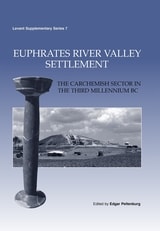
Euphrates River Valley Settlement
The Carchemish Sector in the Third Millennium BCE. Peltenburg
Council for British Research in the Levant, 2007

Excavations at Tel Nebi Mend, Syria Volume I
Peter J. Parr
Council for British Research in the Levant, 2015
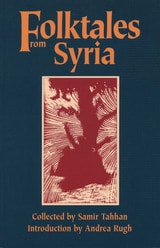
Folktales from Syria
Collected by Samir Tahhan
University of Texas Press, 2004
Syrian poet Samir Tahhan collected folktales from old men sitting outside their houses in Aleppo, drinking tea. Afraid these stories would disappear with the passing of this generation, Tahhan also went to halls and events to hear professional storytellers and record their performances. Anthropologist Andrea Rugh helped translate the resulting two volumes of stories from the original Arabic and wrote the informative introduction to this one-volume collection.
Some of the tales appeared in rhyming verse in Arabic and some were based on events that are said to have actually taken place in Aleppo. Rugh explains the concepts of the most popular types of Syrian story structures: the gissa, the hikaya, and the hudutha. With two of the poems, the Arabic and the English are shown side by side in order to demonstrate the internal poetic structures of the original rhymes.
With their emphasis on morality and social values, the tales will be familiar to Western audiences. Another value for the reader is finding the accepted social values and behaviors that Arab adults try to inculcate in their younger generation, often through complex characterizations. Teasing out these meanings gives the reader an appreciation for the act of translation and hints of the power of the Arabic language in prose and poetry.
Professional illustrator Douglas Rugh has provided the book's black-and-white prints based on the stories and his experiences as a child growing up in the Middle East.

Let Jasmine Rain Down
Song and Remembrance among Syrian JewsKay Kaufman Shelemay
University of Chicago Press, 1998
Shelemay views the intersection of music, individual remembrances, and collective memory through the pizmonim. Reconstructing a century of pizmon history in America based on research in New York, Mexico, and Israel, she explains how verbal and musical memories are embedded in individual songs and how these songs perform both what has been remembered and what otherwise would have been forgotten. In confronting issues of identity and meaning in a postmodern world, Shelemay moves ethnomusicology into the domain of memory studies.
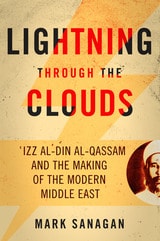
Lightning through the Clouds
?Izz al-Din al-Qassam and the Making of the Modern Middle EastBy Mark Sanagan
University of Texas Press, 2020
Lightning through the Clouds is the first English-language life-and-times biography of ‘Izz al-Din al-Qassam, a preeminent figure who helped to reshape the political and religious landscape of the region. A Syrian-born, Egyptian-educated cleric, he went from the battlefields of World War I to join the anticolonialist fight against the French in Syria. Sentenced to be executed by the French military, he managed to escape to Palestine, where he became an increasingly popular presence, moved by the plight of the poor and disenfranchised. Outraged by British rule and the encroachment of Zionism, he formed a secret society to resist the colonization of Palestine first by the British and then by Jewish immigrants from Europe, once again taking up arms and advocating for a moral, political, and military jihad as the only solution. His death at the hands of Palestine Police in 1935 drew thousands to his funeral and sparked the 1936–1939 Arab Revolt.
His influence continues to be felt in the region; for example, the military wing of the Palestinian Hamas organization is named the ‘Izz al-Din al-Qassam Brigades. Al-Qassam is either revered or reviled, depending on the observers’ perspective, but he is without doubt a fascinating and historically significant individual whose influence on the past, and our present, makes this examination of his life both important and timely.
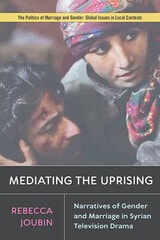
Mediating the Uprising
Narratives of Gender and Marriage in Syrian Television DramaRebecca Joubin
Rutgers University Press, 2020
While for some screenwriters a return to pre-2011 life would be welcome after so much bloodshed, others advocated profound cultural and social transformation, instead. They employed marriage and gender metaphors in the stories they wrote to engage in political critique, even at the risk of creating marketing difficulties for the shows or they created escapist stories such as transnational adaptations and Old Damascus tales. Serving as heritage preservation, Mediating the Uprising underscores that television drama creators in Syria have many ways of engaging in protest, with gender and marriage at the heart of the polemic.
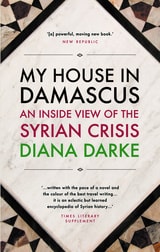
My House in Damascus
An Inside View of the Syrian CrisisDiana Darke
Haus Publishing, 2014
Diana Darke, a fluent Arabic speaker who moved to Damascus in 2004 after decades of regular visits, details how the Assad regime, and its relationship to the people, differs from the regimes in Egypt, Tunisia, and Libya—and why it was thus always less likely to collapse quickly, even in the face of widespread unrest and violence. Through the author’s firsthand experiences of buying and restoring a house in the old city of Damascus, which she later offered as a sanctuary to friends, Darke presents a clear picture of the realities of life on the ground and what hope there is for Syria’s future. Including additional material on topics like the advance of the Islamic State, as well as a new epilogue describing the current turmoil surrounding her house and the refugees she tried to help, this edition of My House in Damascus powerfully documents the human cost of the ongoing civil war.
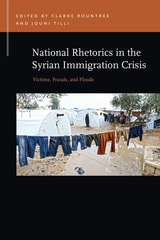
National Rhetorics in the Syrian Immigration Crisis
Victims, Frauds, and FloodsClarke Rountree
Michigan State University Press, 2019
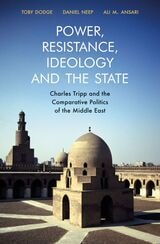
Power, Resistance, Ideology and the State
Charles Tripp and the Comparative Politics of the Middle EastEdited by Daniel Neep, Toby Dodge, and Ali M. Ansari
Gingko, 2025
Power, Resistance, Ideology and the State: Charles Tripp and the Comparative Politics of the Middle East seeks to present a new understanding of a region of unprecedented volatility, where postcolonial projects of state-driven development have now expired, old ruling elites have been delegitimized, and political Islam discredited. The work of Charles Tripp, professor at the School of Oriental and African Studies (SOAS) for over three decades, has shaped a distinct approach to the study of Middle East politics with an analytical sensibility that is empirically rich, theoretically insightful, and historically sensitive. This volume brings together contributions from ten political scientists and historians from across Europe, the United States, and the Middle East, each of which takes Tripp’s work as an intellectual point of departure for studying Middle East politics.
Against this background, the contributors explore the contemporary developments that have emerged to fill the intellectual and material shortcomings created by the systemic failures of economics and politics in the region.
The contributions focus on four themes that are central to an understanding of Middle East politics—power, resistance, ideology, and the state—to examine political trends in cases ranging from Iran and Iraq to Jordan, Lebanon, and Syria. Each chapter combines extensive field research and a knowledge of regional politics with methodological and philosophical reflexivity to produce a collection of papers at the cutting edge of contemporary Middle East Studies.
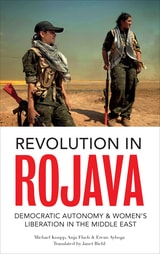
Revolution in Rojava
Democratic Autonomy and Women's Liberation in the Syrian KurdistanMichael Knapp, Ercan Ayboga, and Anja Flach
Pluto Press, 2016
Revolution in Rojava tells the story of Rojava's groundbreaking experiment in what they call democratic confederalism, a communally organized democracy that is fiercely anti-capitalist and committed to female equality, while rejecting reactionary nationalist ideologies.
Rooted in the ideas of imprisoned Kurdish leader Abdullah Ocalan, the system is built on effective gender quotas, bottom-up democratic structures, far-sighted ecological policies, and a powerful militancy that has allowed the region to keep ISIS at bay.
Given the widespread violence and suffering in Syria, it's not unreasonable that outsiders look at the situation as unrelentingly awful. And while the reality of the devastation is undeniable, there is reason for hope in at least one small pocket of the nation: the cantons of Rojava in Syrian Kurdistan, where in the wake of war people are quietly building one of the most progressive societies in the world today. Chapters here include:
*Rojava's Diverse Cultures
*Democratic Confederalism
*The Liberation
*A Women's Revolution
*Democratic Autonomy in Rojava
*Civil Society Associations
*The Theory of the Rose: Defense
*The New Justice System
*Democratization of Education
*Health Care
*The Social Economy
*Ecological Challenges
This first full-length study of democratic developments in Rojava tells an extraordinary and powerfully hopeful story of a little-known battle for true freedom in dark times. With excellent first-hand background information about this important, but little understood struggle, Revolution in Rojava will educate and inspire the reader to learn more about Rojava, Syria, and the fight for change in one of the world’s most dangerous regions.
Schooling for Refugee Children
A Social Justice Perspective Informed by Children from SyriaEleanore Hargreaves, Brian Lally, Bassel Akar, Jumana Al-Waeli, and Jasmine Costello
University College London, 2024
Schooling for Refugee Children is a collaboration between five authors who explore their interactions with refugee children displaced from Syria to the Lebanese borders and London. Through a program of carefully tailored research activities, the authors analyze the children’s representations of their journeys and current circumstances, particularly focusing on questions of ongoing schooling in the face of displacement. The children’s experiences are expressed through their own words and drawings, disrupting the stereotype of children as receivers rather than empowered actors, and challenging traditional solutions for improving schooling. Throughout, the children are eloquent about their schooling in the context of displacement. Their views and illustrations depict a keen awareness of social justice issues, including the distribution of wealth, recognition of status, and representation of voice. In this way, the book brings to light important representations of some empowering experiences lived through by refugee children from Syria, as well as their thoughts on what has helped their learning and what can be done better. The children’s need for care and a sense of belonging in their schools and their new communities is given particular emphasis throughout the book, represented by one child, who simply requested, “Add some more love!”
Schooling for Refugee Children is invaluable for educators, policymakers, and anyone interested in refugee education and social justice. By centering the voices of refugee children, the book sheds light on their unique perspectives and needs, challenging conventional approaches to improving schooling for displaced populations.
Searching for Solidarity
Revolutionary Dreams and Radical Social MovementsNoor Ghazal Aswad
The Ohio State University Press, 2025
Shooting a Revolution
Visual Media and Warfare in SyriaDonatella Della Ratta
Pluto Press, 2018
Drawing on a decade of ethnographic research conducted in Syria and neighboring countries, Donatella Della Ratta examines here how the networked age shapes contemporary warfare, from conflict on the ground to the performance of violence on the screen. Her findings present a stark parallel to the digital democracy offered by techno-utopians, delving into the dark side of web 2.0 practices, where visual regimes of representation and media production are put in service of modes of destruction.
A vivid account of the politics of Syria’s visual media, from commercial television to citizen journalism and Daesh propaganda, Shooting a Revolution offers fascinating insight into the media’s role in transforming conflict zones in the digital age.
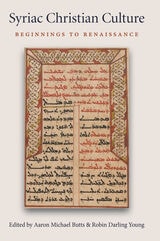
Syriac Christian Culture
Beginnings to RenaissanceAaron Michael Butts
Catholic University of America Press, 2021
The Correspondence of Theodoret of Cyrus
The Collectio Sirmondiana, Volume 4John F. Theodoret of Cyrus
Catholic University of America Press, 2025
The Correspondence of Theodoret of Cyrus
The Collectio Sirmondiana, Volume 5John F. Theodoret of Cyrus
Catholic University of America Press, 2025
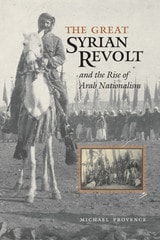
The Great Syrian Revolt and the Rise of Arab Nationalism
By Michael Provence
University of Texas Press, 2005
The Great Syrian Revolt of 1925 was the largest and longest-lasting anti-colonial insurgency in the inter-war Arab East. Mobilizing peasants, workers, and army veterans, rather than urban elites and nationalist intellectuals, it was the first mass movement against colonial rule in the Middle East. The revolt failed to liberate Syria from French occupation, but it provided a model of popular nationalism and resistance that remains potent in the Middle East today. Each subsequent Arab uprising against foreign rule has repeated the language and tactics of the Great Syrian Revolt.
In this work, Michael Provence uses newly released secret colonial intelligence sources, neglected memoirs, and popular memory to tell the story of the revolt from the perspective of its participants. He shows how Ottoman-subsidized military education created a generation of leaders of modest background who came to rebel against both the French Mandate rulers of Syria and the Syrian intellectuals and landowners who helped the colonial regime to function. This new popular nationalism was unprecedented in the Arab world. Provence shows compellingly that the Great Syrian Revolt was a formative event in shaping the modern Middle East.
The Kin Who Count
Family and Society in Ottoman Aleppo, 1770-1840By Margaret L. Meriwether
University of Texas Press, 1999
The history of the Middle Eastern family presents as many questions as there are currently answers. Who lived together in the household? Who married whom and for how long? Who got a piece of the patrimonial pie? These are the questions that Margaret Meriwether investigates in this groundbreaking study of family life among the upper classes of the Ottoman Empire in the pre-modern and early modern period.
Meriwether recreates Aleppo family life over time from records kept by the Islamic religious courts that held jurisdiction over all matters of family law and property transactions. From this research, she asserts that the stereotype of the large, patriarchal patrilineal family rarely existed in reality. Instead, Aleppo's notables organized their families in a great diversity of ways, despite the fact that they were all members of the same social class with widely shared cultural values, acting under the same system of family law. She concludes that this had important implications for gender relations and demonstrates that it gave women more authority and greater autonomy than is usually acknowledged.
The Making of Arab Americans
From Syrian Nationalism to U.S. CitizenshipBy Hani J. Bawardi
University of Texas Press, 2014
The Resistance Network
The Armenian Genocide and Humanitarianism in Ottoman Syria, 1915–1918Khatchig Mouradian
Michigan State University Press, 2021
The Summers
Ronya Othmann, translated by Gary Schmidt
University of Wisconsin Press, 2023
Leyla’s sexual awakening proves far less traumatic than her growing disenchantment with her German classmates and friends, who appear completely indifferent to the fate of her Yazidi community. Thoughtful and poignant, The Summers addresses issues of gender, sexuality, cultural difference, politics, and identity. Othmann draws readers into multiple worlds, ultimately revealing the hopes and dreams that bind us all together when forces threaten to tear us apart.
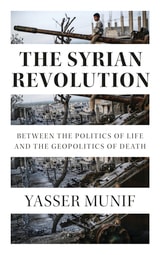
The Syrian Revolution
Between the Politics of Life and the Geopolitics of DeathYasser Munif
Pluto Press, 2020
Having lived in Syria for over fifteen years, Yasser Munif is expert in exploring the micropolitics of revolutionary forces. He uncovers how cities are managed, how precious food is distributed and how underground resistance thrives in regions controlled by regime forces. In contrast, the macropolitics of the elite Syrian regime are undemocratic, destructive and counter-revolutionary. Regional powers, Western elites, as well as international institutions choose this macropolitical lens to apprehend the Syrian conflict. By doing so, they also choose to ignore the revolutionaries' struggles.
By looking at the interplay between the two sides, case studies of Aleppo and Manbij and numerous firsthand interviews, Yasser Munif shows us that this macro and geopolitical authoritarianism only brings death, and that by looking at the smaller picture - the local, the grassroots, the revolutionaries - we can see the politics of life emerge.
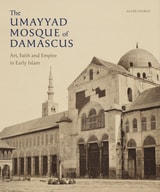
The Umayyad Mosque of Damascus
Art, Faith and Empire in Early IslamAlain George
Gingko, 2020
The Umayyad Mosque of Damascus is one of the oldest continuously used religious sites in the world. The mosque we see today was built in 705 CE by the Umayyad caliph al-Walid on top of a fourth-century Christian church that had been erected over a temple of Jupiter. Incredibly, despite the recent war, the mosque has remained almost unscathed, but over the centuries has been continuously rebuilt after damage from earthquakes and fires. In this comprehensive biography of the Umayyad Mosque, Alain George explores a wide range of sources to excavate the dense layers of the mosque’s history, also uncovering what the structure looked like when it was first built with its impressive marble and mosaic-clad walls. George incorporates a range of sources, including new information he found in three previously untranslated poems written at the time the mosque was built, as well as in descriptions left by medieval scholars. He also looks carefully at the many photographs and paintings made by nineteenth-century European travelers, particularly those who recorded the building before the catastrophic fire of 1893.
War in Syria and the Middle East
A Political and Economic HistoryFederico Manfredi Firmian
University of Texas Press, 2025
A wide-ranging examination of the causes of war in Syria and the Middle East.
In War in Syria and the Middle East, Federico Manfredi Firmian uses historical, political, and economic lenses to examine how Syria’s civil war is part of a broad pattern of social breakdown increasingly prevalent across the Arab and Islamic worlds. This expansive book argues that many conflicts across the Middle East today are rooted in fundamental ideological divides that originated with European imperialism. In Syria, the iniquities of French rule gave way to the radicalism of the Arab Socialist Baʿth Party, which promised to dismantle imperial legacies and capitalist logics through nationalizations, land redistribution, and central planning.
Baʿthist Syria, however, ultimately failed to provide a viable alternative to capitalism. In fact, its failures, and the failures of other revolutionary regimes of socialist inspiration, provided an opening for armed Islamist movements to challenge both secular authoritarian rule and US foreign policies—ultimately leading to civil war. Combining a multidisciplinary approach with fieldwork, War in Syria and the Middle East argues for a global perspective on a pressing, ongoing conflict.