Results by title
16 books match the query 'System'
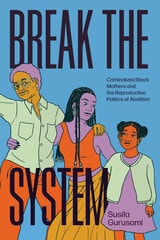
Break the System
Criminalized Black Mothers and the Reproductive Politics of AbolitionSusila Gurusami
University of Chicago Press, 2026
Upends the “broken systems” myth and reveals how the law deliberately criminalizes and punishes Black women, inflicting lasting harm on Black communities in the process.
The United States has one of the highest rates of incarceration in the world, with Black Americans representing a disproportionate share of theimprisoned. Many view this statistic as evidence of a broken system. But sociologist Susila Gurusami argues that the carceral system that so disproportionately harms Black families is not broken at all. In fact, it works just as it was intended. Looking closely at the lives of formerly incarcerated Black mothers, Gurusami shows how state institutions—the criminal-legal, child welfare, and healthcare systems—keep Black mothers from their families, harming Black communities in the process. She also shows how Black women work towards conditions that seem impossible—and even utopian—as part of their everyday mothering labor, but find themselves criminalized for these same actions.
Drawing on ethnographic data and interviews with formerly incarcerated Black women in South Los Angeles, Gurusami challenges dominant assumptions about mothering and criminal justice reform. Gurusami finds that criminalized Black women endure multigenerational political, social, and embodied assaults–what she calls “reproductive warfare”— and still, they build networks, practices, and theories of radical care that protect Black maternal life, legacies, and futures. With incarcerated, formerly incarcerated, and system-impacted Black mothers at the forefront of the growing movement to abolish prisons and jails, Gurusami demonstrates how their everyday mothering work—what she calls “abolitionist motherwork”—is essential to imagining the end of incarceration and ultimately achieving it.
Written with a tender and honest voice, Break the System shares moving vignettes that underscore why we must break the system, rather than reform it, and why we must imagine a future that is radically different than the one we’re told we must accept or salvage.
COVID Diagnosed the System
Lessons from the Pandemic in Massachusetts PrisonsBridget Conley
Rutgers University Press, 0
The American criminal justice system was in flux in 2020, a clash of possibilities for reform, retrenchment, and radical change—nowhere more so than in Massachusetts, which had just passed major criminal justice reform. The COVID-19 pandemic interrupted the moment with life-threatening force, ravaging people held in prisons and jails across the country. However, it did not so much create new deprivations and suffering as it exposed prisons as sites of physical, institutional, and psychological violence that do not make communities safer. At the same time, advocates for people in prisons—including many incarcerated and formerly incarcerated people—seized on the pandemic’s disruptions to demand change. Detailing the first year of the pandemic inside the Massachusetts state prison system, this book argues that the history of the pandemic inside prisons exposed both the cruelties of incarceration and the power of change when it is led by directly affected people.
Immanuel Wallerstein and the Problem of the World
System, Scale, CultureDavid Palumbo-Liu, Bruce Robbins, and Nirvana Tanoukhi, eds.
Duke University Press, 2011
Contributors. Gopal Balakrishnan, Tani E. Barlow, Neil Brenner, Richard E. Lee, Franco Moretti, David Palumbo-Liu, Bruce Robbins, Helen Stacy, Nirvana Tanoukhi, Immanuel Wallerstein, Kären Wigen

Implicating the System
Judicial Discourses in Sentencing of Indigenous WomenElspeth Kaiser-Derrick
University of Manitoba Press, 2019
Long Way Home
A Young Man Lost in the System and the Two Women Who Found HimLaura Caldwell
Northwestern University Press, 2012
By all accounts, Jovan Mosley was a good kid. He was working on a way out of his tough Chicago neighborhood and had been accepted at Ohio State University when he was forced to confess to a murder he did not commit. He then spent five years and ten months in jail without a trial. His efforts to exonerate himself got him nowhere until he happened to meet a successful criminal defense lawyer, Catharine O’Daniel. She became convinced of his innocence and took him on as her first pro bono client. Along with Laura Caldwell, she decided to fight to free Jovan. Against enormous odds, they finally won some measure of justice. In this affecting memoir, Caldwell tells the unforgettable story of a breakdown in the criminal justice system and what it took to free an innocent man.
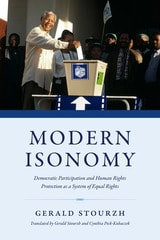
Modern Isonomy
Democratic Participation and Human Rights Protection as a System of Equal RightsGerald Stourzh
University of Chicago Press, 2021
The ideal, Stourzh argues, is a state, and indeed a world, in which individual rights, including the right to participate in politics equally, are clearly defined and possessed by all. Stourzh begins with ancient Greek thought contrasting isonomy—which is associated with the rule of the many—with “gradated societies,” oligarchies, and monarchies. He then discusses the American experiment with the development of representative democracy as well as the French Revolution, which proclaimed that all people are born and remain free and with equal rights. But progress on the creation and protection of rights for all has been uneven. Stourzh discusses specifically the equalization of slaves, peasants, women, Jews, and indigenous people. He demonstrates how deeply intertwined the protection of equal rights is with the development of democracy and gives particular attention to the development of constitutional adjudication, notably the constitutional complaint of individuals. He also discusses the international protection human rights. Timely and thought-provoking, Modern Isonomy is an erudite exploration of political and human rights.

Moving Against the System
The 1968 Congress of Black Writers and the Shaping of Global Black ConsciousnessEdited by David Austin
Pluto Press, 2018
Against a backdrop of widespread racism in the West and ongoing colonialism and imperialism in the Global South, this group of activists, writers, and political figures gathered to discuss the history and struggles of people of African descent and the meaning of black power.
For the first time since 1968, David Austin brings alive the speeches and debates of the most important international gathering of black radicals of the era. With never-before-seen texts from Stokely Carmichael, Walter Rodney and C.L.R. James, these documents will prove invaluable to anyone interested in black radical thought and political activism of the 1960s.

Political Philosophy 2
The System of Philosophies of HistoryLuc Ferry
University of Chicago Press, 1992
Ferry begins this second volume of his ambitious three-volume Political Philosophy by considering both the structure and the potential political effects of the various philosophies of history born of German Idealism. He focuses on the key question of whether, and to what extent, the principle of reason may be said to govern the totality of the historically real. This leads to an examination of Hegel's criticism of the moral view of the world and to an assessment of the phenomenological criticism of Hegel put forth by Heidegger and Arendt.
Screwing the System and Making it Work
Juvenile Justice in the No-Fault SocietyMark D. Jacobs
University of Chicago Press, 1990
Spirit and System
Media, Intellectuals, and the Dialectic in Modern German CultureDominic Boyer
University of Chicago Press, 2005
Boyer analyzes the creation and mediation of the social knowledge of "German-ness" from nineteenth-century university culture and its philosophies of history, to the media systems and redemptive public cultures of the Third Reich and the German Democratic Republic, to the present-day experiences of former East German journalists seeking to explain life in post-unification Germany. Throughout this study, Boyer reveals how dialectical knowledge of "German-ness"—that is, knowledge that emphasizes a cultural tension between an inner "spirit" and an external "system" of social life —is modeled unconsciously upon intellectuals' self-knowledge as it tracks their fluctuation between alienation and utopianism in their interpretations of nation and modernity.
System and Succession
The Social Bases of Political Elite RecruitmentBy John D. Nagle
University of Texas Press, 1977
System and Succession provides a comparative analysis of the social composition of national political leadership in the United States, Russia, Germany, and Mexico. These systems were chosen as case studies because their forms of government are representative of many others, because they are conveniently suited for comparison, and because they have high internal control over their own means of recruitment. Drawing on a mass of data and an extensive bibliography, Nagle's comprehensive study exhibits a mastery of the intricacies of these four quite divergent political systems. Complete time-series data covering several generations of elite recruitment provide the basis for a new methodological approach to comparative elite analysis.
The author investigates, among other issues, elite displacements associated with revolution, economic crises, and postwar peace and prosperity. Especially important differences along class and generational lines are found in the elite displacements associated with the revolutions in Germany (1918), Russia (1917–1921), and Mexico (1910–1920). The American case serves as a nonrevolutionary control case. The overriding theoretical issue throughout System and Succession is the debate among Marxists, radical democrats, and pluralists over the importance of elite social composition for equitable representation of social or class interests. Nagle develops a convincing argument supporting the Marxist thesis that the importance of class in elite recruitment is a defining characteristic of the political system.
System and Succession will be of particular interest to scholars in comparative politics. Political scientists in other areas, as well as historians and sociologists interested in the four countries examined, will also find this book provocative.
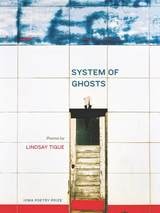
System of Ghosts
Lindsey Tigue
University of Iowa Press, 2016
Rooted in the personal, the speaker of this collection moves through society and history, with the aim of firmly placing herself within her own life and loss. Facts become an essential bridge between spatial and historical boundaries. She connects us to the disappearance of species, abandoned structures, and heartbreak—abandoned spaces that tap into the searing grief woven into society’s public places. There is solace in research, one system this collection uses to examine the isolation of contemporary life alongside personal, historical, and ecological loss. While her poems are intimate and personal, Tigue never turns away from the larger contexts within which we all live.
System of Ghosts is, at its core, an act of reaching out—across time, space, history, and across the room.

Test and Diagnosis of Analogue, Mixed-signal and RF Integrated Circuits
The system on chip approachYichuang Sun
The Institution of Engineering and Technology, 2008

The Genius of the System
Hollywood Filmmaking in the Studio EraThomas Schatz
University of Minnesota Press, 2010

The Play in the System
The Art of Parasitical ResistanceAnna Watkins Fisher
Duke University Press, 2020
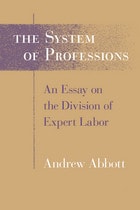
The System of Professions
An Essay on the Division of Expert LaborAndrew Abbott
University of Chicago Press, 1988