Results by title
3 books match the query 'Szporluk, Larissa'

Isolato
Larissa Szporluk
University of Iowa Press, 2000
The short lyric poems in Larissa Szporluk's new collection, Isolato, search for meaning and beauty—for poetry—in an unpredictable and incomprehensible world. Their voices break from the contemporary preoccupation with autobiography, held together by language rather than a sustained narrative or plot. Yet the narrative fragments clearly evoke certain themes and moods: interaction of and struggle between the human and natural world; violence, particularly against women and children; alienation and betrayal; the mysteries of the universe, God, and death; and, of course, poetry itself.
Variously called a religious, a metaphysical, or a visionary poet, Szporluk has been compared to Emily Dickinson and George Herbert as well as to twentieth-century poets like Sylvia Plath, Mark Strand, and Louise Glück. Her work is concise, experimental, and challenging. Language and syntax are often elusive, the logic that of dreams or music, the imagery mysterious. The poems, once read, are not easily dismissed. Like the poet's “Deer Crossing the Sea,”readers find “the promise of nectar / haunts them forever, the shore pecked out / of their eyes, and there, in its stead, / something greater to catch, / a scent that would paralyze God.”
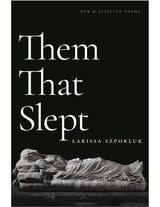
Them That Slept
New & Selected PoemsLarissa Szporluk
Tupelo Press, 2026
A selection of poems that form a narrative about psychological and spiritual somnambulance in our current age and the ever-urgent need to wake up.
In Them That Slept, Larissa Szporluk gathers three decades of work into a single incandescent arc—poems that braid feminist theology, eros, and myth into a lyric of fierce awakening. Borrowing its title from First Corinthians—“the firstfruits of them that slept”—this collection asks what it means to rise, not into certainty, but into desire, voice, and embodiment. Here, virgins become saints and saints become women of appetite. Daughters speak back to fathers. The sea mothers and devours. Joan of Arc lingers in her cell. Venus tweets. The body is never merely symbolic—it is radiant, wounded, knowing. Szporluk’s women are not passive figures in inherited narratives; they are theologians of touch, architects of longing, midwives of their own transformations.
Across selections from six previous books and a powerful suite of new poems, Szporluk reimagines sacred language as intimate speech. Biblical cadences shimmer against domestic interiors, fields, bedrooms, and storm skies. Eros is not an ornament but a form of knowledge; faith is not obedience but risk. These are poems that refuse to sleep through history. They burn toward revelation— sensual, subversive, and alive.

Traffic with Macbeth
Larissa Szporluk
Tupelo Press, 2011