Results by title
3 books match the query 'Téllez, Michelle'
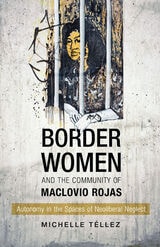
Border Women and the Community of Maclovio Rojas
Autonomy in the Spaces of Neoliberal NeglectMichelle Téllez
University of Arizona Press, 2021
Near Tijuana, Baja California, the autonomous community of Maclovio Rojas demonstrates what is possible for urban place-based political movements. More than a community, Maclovio Rojas is a women-led social movement that works for economic and political autonomy to address issues of health, education, housing, nutrition, and security.
Border Women and the Community of Maclovio Rojas tells the story of the community’s struggle to carve out space for survival and thriving in the shadows of the U.S.-Mexico geopolitical border. This ethnography by Michelle Téllez demonstrates the state’s neglect in providing social services and local infrastructure. This neglect exacerbates the structural violence endemic to the border region—a continuation of colonial systems of power on the urban, rural, and racialized poor. Téllez shows that in creating the community of Maclovio Rojas, residents have challenged prescriptive notions of nation and belonging. Through women’s active participation and leadership, a women’s political subjectivity has emerged—Maclovianas. These border women both contest and invoke their citizenship as they struggle to have their land rights recognized, and they transform traditional political roles into that of agency and responsibility.
This book highlights the U.S.-Mexico borderlands as a space of resistance, conviviality, agency, and creative community building where transformative politics can take place. It shows hope, struggle, and possibility in the context of gendered violences of racial capitalism on the Mexican side of the U.S.-Mexico border.
[more]
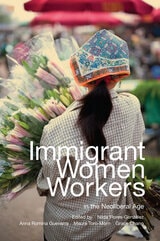
Immigrant Women Workers in the Neoliberal Age
Edited by Nilda Flores-Gonzalez, Anna Romina Guevarra, Maura Toro-Morn, and Grace Chang
University of Illinois Press, 2013
To date, most research on immigrant women and labor forces has focused on the participation of immigrant women on formal labor markets. In this study, contributors focus on informal economies such as health care, domestic work, street vending, and the garment industry, where displaced and undocumented women are more likely to work. Because such informal labor markets are unregulated, many of these workers face abusive working conditions that are not reported for fear of job loss or deportation. In examining the complex dynamics of how immigrant women navigate political and economic uncertainties, this collection highlights the important role of citizenship status in defining immigrant women's opportunities, wages, and labor conditions.
Contributors are Pallavi Banerjee, Grace Chang, Margaret M. Chin, Jennifer Jihye Chun, Héctor R. Cordero-Guzmán, Emir Estrada, Lucy Fisher, Nilda Flores-González, Ruth Gomberg-Munoz, Anna Romina Guevarra, Shobha Hamal Gurung, Pierrette Hondagneu-Sotelo, María de la Luz Ibarra, Miliann Kang, George Lipsitz, Lolita Andrada Lledo, Lorena Muñoz, Bandana Purkayastha, Mary Romero, Young Shin, Michelle Téllez, and Maura Toro-Morn.
[more]
The Chicana Motherwork Anthology
Edited by Cecilia Caballero, Yvette Martínez-Vu, Judith Pérez-Torres, Michelle Téllez, Christine Vega; Foreword by Ana Castillo
University of Arizona Press, 2019
The Chicana M(other)work Anthology weaves together emerging scholarship and testimonios by and about self-identified Chicana and Women of Color mother-scholars, activists, and allies who center mothering as transformative labor through an intersectional lens. Contributors provide narratives that make feminized labor visible and that prioritize collective action and holistic healing for mother-scholars of color, their children, and their communities within and outside academia.
The volume is organized in four parts: (1) separation, migration, state violence, and detention; (2) Chicana/Latina/WOC mother-activists; (3) intergenerational mothering; and (4) loss, reproductive justice, and holistic pregnancy. Contributors offer a just framework for Chicana and Women of Color mother-scholars, activists, and allies to thrive within and outside of the academy. They describe a new interpretation of motherwork that addresses the layers of care work needed for collective resistance to structural oppression and inequality.
This anthology is a call to action for justice. Contributions are both theoretical and epistemological, and they offer an understanding of motherwork through Chicana and Women of Color experiences.
[more]