Results by title
5 books match the query 'Taino Indians'
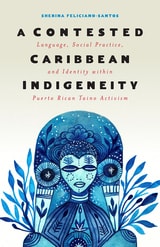
A Contested Caribbean Indigeneity
Language, Social Practice, and Identity within Puerto Rican Taíno ActivismSherina Feliciano-Santos
Rutgers University Press, 2021
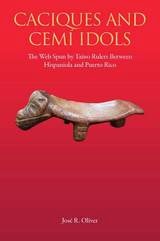
Caciques and Cemi Idols
The Web Spun by Taino Rulers Between Hispaniola and Puerto RicoJose R Oliver
University of Alabama Press, 2009
Cemís are both portable artifacts and embodiments of persons or spirit, which the Taínos and other natives of the Greater Antilles (ca. AD 1000-1550) regarded as numinous beings with supernatural or magic powers. This volume takes a close look at the relationship between humans and other (non-human) beings that are imbued with cemí power, specifically within the Taíno inter-island cultural sphere encompassing Puerto Rico and Hispaniola. The relationships address the important questions of identity and personhood of the cemí icons and their human “owners” and the implications of cemí gift-giving and gift-taking that sustains a complex web of relationships between caciques (chiefs) of Puerto Rico and Hispaniola.
Hispaniola
Caribbean Chiefdoms in the Age of ColumbusSamuel M. Wilson
University of Alabama Press, 1990
In 1492 the island of Hispaniola was inhabited by the Taino, an Indian group whose ancestors had moved into the Caribbean archipelago from lowland South America more than 1,500 years before. They were organized politically into large cacicazgos, or chiefdoms, comprising 70 or more villages under the authority of a paramount cacique, or chief. From the first voyage on, Columbus made Hispaniola his primary base for operations in the New World. Over the subsequent decades, disease, warfare, famine, and enslavement brought about the destruction of the Taino chiefdoms and almost completely annihilated the aboriginal population of the island.
This book examines the early years of the contact period in the Caribbean and in narrative form reconstructs the social and political organization of the Taino. Wilson describes in detail the interactions between the Taino and the Spaniards, with special attention paid to the structure and functioning of the Taino chiefdoms. By providing additional information from archaeology and recent ethnography, he builds a rich context within which to understand the Taino and their responses to the Europeans.
The Taino are especially important in a New World context because they represent a society undergoing rapid sociopolitical change and becoming more complex through time. The early contact period on Hispaniola gives us a rich ethnohistorical glimpse of the political processes of a complex New World society before and during its destruction brought about by the arrival of the Europeans.
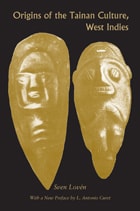
Origins of the Tainan Culture, West Indies
Sven Loven, with a new preface by L. Antonio Curet
University of Alabama Press, 2010
When originally published in German in 1924, this volume was hailed as the first modern, comprehensive archaeological overview of an emerging area of the world. Yes, the Caribbean islands had long been known and owned, occupied, or traded among by the economically advanced nations of the world. However, the original inhabitants—as well as their artifacts, languages, and culture—had been treated by explorers and entrepreneurs alike as either slaves or hindrances to progress, and were used or eliminated. There was no publication that treated seriously the region and the peoples until this work. In the following ten years, additional pertinent publications emerged, along with a request to translate the original into Spanish. Based on those recent publications, Loven decided to update and reissue the work in English, which he thought to be the future international language of scholarship. This work is a classic, with enduring interpretations, broad geographic range, and an eager audience.
Talking Taino
Caribbean Natural History from a Native PerspectiveWilliam F. Keegan and Lisabeth A. Carlson
University of Alabama Press, 2008
Keegan and Carlson, combined, have spent over 45 years conducting archaeological research in the Caribbean, directing projects in Trinidad, Grenada, St. Lucia, Puerto Rico, the Dominican Republic, Haiti, Cuba, Jamaica, Grand Cayman, the Turks & Caicos Islands, and throughout the Bahamas. Walking hundreds of miles of beaches, working without shade in the Caribbean sun, diving in refreshing and pristine waters, and studying the people and natural environment around them has given them insights into the lifeways of the people who lived in the Caribbean before the arrival of Christopher Columbus. Sadly, harsh treatment extinguished the culture that we today call Taíno or Arawak.
In an effort to repay their debt to the past and the present, the authors have focused on the relationship between the Taínos of the past (revealed through archaeological investigations) and the present natural history of the islands. Bringing the past to life and highlighting commonalities between past and present, they emphasize Taíno words and beliefs about their worldview and culture.