Results by title

14 books match the query 'Talking'

cover of A Scientist's Guide To Talking With The Media: Practical Advice from the Union of Concerned Scientists

A Scientist's Guide To Talking With The Media

Practical Advice from the Union of Concerned Scientists

Grossman, Daniel

Rutgers University Press, 2006

Research in most scientific disciplines calls for painstaking accuracy and a hesitation to generalize for fear of distorting the truth. Given this penchant for nuance, scientists often feel uneasy about a relationship with anyone in the media who is seeking an eye-catching lead, usually with limited space to express subtleties. Researchers who give interviews often feel that their findings are distorted or sensationalized, and shun future media contact. By avoiding potential misrepresentations, however, scientists also sacrifice opportunities to educate the public on important issues related to health, the environment, outer space, and much more.

In A Scientist's Guide to Talking with the Media, Richard Hayes and Daniel Grossman draw on their expertise in public relations and journalism to empower researchers in a variety of fields to spread their message on their own terms. The authors provide tips on how to translate abstract concepts into concrete metaphors, craft soundbites, and prepare for interviews. For those looking for a higher profile, the authors explain how to become a reporter's trusted source-the first card in the Rolodex-on controversial issues.

A must-read for all scientists, this book shows how it is possible for the discoveries that hibernate in lecture halls and academic journals to reach a broader audience in a way that is accurate and effective.
[more]
cover of Outside the Lines: Talking with Contemporary Gay Poets

Outside the Lines

Talking with Contemporary Gay Poets

Christopher Hennessy, Editor

University of Michigan Press, 2005

"Outside the Lines explores the personal and historical forces that have shaped the work of a dozen gifted poets. The answers given to Hennessy's astute, perfectly tailored questions remind a reader how exciting poetry can be, and how writers create, through language, the world as we have never known it. These adventuresome interviews will stir anyone who cares about the making of art."
---Bernard Cooper, author of Maps to Anywhere

Editor Christopher Hennessy gathers interviews with some of the most significant figures in contemporary American poetry. While each poet is gay, these encompassing, craft-centered interviews reflect the diversity of their respective arts and serve as a testament to the impact gay poets have had and will continue to have on contemporary poetics.

The book includes twelve frank, intense interviews with some of America's best-known and loved poets, who have not only enjoyed wide critical acclaim but who have had lasting impact on both the gay tradition and the contemporary canon writ large, for example, Frank Bidart, the late Thom Gunn, and J. D. McClatchy. Some of the most honored and respected poets, still in the middle of their careers, are also included, for example, Mark Doty, Carl Phillips, and Reginald Shepherd. Each interview explores the poet's complete work to date, often illuminating the poet's technical evolution and emotional growth, probing shifts in theme, and even investigating links between verse and sexuality.

In addition to a selected bibliography of works by established poets, the book also includes a list of works by newer and emerging poets who are well on their way to becoming important voices of the new millennium.
[more]
cover of Row by Row: Talking with Kentucky Gardeners

Row by Row

Talking with Kentucky Gardeners

Katherine J. Black

Ohio University Press, 2015

For two and a half years, Katherine J. Black crisscrossed Kentucky, interviewing home vegetable gardeners from a rich variety of backgrounds. Row by Row: Talking with Kentucky Gardeners is the result, a powerful compilation of testimonies on the connections between land, people, culture, and home.

The people profiled here share a Kentucky backdrop, but their life stories, as well as their gardens, have as many colors, shapes, and tastes as heirloom tomatoes do. Black interviewed those who grow in city backyards, who carve out gardens from farmland, and who have sprawling plots in creek bottoms and former pastures. Many of the gardeners in Row by Row speak eloquently about our industrialized food system’s injuries to the land, water, and health of people. But more often they talk about what they are doing in their gardens to reverse this course.

Row by Row is as sure to appeal to historians, food studies scholars, and sustainability advocates as it is to gardeners and local food enthusiasts. These eloquent portraits, drawn from oral histories and supplemented by Deirdre Scaggs’ color photographs, form a meditation on how gardeners make sense of their lives through what they grow and how they grow it.
[more]
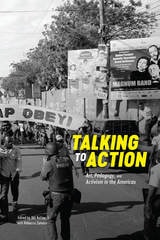
cover of Talking to Action: Art, Pedagogy, and Activism in the Americas

Talking to Action

Art, Pedagogy, and Activism in the Americas

Bill Kelley, Jr. with Rebecca Zamora

School of the Art Institute of Chicago, 2017

Talking to Action: Art, Pedagogy, and Activism in the Americas is the first publication to bring together scholarship, critical essays, and documentation of collaborative community-based art making by researchers from across the American hemisphere.  The comprehensive volume is a compendium of texts, analysis, and research documents from the Talking to Action research and exhibition platform, part of the Getty’s Pacific Standard Time: LA/LA initiative, a far-reaching and ambitious exploration of Latin American and Latino art in dialogue with Los Angeles.  While the field of social practice has had an increasingly high profile within contemporary art discourse, this book documents artists who have been under-recognized because they do not show in traditional gallery or museum contexts and are often studied by specialists in other disciplines, particularly within the Latin American context. Talking to Action: Art, Pedagogy, and Activism in the Americas addresses the absence of a publication documenting scholarly exchange between research sites throughout the hemisphere and is intended for those interested in community-based practices operating within the intersection of art, activism, and the social sciences.
 
[more]
cover of Talking to Action: Spanish Language Edition

Talking to Action

Spanish Language Edition

Bill Kelley, Jr. with Rebecca Zamora

School of the Art Institute of Chicago, 2017

Talking to Action: Art, Pedagogy, and Activism in the Americas is the first publication to bring together scholarship, critical essays, and documentation of collaborative community-based art making by researchers from across the American hemisphere.  The comprehensive volume is a compendium of texts, analysis, and research documents from the Talking to Action research and exhibition platform, part of the Getty’s Pacific Standard Time: LA/LA initiative, a far-reaching and ambitious exploration of Latin American and Latino art in dialogue with Los Angeles.  While the field of Social Practice has had an increasingly high profile within contemporary art discourse, this book documents artists who have been under-recognized because they do not show in traditional gallery or museum contexts and are often studied by specialists in other disciplines, particularly within the Latin American context. Talking to Action: Art, Pedagogy, and Activism in the Americas, addresses the absence of a publication documenting scholarly exchange between research sites throughout the hemisphere and is intended for those interested in community-based practices operating within the intersection of art, activism, and the social sciences.

This is the Spanish language edition.
 
[more]
cover of Talking to North Korea: Ending the Nuclear Standoff

Talking to North Korea

Ending the Nuclear Standoff

Glyn Ford

Pluto Press, 2018

Few attempts have been made to understand the internal logic of Kim Jong-un’s regime and why life in North Korea is so difficult.
 
This provocative insider’s account blasts apart the myths which paint North Korea as a rogue state run by a mad leader. Informed by extraordinary access to the country's leadership, Glyn Ford investigates the regime from the inside, providing game-changing insights. Acknowledging that North Korea is a deeply flawed and barbaric state, he nonetheless shows that sections of the leadership are desperate to modernize and end their isolation.
 
With chapters on recent developments including the Trump / Kim summit, Ford supports a dialogue between East and West and provides a road map to avert the looming threat of a war that would threaten the lives of millions.

[more]
cover of Talking to Strangers

Talking to Strangers

Patricia Dobler

University of Wisconsin Press, 1986

In her first book of poems, Patricia Dobler records her memories of the Ohio mill town where she grew up in the 1950s. but the poems range over time and the memories of others, as well: her immigrant Hungarian grandparents, her parent's tensions during hard times (”Years spilled on the kitchen table, / picked over like beans or old bills”), the dangers, losses, and occasional triumphs of hard-working men and women.
[more]
cover of Talking to Strangers: Anxieties of Citizenship since Brown v. Board of Education

Talking to Strangers

Anxieties of Citizenship since Brown v. Board of Education

Danielle Allen

University of Chicago Press, 2004

"Don't talk to strangers" is the advice long given to children by parents of all classes and races. Today it has blossomed into a fundamental precept of civic education, reflecting interracial distrust, personal and political alienation, and a profound suspicion of others. In this powerful and eloquent essay, Danielle Allen, a 2002 MacArthur Fellow, takes this maxim back to Little Rock, rooting out the seeds of distrust to replace them with "a citizenship of political friendship."

Returning to the landmark Brown v. Board of Education decision of 1954 and to the famous photograph of Elizabeth Eckford, one of the Little Rock Nine, being cursed by fellow "citizen" Hazel Bryan, Allen argues that we have yet to complete the transition to political friendship that this moment offered. By combining brief readings of philosophers and political theorists with personal reflections on race politics in Chicago, Allen proposes strikingly practical techniques of citizenship. These tools of political friendship, Allen contends, can help us become more trustworthy to others and overcome the fossilized distrust among us.

Sacrifice is the key concept that bridges citizenship and trust, according to Allen. She uncovers the ordinary, daily sacrifices citizens make to keep democracy working—and offers methods for recognizing and reciprocating those sacrifices. Trenchant, incisive, and ultimately hopeful, Talking to Strangers is nothing less than a manifesto for a revitalized democratic citizenry.
 
[more]
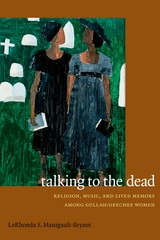
cover of Talking to the Dead: Religion, Music, and Lived Memory among Gullah/Geechee Women

Talking to the Dead

Religion, Music, and Lived Memory among Gullah/Geechee Women

LeRhonda S. Manigault-Bryant

Duke University Press, 2014
Talking to the Dead is an ethnography of seven Gullah/Geechee women from the South Carolina lowcountry. These women communicate with their ancestors through dreams, prayer, and visions and traditional crafts and customs, such as storytelling, basket making, and ecstatic singing in their churches. Like other Gullah/Geechee women of the South Carolina and Georgia coasts, these women, through their active communication with the deceased, make choices and receive guidance about how to live out their faith and engage with the living. LeRhonda S. Manigault-Bryant emphasizes that this communication affirms the women's spiritual faith—which seamlessly integrates Christian and folk traditions—and reinforces their position as powerful culture keepers within Gullah/Geechee society. By looking in depth at this long-standing spiritual practice, Manigault-Bryant highlights the subversive ingenuity that lowcountry inhabitants use to thrive spiritually and to maintain a sense of continuity with the past.
[more]
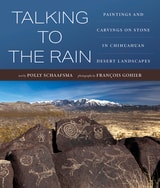
cover of Talking to the Rain: Paintings and Carvings on Stone in Chihuahuan Desert Landscapes

Talking to the Rain

Paintings and Carvings on Stone in Chihuahuan Desert Landscapes

Polly Schaafsma, photographs by François Gohier

University of Utah Press, 2025

Explores ancient dialogue between desert farmers and the cosmos

In this visually stunning volume, Polly Schaafsma, leading authority on pre-Hispanic Indian rock imagery and kiva murals of the greater American Southwest, provides an insightful journey into the petroglyphs and rock paintings of the Jornada Mogollon farmers in southern New Mexico's lower Chihuahuan Desert.

Talking to the Rain defines the Rio Grande Tradition, emphasizing the foundational Jornada Style as exemplified by its Mimbres-like imagery as well as its diverse and complex rain-making symbolism. By examining visual metaphors of cosmology and place-making, the book reveals an ancient dialogue between farmers and the cosmos that places rain for crops as its central concern. Exceptional color photographs by François Gohier invite readers to experience the landscapes and locations selected for creating these images. Both scholarly and accessible, Talking to the Rain offers a fresh perspective on cultural landscapes and the profound connections between people, art, and environment, making it essential for understanding Southwest cultural history.
[more]
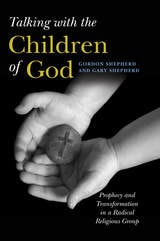
cover of Talking with the Children of God: Prophecy and Transformation in a Radical Religious Group

Talking with the Children of God

Prophecy and Transformation in a Radical Religious Group

Gordon Shepherd and Gary Shepherd

University of Illinois Press, 2010

Grounded in direct, systematic observation by neutral observers, Talking with the Children of God is a unique study of the radical religious movement now known as The Family International. The book draws on extraordinarily candid interviews with the group's leaders and administrative staff. In revealing new information about the organization's history, beliefs, and use of prophecy, Gordon Shepherd and Gary Shepherd offer a highly detailed case study that is both an antidote to sensationalized coverage of the group and a means for understanding the transformational practices of new religious movements in general.

One of the most controversial groups emerging from the Jesus People movement of the 1960s, the Family originally was known as The Children of God. Under leader David Berg, members proclaimed an apocalyptic "Endtime," shunned secular occupations, lived communally, and adopted unusual sexual practices that led to abuse scandals in the 1970s and 1980s. Following Berg's death in 1994, the organization began to dramatically alter its evangelization efforts and decision-making processes.

Talking with the Children of God builds a picture of a complex organization with ten thousand core members worldwide, including details on the lives, careers, and responsibilities of the second generation and their efforts to defend their faith. The authors summarize the Family's history and beliefs as well as its controversial past. In particular, they analyze the organization's use of prophecy--or channeled revelations from Jesus and other spiritual beings--for making decisions and setting policy, revealing how this essentially democratic process works and how it shapes Family life and culture.

These remarkable insights are the result of sixteen years of surveys and field observations conducted in Family member homes in sixteen countries, plus four days of face-to-face interviews with Family leaders and organizational staff. The volume also includes condensed transcripts of the interviews with analysis by Shepherd and Shepherd.
[more]
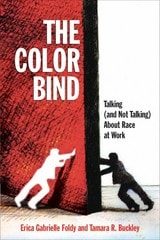
cover of The Color Bind: Talking (and Not Talking) About Race at Work

The Color Bind

Talking (and Not Talking) About Race at Work

Erica Gabrielle Foldy

Russell Sage Foundation, 2014
Since the 1960s, the dominant model for fostering diversity and inclusion in the United States has been the “color blind” approach, which emphasizes similarity and assimilation and insists that people should be understood as individuals, not as members of racial or cultural groups. This approach is especially prevalent in the workplace, where discussions about race and ethnicity are considered taboo. Yet, as widespread as “color blindness” has become, many studies show that the practice has damaging repercussions, including reinforcing the existing racial hierarchy by ignoring the significance of racism and discrimination. In The Color Bind, workplace experts Erica Foldy and Tamara Buckley investigate race relations in office settings, looking at how both color blindness and what they call “color cognizance” have profound effects on the ways coworkers think and interact with each other. Based on an intensive two-and-a-half-year study of employees at a child welfare agency, The Color Bind shows how color cognizance—the practice of recognizing the profound impact of race and ethnicity on life experiences while affirming the importance of racial diversity—can help workers move beyond silence on the issue of race toward more inclusive workplace practices. Drawing from existing psychological and sociological research that demonstrates the success of color-cognizant approaches in dyads, workgroups and organizations, Foldy and Buckley analyzed the behavior of work teams within a child protection agency. The behaviors of three teams in particular reveal the factors that enable color cognizance to flourish. While two of the teams largely avoided explicitly discussing race, one group, “Team North,” openly talked about race and ethnicity in team meetings. By acknowledging these differences when discussing how to work with their clients and with each other, the members of Team North were able to dig into challenges related to race and culture instead of avoiding them. The key to achieving color cognizance within the group was twofold: It required both the presence of at least a few members who were already color cognizant, as well as an environment in which all team members felt relatively safe and behaved in ways that strengthened learning, including productively resolving conflict and reflecting on their practice. The Color Bind provides a useful lens for policy makers, researchers and practitioners pursuing in a wide variety of goals, from addressing racial disparities in health and education to creating diverse and inclusive organizations to providing culturally competent services to clients and customers. By foregrounding open conversations about race and ethnicity, Foldy and Buckley show that institutions can transcend the color bind in order to better acknowledge and reflect the diverse populations they serve.
[more]
cover of To Keep the Republic: Thinking, Talking, and Acting Like a Democratic Citizen

To Keep the Republic

Thinking, Talking, and Acting Like a Democratic Citizen

Elizabeth C. Matto

Rutgers University Press, 2024

American democracy is at an inflection point. With voting rights challenged, election results undermined, and even the US Capitol violently attacked, many Americans feel powerless to save their nation’s democratic institutions from the forces dismantling them. Yet, as founders like Benjamin Franklin knew from the start, the health of America’s democracy depends on the actions its citizens are willing to take to preserve it. 
 
To Keep the Republic is a wake-up call about the responsibilities that come with being a citizen in a participatory democracy. It describes the many ways that individuals can make a difference on both local and national levels—and explains why they matter. Political scientist Elizabeth C. Matto highlights the multiple facets of democratic citizenship, identifies American democracy’s sometimes competing values and ideals, and explains how civic engagement can take various forms, including political conversation. Combining political philosophy with concrete suggestions for how to become a more engaged citizen, To Keep the Republic reminds us that democracy is not a spectator sport; it only works when we get off the sidelines and enter the political arena to make our voices heard.

 
[more]
cover of What Do I Say?: Talking with Patients about Spirituality

What Do I Say?

Talking with Patients about Spirituality

Elizabeth Johnston-Taylor

Templeton Press, 2007

Health care professionals, clergy, chaplains, social workers, and others who counsel people in medical crisis often find themselves faced with deeply painful questions: Why is this happening to me? Am I dying? Why should I live? I'm just a burden to others.
Here is a workbook that suggests healing verbal responses to such expressions of spiritual pain. The author, an internationally recognized expert in spiritual caregiving, points out that wanting to help is one motivation for learning these skills, but there are also evidence-based reasons: helping patients express their innermost feelings promotes spiritual healing; spiritual health is related to physical and emotional health; spiritual coping helps patients accept and deal with their illness; and patients tend to want their health care professionals to know about their spirituality.
Lessons, tips, and exercises teach how to listen effectively, with guidelines for detecting and understanding the spiritual needs embedded in patients' conversations. Suggestions are provided for verbal responses to patients who express spiritual distress, including tips for building rapport, using self-disclosure, and praying with patients. A FAQ section deals with frequently asked questions and miscellaneous information, such as:
•What do I do when a patient talks on and on and I have to leave?
•How do I answer a "why" question?
•What do I say to a patient who believes a miracle will happen to cure them?
•What if I'm not religious? How can I talk about it?
By practicing and using these healing techniques, Taylor explains, healthcare professionals will be able to provide patients responses to their questions that allow them to become intellectually, emotionally, and physically aware of their spirituality so they can experience life more fully.
[more]