Results by title
4 books match the query 'Tattoo artists'
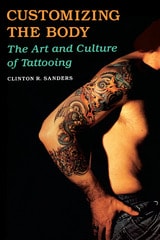
Customizing The Body
Clinton Sanders
Temple University Press, 1990
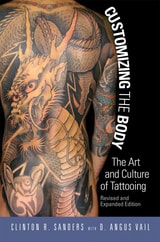
Customizing the Body
The Art and Culture of TattooingClinton Sanders
Temple University Press, 2008
Originally published in 1989, this ground-breaking ethnographic exploration of tattooing—and the art world surrounding it—covers the history, anthropology and sociology of body modification practices; the occupational experience of the tattooist; the process and social consequences of becoming a tattooed person; and the prospects of "serious" tattooing becoming an accepted art form. Curiously, despite the greater prevalence of tattoos and body modification in today’s society, there is still a stigma of deviance associated with people who get or ink tattoos.
Retaining the core of the original book, this revised and expanded edition offers a new preface by the author and a new chapter focusing on the changes that have occurred in the tattoo world. A section on the new scholarly literature that has emerged, as well as the new modes of body modification that have come into vogue are included along with a new gallery of photographs that shows some splendid examples of contemporary tattoo art. A directory of artists' websites invites readers to discover the range of work being done around the world—from “suits” (full body tattoos) to skulls.

Samuel Steward and the Pursuit of the Erotic Sexuality, Literature, Archives
Sexuality, Literature, ArchivesEdited by Debra A. Moddelmog and Martin Joseph Ponce
The Ohio State University Press, 2017
With work by prominent scholars in queer, transgender, and sexuality studies, and with topics such as the queer archive, hoarding, masochism, the queer mystery, race and desire, sexology, and gay pornography, Samuel Steward and the Pursuit of the Erotic will appeal to a wide range of readers across a variety of disciplines invested in queer experience. Closing on a personal recollection from one of Steward’s last close friends, the volume will also appeal to readers interested in the personal aspects of this fascinating, idiosyncratic figure’s multifaceted life.

The Other End of the Needle
Continuity and Change among Tattoo WorkersDavid C. Lane
Rutgers University Press, 2021
Yet, Lane notes, prior research has focused almost exclusively on the tattoos—the outcome of an intricate social process—and have ignored the significance of tattoo workers themselves. "Tattooists," as Lane dubs them, make decisions, but they work within a social world that constrains and shapes the outcome of their labor—the tattoo. The goal of this book is to help readers understand the world of tattoo work as an intricate and nuanced form of work. Lane ultimately asks new questions about the social processes occurring prior to the tattoo’s existence.