Results by title
4 books match the query 'Taylor, Michael'
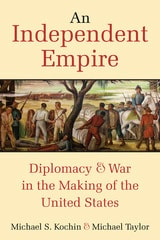
An Independent Empire
Diplomacy & War in the Making of the United StatesMichael S. Kochin and Michael Taylor
University of Michigan Press, 2020
Foreign policies and diplomatic missions, combined with military action, were the driving forces behind the growth of the early United States. In an era when the Old and New Worlds were subject to British, French, and Spanish imperial ambitions, the new republic had limited diplomatic presence and minimal public credit. It was vulnerable to hostile forces in every direction. The United States could not have survived, grown, or flourished without the adoption of prescient foreign policies, or without skillful diplomatic operations.
An Independent Empire shows how foreign policy and diplomacy constitute a truly national story, necessary for understanding the history of the United States. In this lively and well-written book, episodes in American history—such as the writing and ratification of the Constitution, Henry Clay’s advocacy of an American System, Pinckney’s Treaty with Spain, and the visionary but absurd Congress of Panama—are recast as elemental aspects of United States foreign and security policy.
An Independent Empire tells the stories of the people who defined the early history of America’s international relationships. Throughout the book are brief, entertaining vignettes of often-overlooked intellectuals, spies, diplomats, and statesmen whose actions and decisions shaped the first fifty years of the United States. More than a dozen bespoke maps illustrate that the growth of the early United States was as much a geographical as a political or military phenomenon.
Film Language
A Semiotics of the CinemaChristian Metz
University of Chicago Press, 1990
"The semiology of film . . . can be held to date from the publication in 1964 of the famous essay by Christian Metz, 'Le cinéma: langue ou langage?'"—Geoffrey Nowell-Smith, Times Literary Supplement
"Modern film theory begins with Metz."—Constance Penley, coeditor of Camera Obscura
"Any consideration of semiology in relation to the particular field signifying practice of film passes inevitably through a reference to the work of Christian Metz. . . . The first book to be written in this field, [Film Language] is important not merely because of this primacy but also because of the issues it raises . . . issues that have become crucial to the contemporary argument."—Stephen Heath, Screen
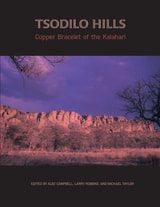
Tsodilo Hills
Copper Bracelet of the KalahariAlec Campbell
Michigan State University Press, 2010
For 100,000 years, inhabitants of Botswana's Tsodilo Hills region left behind a record of their gathering wild foods, hunting, fishing, mining, rock painting, cattle herding, and metalworking, as well as of their participation in a coast-to-coast trade network. During the past 30 years, archaeologists, paleontologists, historians, and anthropologists have worked at Tsodilo.
Here is the Tsodilo story, the Hills' revelations brought together in one volume, beautifully illuminated by more than 150 color plates and maps. For scientists, this work brings together decades of research at a site in the Kalahari that was virtually unknown until the late 1970s. Tsodilo Hills also offers a fascinating glimpse into the history of the Kalahari Desert to the general reader, as well as an unsurpassedguide to an extraordinary world to the desert's many tourists.
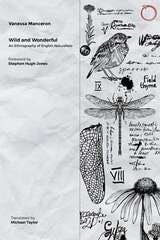
Wild and Wonderful
An Ethnography of English NaturalistsVanessa Manceron
HAU, 2025
In Wild and Wonderful, social anthropologist Vanessa Manceron investigates an understudied but indispensable scientific practice: getting to know and recognize the living worlds around us. Her research takes her to England, where a longstanding naturalist tradition brings together professionals, academics, and amateurs to study the world around them. Observing the natural world here is regarded not as a simple hobby, but as a necessary activity. This is participatory science, an itinerant brand of scholarship that immerses itself in a specific and delimited territory, meticulously documenting the species living there and how they develop and expand their domain or regress and disappear. Manceron leads us through woods and fields, showing us another way of looking, of paying attention to minute differences, sounds, and variations of color. Her book is both a contribution to the anthropology of science and an opportunity to take a fresh look at our relationship with nature, affording us a glimpse of another way of living and living with.