Results by title

7 books match the query 'Tea'
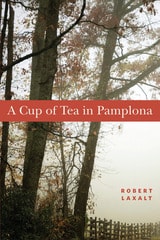
cover of A Cup of Tea in Pamplona

A Cup of Tea in Pamplona

Robert Laxalt

University of Nevada Press, 1993
In this slim tale, Laxalt shows the ugly, desperate, and sometimes violent world of the contrabandiers, Basque smugglers in the Pyrenees. Set in the 1960s, the terse story begins with Nikolas, driven by his family’s financial despair, taking on work from Gregorio, the patrón of a small team of smugglers. Nikolas must smuggle fifty horses over the mountain ridges between France and Spain. If he’s caught, jail and ruin are certain; death is possible. This engrossing novella, told with tight narration and compelling dialogue, shows the grinding poverty and ethnic tensions in Basque lands, fifty years ago. 
[more]
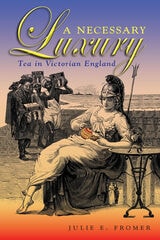
cover of A Necessary Luxury: Tea in Victorian England

A Necessary Luxury

Tea in Victorian England

Julie E. Fromer

Ohio University Press, 2008

Tea drinking in Victorian England was a pervasive activity that, when seen through the lens of a century’s perspective, presents a unique overview of Victorian culture. Tea was a necessity and a luxury; it was seen as masculine as well as feminine; it symbolized the exotic and the domestic; and it represented both moderation and excess. Tea was flexible enough to accommodate and to mark subtle differences in social status, to mediate these differences between individuals, and to serve as a shared cultural symbol within England.

In A Necessary Luxury: Tea in Victorian England, Julie E. Fromer analyzes tea histories, advertisements, and nine Victorian novels, including Alice’s Adventures in Wonderland, Wuthering Heights, and Portrait of a Lady. Fromer demonstrates how tea functions within the literature as an arbiter of taste and middle-class respectability, aiding in the determination of class status and moral position. She reveals the way in which social identity and character are inextricably connected in Victorian ideology as seen through the ritual of tea.

Drawing from the fields of literary studies, cultural studies, history, and anthropology, A Necessary Luxury offers in-depth analysis of both visual and textual representations of the commodity and the ritual that was tea in nineteenth-century England.
[more]
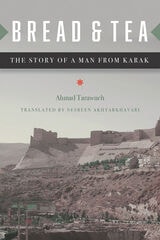
cover of Bread and Tea: The Story of a Man from Karak

Bread and Tea

The Story of a Man from Karak

Ahmad Tarawneh

Michigan State University Press, 2017
In this post–Arab Spring novel, Ahmad Tarawneh tells the story of conflicting loyalties between two Jordanian brothers, one who serves in the Jordanian national security division, and another who belongs to an extremist militant Islamic group. With boldness, clarity, and an insider’s eye, Tarawneh addresses the root causes and circumstances that lead a desperate young Jordanian to be recruited into a terrorist organization, tempted by the lure of glory purported by a skillful, self-serving sheikh. The novel depicts the positive and negative forces that influence the two brothers in their soul-searching quests for self-actualization that lead to more questions than answers—questions many Arab youth still ask today, while engulfed in their own raging struggles over tradition, religion, modernity, and secularism. Readers find themselves on an intimate journey into the minds and hearts of the protagonists to witness the tragedy and absurdity of this conflict and the magnitude of the human destruction it leaves behind.
[more]
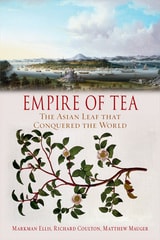
cover of Empire of Tea: The Asian Leaf that Conquered the World

Empire of Tea

The Asian Leaf that Conquered the World

Markman Ellis, Richard Coulton, and Matthew Mauger

Reaktion Books, 2015

Although tea had been known and consumed in China and Japan for centuries, it was only in the seventeenth century that Londoners first began drinking it. Over the next two hundred years, its stimulating properties seduced all of British society, as tea found its way into cottages and castles alike. One of the first truly global commodities and now the world’s most popular drink, tea has also, today, come to epitomize British culture and identity.

This impressively detailed book offers a rich cultural history of tea, from its ancient origins in China to its spread around the world. The authors recount tea’s arrival in London and follow its increasing salability and import via the East India Company throughout the eighteenth century, inaugurating the first regular exchange—both commercial and cultural—between China and Britain. They look at European scientists’ struggles to understand tea’s history and medicinal properties, and they recount the ways its delicate flavor and exotic preparation have enchanted poets and artists. Exploring everything from its everyday use in social settings to the political and economic controversies it has stirred—such as the Boston Tea Party and the First Opium War—they offer a multilayered look at what was ultimately an imperial industry, a collusion—and often clash—between the world’s greatest powers over control of a simple beverage that has become an enduring pastime.
[more]
cover of Globalizing Chocolate and Tobacco: Medical Exchange in the Early Modern World

Globalizing Chocolate and Tobacco

Medical Exchange in the Early Modern World

Susan G. Polansky

Bucknell University Press, 2026

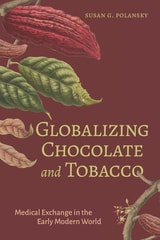
This groundbreaking volume explores two early and opposing Spanish medical perspectives on chocolate and other New World substances. In the early 1600s, doctors Bartolomé Marradón and Antonio Colmenero de Ledesma returned from travels to the Americas with starkly different views: Marradón cautioned against tobacco and offered only limited approval of chocolate, while Colmenero vigorously defended chocolate’s health benefits. Their writings, translated and circulated across Europe, helped transform chocolate from a medicinal drink into a global commodity. Featuring the first bilingual edition of Marradón’s Dialogue (1618)—in full Spanish and English—and a new bilingual presentation of Colmenero’s influential Curious Treatise (1631), this book provides rare insight into early modern medical thought, cultural exchange, and the globalization of taste. Essential for readers of food history, early modern medicine, and transatlantic interchange, it uniquely reveals how debates over health, culture, and commerce brewed in a cup of chocolate.

Published by Bucknell University Press. Distributed worldwide by Rutgers University Press.

[more]
cover of No Tea, No Shade: New Writings in Black Queer Studies

No Tea, No Shade

New Writings in Black Queer Studies

E. Patrick Johnson, editor

Duke University Press, 2016
The follow-up to the groundbreaking Black Queer Studies, the edited collection No Tea, No Shade brings together nineteen essays from the next generation of scholars, activists, and community leaders doing work on black gender and sexuality. Building on the foundations laid by the earlier volume, this collection's contributors speak new truths about the black queer experience while exemplifying the codification of black queer studies as a rigorous and important field of study. Topics include "raw" sex, pornography, the carceral state, gentrification, gender nonconformity, social media, the relationship between black feminist studies and black trans studies, the black queer experience throughout the black diaspora, and queer music, film, dance, and theater. The contributors both disprove naysayers who believed black queer studies to be a passing trend and respond to critiques of the field's early U.S. bias. Deferring to the past while pointing to the future, No Tea, No Shade pushes black queer studies in new and exciting directions.

Contributors. Jafari S. Allen, Marlon M. Bailey, Zachary Shane Kalish Blair, La Marr Jurelle Bruce, Cathy J. Cohen, Jennifer DeClue, Treva Ellison, Lyndon K. Gill, Kai M. Green, Alexis Pauline Gumbs, Kwame Holmes, E. Patrick Johnson, Shaka McGlotten, Amber Jamilla Musser, Alison Reed, Ramón H. Rivera-Servera, Tanya Saunders, C. Riley Snorton, Kaila Story, Omise'eke Natasha Tinsley, Julia Roxanne Wallace, Kortney Ziegler
 

[more]
cover of Tea, Coffee & Chocolate: How We Fell in Love with Caffeine

Tea, Coffee & Chocolate

How We Fell in Love with Caffeine

Melanie King

Bodleian Library Publishing, 2015

There are few things in the world more pleasing than a decadent cup of hot chocolate, a steaming mug of one’s favorite tea, or that first wonderful sip of freshly brewed coffee. Three of the great culinary obsessions of the twenty-first century, tea, coffee, and chocolate are long-time favorites of both casual diners and foodies, But how did we become so enamored of the big three?
           
In her mouthwatering new book, Melanie King offers a concise cultural history. All three beverages hail from faraway places: tea came first from China, coffee from the Middle East, and chocolate from Central America. Physicians and politicians alike were quick to comment in newspapers and popular periodicals on their supposed perils or health benefits. Readers learn that coffee was recommended in the seventeenth century as protection against the bubonic plague. Tea was thought to make women unattractive and men “unfit to do their business,” while a cup of chocolate was supposed to have exactly the opposite effect on the drinker’s sex life and physical appearance. As consumption of these newly discovered delicacies grew, merchants seized on the opportunity by setting up coffee houses or encouraging ever-more-elaborate tea-drinking rituals.
           
Filled with fascinating and often funny anecdotes—from a goatherd whose flock became frisky after eating coffee berries to a duchess with a goblet of poisoned chocolate, Tea, Coffee & Chocolate shows how the rowdy initial reception of these drinks forms the roots of today’s enduring caffeine culture.
[more]