Results by title
94 books match the query 'Techniques' and 8 start with a

A Curious and Ingenious Art
Reflections on Daguerreotypes at HarvardMelissa Banta
University of Iowa Press, 2000
Around the time Louis Jacques Mandé Daguerre perfected his method for fixing images on polished metal plates in 1839, Harvard was emerging as a modern research institution. Accordingly, the college began amassing vast collections for teaching and research. Among these collections in the university's libraries, museums, archives, and academic departments are some of the earliest photographic documents of American life: daguerreotypes.
A Curious and Ingenious Art brings together a representative sampling of Harvard's internationally significant but relatively unknown collection of daguerreotypes. Many of these images were made for, by, and of members of the university's community and have been in its holdings for more than 150 years. The collection includes the work of some of America's pioneering daguerreotypists, such as Mathew Brady, Southworth and Hawes, and John Adams Whipple. Most notably, the Harvard collection preserved for posterity such faces of the era as Oliver Wendell Holmes, Ralph Waldo Emerson, Harriet Beecher Stowe, Henry James, James McNeill Whistler, Dorothea Dix, Jenny Lind, and even Tom Thumb.
The university also seized upon photography as a tool of scientific research, stunningly exemplified in one of the first detailed daguerreotypes of the moon taken in 1851 as well as in images capturing the emergence of modern anesthesia. An unfortunate misuse of photography is recalled in the now famous slave daguerreotypes commissioned by natural historian Louis Agassiz, who believed in the theory of separate human species.
The Harvard collection represents the early history of photography and its social meaning. The accompanying essays explore the personal, telling histories behind the images, stories that unveil the reflections of individuals who searched for purpose and promise in the new medium.
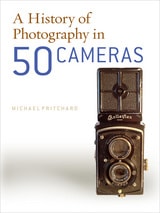
A History of Photography in Fifty Cameras
Michael Pritchard
University of Chicago Press, 2014
Through brief, illustrated chapters on fifty landmark cameras and the photographers who used them, Michael Pritchard offers an entertaining look at photography as practiced by professionals, artists, and amateurs. A History of Photography in Fifty Cameras is organized chronologically, beginning with William Henry Fox Talbot’s wooden “Mousetrap” camera of 1835. Other entries include the Brownie (1900), the Coronet Midget (1935), the Kodak Instamatic 100 (1963), and, of course, the Polaroid SX-70 (1972). Photographs within each chapter show not only the cameras themselves but also samples of the images made with them. Pritchard uses each camera as a point of entry for talking about the people who used them and the kind of photos they produced, from Weegee and his Speed Graphic to Cartier-Bresson and the Leica’s role in the invention of photojournalism. In the hands of individual photographers, he reveals, cameras came to represent unique styles of depiction.
Together, the stories of the fifty cameras gathered here present an approachable and informative take on a medium that continues to fire the imagination, whether we’re perfecting the selfie or longing for the days of Fotomat.

A Photographer’s Guide to Ohio
Ian Adams
Ohio University Press, 2011

A Photographer’s Guide to Ohio, Volume 2
Volume 2Ian Adams
Ohio University Press, 2015

A Rock Garden in the South
Elizabeth A. Lawrence
Duke University Press, 1990
Lawrence, in her usual exquisite prose, deals with the full range of rock gardening topics in this work. She addresses the unique problem of cultivating rock gardens in the South, where the growing season is prolonged and humidity and heat are not conducive to such planting. She describes her own experiences in making a rock garden, with excellent advice on placing stones, constructing steps, ordering plants, and making cuttings.
At the same time, what she writes about here is in large part of interest to gardeners everywhere and for gardens with or without rocks. As always, she thoroughly discusses the plants she has tried—recommending bulbs and other perennials of all sorts, annuals, and woody plants—with poetic descriptions of the plants themselves as well as specific and useful cultural advice. A Rock Garden in the South includes an encyclopedia of plants alphabetized by genus and species and divided into two parts: wood and non-woody plants.
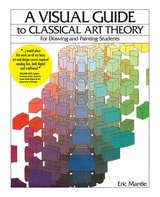
A Visual Guide to Classical Art Theory for Drawing and Painting Students
Mantle, Eric
Parkhurst Brothers, Inc., 2009
Eric Mantle presents the basics of classical theory in a clear and concise manner for all beginning drawing and painting students. His book features diagrams that illustrate every concept. Students will see the complexities of color theory and understand how to create the illusion of volume and depth on a 2-dimensional surface. “As an art student,” Professor Mantle recalls, “I was frequently frustrated by instructional books that gave lengthy verbal descriptions of visual concepts and then showed small and/or unclear diagrams of those concepts. As an art teacher, I found that my students would gain a clearer understanding of a visual concept if my verbal explanation was combined with a diagram of that concept.”
A Visual Guide to Classical Art Theory is great for both traditional and non-traditional media. Each page, theory and diagram represents a different tool for the artist to use. Through their use, the artist will find an infinite number of solutions. Artists also may use the book to create a trompe-l’oeil effect in graffiti art or the illusion of volume and depth on the computer. A Visual Guide to Art Theory is presented in a unique, non-verbal format that clearly illustrates the effect of perspective on color, light and shade.
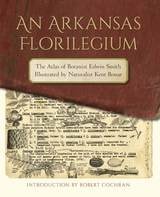
An Arkansas Florilegium
The Atlas of Botanist Edwin Smith Illustrated by Naturalist Kent BonarEdwin Smith
University of Arkansas Press, 2017
Thirty-five years later, with Smith retired and Bonar long gone from the park service but still drawing, Bonar’s weathered and battered copy of the atlas was seized by a diverse cadre of amateur admirers motivated by fears of its damage or loss. Their fears were certainly justified; after all, the pages were now jammed to the margins with some 3,500 drawings, and the volume had already survived one accidental dunking in an Ozark stream.
An Arkansas Florilegium brings Smith’s and Bonar’s knowledge and lifelong diligence to the world in this unique mix of art, science, and Arkansas saga.
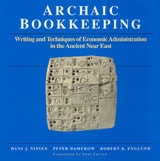
Archaic Bookkeeping
Early Writing and Techniques of Economic Administration in the Ancient Near EastHans J. Nissen, Peter Damerow, and Robert K. Englund
University of Chicago Press, 1993
scholarship on the earliest true writing system in human
history. Invented by the Babylonians at the end of the
fourth millennium B.C., this script, called proto-cuneiform,
survives in the form of clay tablets that have until now
posed formidable barriers to interpretation. Many tablets,
excavated in fragments from ancient dump sites, lack a clear
context. In addition, the purpose of the earliest tablets
was not to record language but to monitor the administration
of local economies by means of a numerical system.
Using the latest philological research and new methods
of computer analysis, the authors have for the first time
deciphered much of the numerical information. In
reconstructing both the social context and the function of
the notation, they consider how the development of our
earliest written records affected patterns of thought, the
concept of number, and the administration of household
economies. Complete with computer-generated graphics keyed
to the discussion and reproductions of all documents referred
to in the text, Archaic Bookkeeping will interest
specialists in Near Eastern civilizations, ancient history,
the history of science and mathematics, and cognitive
psychology.