Results by title

44 books match the query 'Technologies'
cover of Advances in Telemedicine for Health Monitoring: Technologies, design and applications

Advances in Telemedicine for Health Monitoring

Technologies, design and applications

Tarik A. Rashid

The Institution of Engineering and Technology, 2020

Advances in telemedicine technologies have offered clinicians greater levels of real-time guidance and technical assistance for diagnoses, monitoring, operations or interventions from colleagues based in remote locations. The topic includes the use of videoconferencing, mentorship during surgical procedures, or machine-to-machine communication to process data from one location by programmes running in another.
[more]
cover of Assessing the Teaching of Writing: Twenty-First Century Trends and Technologies

Assessing the Teaching of Writing

Twenty-First Century Trends and Technologies

Amy E. Dayton

Utah State University Press, 2015

Although fraught with politics and other perils, teacher evaluation can contribute in important, positive ways to faculty development at both the individual and the departmental levels. Yet the logistics of creating a valid assessment are complicated. Inconsistent methods, rater bias, and overreliance on student evaluation forms have proven problematic. The essays in Assessing the Teaching of Writing demonstrate constructive ways of evaluating teacher performance, taking into consideration the immense number of variables involved.

Contributors to the volume examine a range of fundamental issues, including the political context of declining state funds in education; growing public critique of the professoriate and demands for accountability resulting from federal policy initiatives like No Child Left Behind; the increasing sophistication of assessment methods and technologies; and the continuing interest in the scholarship of teaching. The first section addresses concerns and advances in assessment methodologies, and the second takes a closer look at unique individual sites and models of assessment. Chapters collectively argue for viewing teacher assessment as a rhetorical practice.

Fostering new ways of thinking about teacher evaluation, Assessing the Teaching of Writing will be of great interest not only to writing program administrators but also to those concerned with faculty development and teacher assessment outside the writing program. 
[more]
cover of Blockchains for Network Security: Principles, technologies and applications

Blockchains for Network Security

Principles, technologies and applications

Haojun Huang

The Institution of Engineering and Technology, 2021
Blockchain technology is a powerful, cost-effective method for network security. Essentially, it is a decentralized ledger for storing all committed transactions in trustless environments by integrating several core technologies such as cryptographic hash, digital signature and distributed consensus mechanisms.
[more]
cover of Cogeneration: Technologies, optimization and implementation

Cogeneration

Technologies, optimization and implementation

Christos A. Frangopoulos

The Institution of Engineering and Technology, 2017

Cogeneration, also called combined heat and power (CHP), refers to the use of a power station to deliver two or more useful forms of energy, for example, to generate electricity and heat at the same time. All conventional, fuel-based plants generate heat as by-product, which is often carried away and wasted. Cogeneration captures part of this heat for delivery to consumers and is thus a thermodynamically efficient use of fuel, and contributes to reduction of carbon emissions. This book provides an integrated treatment of cogeneration, including a tour of the available technologies and their features, and how these systems can be analysed and optimised.
[more]
cover of Contemporary Carioca: Technologies of Mixing in a Brazilian Music Scene

Contemporary Carioca

Technologies of Mixing in a Brazilian Music Scene

Frederick Moehn

Duke University Press, 2012
Brazilian popular music is widely celebrated for its inventive amalgams of styles and sounds. Cariocas, native residents of Rio de Janeiro, think of their city as particularly conducive to musical mixture, given its history as a hub of Brazilian media and culture. In Contemporary Carioca, the ethnomusicologist Frederick Moehn introduces a generation of Rio-based musicians who collaboratively have reinvigorated Brazilian genres, such as samba and maracatu, through juxtaposition with international influences, including rock, techno, and funk. Moehn highlights the creativity of individual artists, including Marcos Suzano, Lenine, Pedro Luís, Fernanda Abreu, and Paulinho Moska. He describes how these artists manage their careers, having reclaimed some control from record labels. Examining the specific meanings that their fusions have in the Carioca scene, he explains that musical mixture is not only intertwined with nationalist discourses of miscegenation, but also with the experience of being middle-class in a country confronting neoliberal models of globalization. At the same time, he illuminates the inseparability of race, gender, class, place, national identity, technology, and expressive practice in Carioca music and its making. Moehn offers vivid depictions of Rio musicians as they creatively combine and reconcile local realities with global trends and exigencies.
[more]
cover of E-learning Methodologies: Fundamentals, technologies and applications

E-learning Methodologies

Fundamentals, technologies and applications

Mukta Goyal

The Institution of Engineering and Technology, 2021

E-learning has become an important part of our educational life with the development of e-learning systems and platforms and the need for online and remote learning. ICT and computational intelligence techniques are being used to design more intelligent and adaptive systems. However, the art of designing good real-time e-learning systems is difficult as different aspects of learning need to be considered including challenges such as learning rates, involvement, knowledge, qualifications, as well as networking and security issues. The earlier concepts of standalone integrated virtual e-learning systems have been greatly enhanced with emerging technologies such as cloud computing, mobile computing, big data, Internet of Things (IoT), AI and machine learning, and AR/VT technologies.
[more]
cover of Edge Computing: Models, technologies and applications

Edge Computing

Models, technologies and applications

Javid Taheri

The Institution of Engineering and Technology, 2020

Cloud computing has evolved as a cost-effective, easy-to-use, elastic and scalable computing paradigm to transform today's business models. 5G, Industrial IoT, Industry 4.0 and China-2050 frameworks and technologies are introducing new challenges that cannot be solved efficiently using current cloud architectures. To handle the collected information from such a vast number of devices and actuators, and address these issues, novel concepts have been proposed to bring cloud-like resources closer to end users at the edge of the network, a technology called edge computing.
[more]
cover of Energy: Resources, technologies and the environment

Energy

Resources, technologies and the environment

Christian Ngô

The Institution of Engineering and Technology, 2010
This book is aimed at students and professionals as well as anyone interested in having a global vision and perspective on energy.
[more]
cover of Enhanced Living Environments: From models to technologies

Enhanced Living Environments

From models to technologies

Rossitza Ivanova Goleva

The Institution of Engineering and Technology, 2018

Enhanced living environments employ information and communications technologies to support true ambient assisted living for adults and people with disabilities. This book provides an overview of today's architectures, techniques, protocols, components, and cloud-based solutions related to ambient assisted living and enhanced living environments. Topics covered include: an introduction to enhanced living environments; pervasive sensing for social connectedness; ethics in information and communication technologies; service scenarios in smart personal environments; technological support to stress level monitoring; big data systems to improve healthcare information searching over the Internet; sensors for wireless body area networks; linear wireless sensor networks and protocols in next generation networks; model-compilation challenges for cyber-physical systems; health monitoring using wireless body area networks; wearable health care; and intelligent systems for after-stroke home rehabilitation.
[more]
cover of Environmentality: Technologies of Government and the Making of Subjects

Environmentality

Technologies of Government and the Making of Subjects

Arun Agrawal

Duke University Press, 2005

In Kumaon in northern India, villagers set hundreds of forest fires in the early 1920s, protesting the colonial British state’s regulations to protect the environment. Yet by the 1990s, they had begun to conserve their forests carefully. In his innovative historical and political study, Arun Agrawal analyzes this striking transformation. He describes and explains the emergence of environmental identities and changes in state-locality relations and shows how the two are related. In so doing, he demonstrates that scholarship on common property, political ecology, and feminist environmentalism can be combined—in an approach he calls environmentality—to better understand changes in conservation efforts. Such an understanding is relevant far beyond Kumaon: local populations in more than fifty countries are engaged in similar efforts to protect their environmental resources.

Agrawal brings environment and development studies, new institutional economics, and Foucauldian theories of power and subjectivity to bear on his ethnographical and historical research. He visited nearly forty villages in Kumaon, where he assessed the state of village forests, interviewed hundreds of Kumaonis, and examined local records. Drawing on his extensive fieldwork and archival research, he shows how decentralization strategies change relations between states and localities, community decision makers and common residents, and individuals and the environment. In exploring these changes and their significance, Agrawal establishes that theories of environmental politics are enriched by attention to the interconnections between power, knowledge, institutions, and subjectivities.

[more]
cover of Futures of Chinese Cinema: Technologies and Temporalities in Chinese Screen Cultures

Futures of Chinese Cinema

Technologies and Temporalities in Chinese Screen Cultures

Edited by Olivia Khoo and Sean Metzger

Intellect Books, 2009

In recent years, Chinese film has garnered worldwide attention, and this interdisciplinary collection investigates how new technologies, changing production constraints, and shifting viewing practices have shaped perceptions of Chinese screen cultures. For the first time, international scholars from film studies, media studies, history and sociology have come together to examine technology and temporality in Chinese cinema today.

Futures of Chinese Cinema takes an innovative approach, arguing for a broadening of Chinese screen cultures to account for new technologies of screening, from computers and digital video to smaller screens (including mobile phones). It also considers time and technology in both popular blockbusters and independent art films from mainland China, Taiwan, Hong Kong, and the Chinese diasporas. The contributors explore transnational connections, including little-discussed Chinese-Japanese and Sino-Soviet interactions. With an exciting array of essays by established and emerging scholars, Futures of Chinese Cinema represents a fresh contribution to film and cultural studies.
[more]
cover of GNSS-Enabled Autonomous Navigation: Principles, technologies and challenges

GNSS-Enabled Autonomous Navigation

Principles, technologies and challenges

Samieh Alissa

The Institution of Engineering and Technology, 2026
The world is moving into an era of unprecedented transformation driven by automation and intelligent systems. This future hinges not just on artificial intelligence and machine learning's intelligence but also - fundamentally - on autonomous systems' ability to know where they are and how they are moving with precision, dependably, and continuously. Navigation is the centre of all autonomous platforms. Navigation is that foundational ability whereby a system can be aware of where it is, where it must go, and how to get there safely. Global Navigation Satellite Systems (GNSS) not only enable navigation but also synchronization of telecommunications networks, electricity distribution and financial transactions, and constitute a central infrastructure of the digital age.
[more]
cover of Gratia non tollit naturam: Technologies of the Self and the Catholic Constitution of Time and Space

Gratia non tollit naturam

Technologies of the Self and the Catholic Constitution of Time and Space

Philipp W. Rosemann

St. Augustine's Press, 2025

In this short volume, Philipp Rosemann sets out to articulate the structures of Catholic existence in terms adapted from contemporary philosophy. Using a concept from the last works of Michel Foucault, Rosemann focuses on the liturgy as a "technology of the self." Through language, the liturgy "makes" the world in which the believer lives. But whereas modern philosophers hold that the human mind imposes its structures upon reality, the liturgical self exists in accordance with a cosmic order that stems from the Word. 
     If one dialogue partner is Michel Foucault, the other is Joseph Ratzinger, the late Pope Benedict XVI. Although this pairing may seem surprising, two facts suggest its fruitfulness. First, scholars now speak of a "Christian turn" in the late Foucault, a thinker often denounced—falsely—as the epitome of philosophical decadence. Second, as one of the leading liturgists of our time, Ratzinger incorporated crucial insights from modern philosophy into his liturgical theology. In relation to Ratzinger, too, some clichés need to be corrected. 
      In the resulting dialogue between Foucault and Ratzinger, the reader discovers what the specific mode of existence of the "liturgical subject" is, and how Catholic time and space are constituted liturgically. In the end, the Thomistic adage gratia non tollit naturam turns out to be an excellent way of summarizing how the liturgical subject relates to the cosmos: not by destroying it, but by listening to the words of creation and perfecting them. 
     The University of Dallas Aquinas Lecture for 2024, Gratia non tollit naturam is published here with an introduction by Fr. James Lehrberger, OCist.

 
[more]
cover of Health Informatics: Technologies and applications

Health Informatics

Technologies and applications

Gaurav Gupta

The Institution of Engineering and Technology, 2025
Health Informatics: Technologies and applications covers technological advances in healthcare that contribute to precision medicine and early detection of diseases. The editors explore the evolution of medical devices with attention to data management, patient safety and cost effectiveness.
[more]
cover of High Frequency MOSFET Gate Drivers: Technologies and applications

High Frequency MOSFET Gate Drivers

Technologies and applications

ZhiLiang Zhang

The Institution of Engineering and Technology, 2017
This book describes high frequency power MOSFET gate driver technologies, including gate drivers for GaN HEMTs, which have great potential in the next generation of switching power converters. Gate drivers serve as a critical role between control and power devices.
[more]
cover of Information Security: Foundations, technologies and applications

Information Security

Foundations, technologies and applications

Ali Ismail Awad

The Institution of Engineering and Technology, 2018
The rapid advancements in telecommunications, computing hardware and software, and data encryption, and the widespread use of electronic data processing and electronic business conducted through the Internet have led to a strong increase in information security threats. The latest advances in information security have increased practical deployments and scalability across a wide range of applications to better secure and protect our information systems and the information stored, processed and transmitted. This book outlines key emerging trends in information security from the foundations and technologies in biometrics, cybersecurity, and big data security to applications in hardware and embedded systems security, computer forensics, the Internet of Things security, and network security.
[more]
cover of Introduction to the Smart Grid: Concepts, technologies and evolution

Introduction to the Smart Grid

Concepts, technologies and evolution

Salman K. Salman

The Institution of Engineering and Technology, 2017
In recent years it has become increasingly apparent that conventional electrical networks cannot meet the requirements of the 21st century. These include reliability, efficiency, liberalisation of electricity markets, as well as effective and seamless integration of various types of renewable energy sources, electric vehicles, and customers as players. The emergence of new technologies such as distributed control, monitoring devices, and tremendous advances in information and communication technology have paved the way to realize the Smart Grid concept.
[more]
cover of Large Scale Grid Integration of Renewable Energy Sources: Solutions and technologies

Large Scale Grid Integration of Renewable Energy Sources

Solutions and technologies

Antonio Moreno-Muñoz

The Institution of Engineering and Technology, 2024

Key to the further growth of shares of renewables is their integration with the existing grid system including EV and sector coupling. This in turn requires technical developments to enable flexibility and dispatch. Approaches to meeting these challenges include hybridization of different distributed energy resources, forecasting and control, storage and demand response, and modelling. Technological advances are also being accompanied by changes in business models.
[more]
cover of Moral Spectatorship: Technologies of Voice and Affect in Postwar Representations of the Child

Moral Spectatorship

Technologies of Voice and Affect in Postwar Representations of the Child

Lisa Cartwright

Duke University Press, 2008

Why were theories of affect, intersubjectivity, and object relations bypassed in favor of a Lacanian linguistically oriented psychoanalysis in feminist film theory in the 1980s and 1990s? In Moral Spectatorship, Lisa Cartwright rethinks the politics of spectatorship in film studies. Returning to impasses reached in late-twentieth-century psychoanalytic film theory, she focuses attention on theories of affect and object relations seldom addressed during that period. Cartwright offers a new theory of spectatorship and the human subject that takes into account intersubjective and affective relationships and technologies facilitating human agency. Seeking to expand concepts of representation beyond the visual, she develops her theory through interpretations of two contexts in which adult caregivers help bring children to voice. She considers several social-problem melodramas about deaf and nonverbal girls and young women, including Johnny Belinda, The Miracle Worker, and Children of a Lesser God. Cartwright also analyzes the controversies surrounding facilitated communication, a technological practice in which caregivers help children with communication disorders achieve “voice” through writing facilitated by computers. This practice has inspired contempt among professionals and lay people who charge that the facilitator can manipulate the child’s speech.

For more than two decades, film theory has been dominated by a model of identification tacitly based on the idea of feeling what the other feels or of imagining oneself to be the other. Building on the theories of affect and identification developed by André Green, Melanie Klein, Donald W. Winnicott, and Silvan Tomkins, Cartwright develops a model of spectatorship that takes into account and provides a way of critically analyzing the dynamics of a different kind of identification, one that is empathetic and highly intersubjective.

[more]
cover of Parchment, Paper, Pixels: Law and the Technologies of Communication

Parchment, Paper, Pixels

Law and the Technologies of Communication

Peter M. Tiersma

University of Chicago Press, 2010

Technological revolutions have had an unquestionable, if still debatable, impact on culture and society—perhaps none more so than the written word. In the legal realm, the rise of literacy and print culture made possible the governing of large empires, the memorializing of private legal transactions, and the broad distribution of judicial precedents and legislation. Yet each of these technologies has its shadow side: written or printed texts easily become static and the textual practices of the legal profession can frustrate ordinary citizens, who may be bound by documents whose implications they scarcely understand.

Parchment, Paper, Pixels offers an engaging exploration of the impact of three technological revolutions on the law.  Beginning with the invention of writing, continuing with the mass production of identical copies of legal texts brought about by the printing press, and ending with a discussion of computers and the Internet, Peter M. Tiersma traces the journey of contracts, wills, statutes, judicial opinions, and other legal texts through the past and into the future.

Though the ultimate effects of modern technologies on our legal system remain to be seen, Parchment, Paper, Pixels offers readers an insightful guide as to how our shifting forms of technological literacy have shaped and continue to shape the practice of law today.

 

[more]
cover of Road Pricing: Technologies, economics and acceptability

Road Pricing

Technologies, economics and acceptability

John Walker

The Institution of Engineering and Technology, 2018

Road pricing is increasingly being implemented around the world to combat congestion, curb carbon and other polluting emissions, compensate for falling revenues from fuel duty, improve the efficiency of the existing transport infrastructure, and fund new transport projects.
[more]
cover of Science Fiction in Argentina: Technologies of the Text in a Material Multiverse

Science Fiction in Argentina

Technologies of the Text in a Material Multiverse

Joanna Page

University of Michigan Press, 2016
It has become something of a critical commonplace to claim that science fiction does not actually exist in Argentina. This book puts that claim to rest by identifying and analyzing a rich body of work that fits squarely in the genre. Joanna Page explores a range of texts stretching from 1875 to the present day and across a variety of media-literature, cinema, theatre, and comics-and studies the particular inflection many common discourses of science fiction (e.g., abuse of technology by authoritarian regimes, apocalyptic visions of environmental catastrophe) receive in the Argentine context. A central aim is to historicize these texts, showing how they register and rework the contexts of their production, particularly the hallmarks of modernity as a social and cultural force in Argentina. Another aim, held in tension with the first, is to respond to an important critique of historicism that unfolds in these texts. They frequently unpick the chronology of modernity, challenging the linear, universalizing models of development that underpin historicist accounts. They therefore demand a more nuanced set of readings that work to supplement, revise, and enrich the historicist perspective.
[more]
cover of Sensors in the Age of the Internet of Things: Technologies and applications

Sensors in the Age of the Internet of Things

Technologies and applications

Octavian Adrian Postolache

The Institution of Engineering and Technology, 2019
The IoT is the inter-networking of connected and smart devices, buildings, vehicles and other items which are embedded with electronics, software, sensors, actuators, and network connectivity that enable these objects to collect and exchange data. A sensor is a detection device that measures, records, or responds to a physical property. Sensors represent the front end of information processing. Progress in communication technologies is part of the multi-factorial advances in electronics, sensors, embedded computing, signal processing and machine learning methods that has led to the development of new capabilities in the IoT.
[more]
cover of Smart Cities for Inclusive Innovation: Concepts, technologies and solutions

Smart Cities for Inclusive Innovation

Concepts, technologies and solutions

George Cristian Lazaroiu

The Institution of Engineering and Technology, 2025
Cities that promote inclusion not only ensure greater opportunities for their citizens but often reap large economic benefits. In recent years, smart cities have exploited and used technologies to guarantee a better quality of services and to predictively analyse and provide responses to urban changes in a proactive way. However, it has become clear that some initiatives have made existing inequalities stronger by failing to address the needs of all citizens. Today, more than ever, it is necessary to address inclusiveness in smart cities from the ground up. Sustainable solutions and energy efficient methods have led to cleaner energy, pollution reduction, improvements in the life of citizens, and transformed environments and regulatory structures to be more inclusive. This is creating smarter cities where citizens, inclusivity and sustainability are at the core.
[more]
cover of Space Robotics and Autonomous Systems: Technologies, advances and applications

Space Robotics and Autonomous Systems

Technologies, advances and applications

Yang Gao

The Institution of Engineering and Technology, 2021

Space robotics and autonomous systems (Space RAS) play a critical role in the current and future development of mission-defined machines that can survive in space while performing exploration, assembly, construction, maintenance and servicing tasks. They represent a multi-disciplinary emerging field at the intersection of space engineering, terrestrial robotics, computer science and materials. The field is essential to humankind's ability to explore or operate in space; providing greater access beyond human spaceflight limitations in the harsh environment of space, and offering greater operational handling that extends astronauts' capabilities. Space RAS covers all types of robotics for the exploration of planet surfaces as well as robotics used in orbit around the Earth and the sensors needed by the platform for navigation or control.
[more]
cover of Strawberries and Technologies: How Media Transforms Farmworker Communities in Southern California

Strawberries and Technologies

How Media Transforms Farmworker Communities in Southern California

Carlos Jimenez Jr.

University of Illinois Press, 2027

Starting in the 1970s, a shift to labor-intensive specialty crops encouraged Mexican migrant workers to settle permanently and build thriving communities around Oxnard, California. Today, their use of mobile phones, community radio, and other media and digital tools provide unprecedented opportunities for the workers—but also threaten their livelihoods and communities.

Carlos Jimenez Jr. looks at the lives of farmworkers living at the intersection of agriculture and digital technologies. As he tells the workers’ stories, Jimenez shows how technology like non-commercial radio and autonomous robots offer chances to create, experiment, dream, develop new skills, and participate in civic life, yet also power the automation that may replace their jobs. The simultaneous processes of stabilization with visibility, and destabilization with invisibility, drive an ongoing evolution that continually redefines contemporary farmworker life.

Enlightening and richly detailed, Strawberries and Technologies provides an on-the-ground report of the surprising role of digital communication in farmworker communities.

[more]
cover of TECHNOLOGIES OF CARE

TECHNOLOGIES OF CARE

YVONNE VOLKART

Diaphanes, 2023

[more]
cover of Techniques and Technologies in Electrical Stimulation for Neuromuscular Rehabilitation

Techniques and Technologies in Electrical Stimulation for Neuromuscular Rehabilitation

Ian Swain

The Institution of Engineering and Technology, 2025
In its simplest form, electrical stimulation is the application of electrical impulses to nerves via electrodes placed over the nerve or muscle or implanted within the body. The aim is to evoke a muscle contraction. People may not be able to activate their own muscles sufficiently to execute effective movement due to damage to the nervous system preventing the signals from the brain reaching the muscles, for example, after a stroke or spinal cord injury, or due to disuse, often because of pain. Electrical stimulation can be used to restore or improve impaired function by initiating or complementing muscle activity. Stimulation can be used either to provide exercise and so improve strength and endurance or timed to a physical activity such as walking to improve quality of movement and function.
[more]
cover of Technologies and Techniques in Gait Analysis: Past, present and future

Technologies and Techniques in Gait Analysis

Past, present and future

Nachiappan Chockalingam

The Institution of Engineering and Technology, 2022
Gait analysis is the study of the walking or running pattern of an individual. This can include spatial and temporal measurements such as step length, stride length and speed along with angular measurements of various joints and the interplay between various parts like the foot, hip, pelvis or spine when walking. Gait analysis can be used to assess clinical conditions and design effective rehabilitation; for example, following limb injury or amputation, or other disorders such as a stroke or Parkinson's diagnosis. It can be used to influence intervention decisions, such as whether a patient should undergo surgery, further physiotherapy, or begin a particular treatment regime. Gait analysis can also be used in sports science to monitor and review performance and technique.
[more]
cover of Technologies of Empire: Writing, Imagination, and the Making of Imperial Networks, 1750–1820

Technologies of Empire

Writing, Imagination, and the Making of Imperial Networks, 1750–1820

Dermot Ryan

University of Delaware Press, 2013

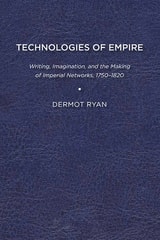
Technologies of Empire looks at the ways in which writers of the long eighteenth century treat writing and imagination as technologies that can produce rather than merely portray empire. Authors ranging from Adam Smith to William Wordsworth consider writing not as part of a larger logic of orientalism that represents non-European subjects and spaces in fixed ways, but as a dynamic technology that organizes these subjects and transforms these spaces. Technologies of Empire reads the imagination as an instrument that works in tandem with writing, expanding and consolidating the networks of empire. Through readings across a variety of genres, ranging from Smith’s The Wealth of Nations and Edmund Burke’s Reflections on the Revolution in France to Maria Edgeworth’s Irish fiction and Wordsworth’s epic poetry, this study offers a new account of writing’s role in empire-building and uncovers a genealogy of the romantic imagination that is shot through by the imperatives of imperialism.

Published by University of Delaware Press. Distributed worldwide by Rutgers University Press.
 
[more]
cover of Technologies of History: Visual Media and the Eccentricity of the Past

Technologies of History

Visual Media and the Eccentricity of the Past

Steve F. Anderson

Dartmouth College Press, 2011

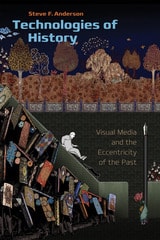
Technologies of History is an engrossing and innovative consideration of how history is constructed today, exploring our most basic relationship to history and the diverse contributions of visual and computational media to conceptions of the past. Embracing the varieties of history offered by experimental film, television, video games, and digital media, Steve F. Anderson mines the creative and discursive potential of this profane and esoteric historiography. He offers a highly readable and consistently fascinating discussion of historiography in visual media, with an emphasis on alternate or fantastic histories, including Star Trek time travel episodes, fake documentaries, films created from home movies and found footage, and video games about cultural traumas such as the siege at Waco and the assassination of President John F. Kennedy. Examining artifacts from the most commercial Hollywood product to the modernist avant-garde, this bold and ambitious polemic seeks to address historians, media scholars, and general readers alike, encouraging all to recognize, engage with, and perhaps even learn from these heterodox histories and the powerful sway they hold over our historical consciousness.
[more]
cover of Technologies of Public Persuasion: An Accidental Issue, Volume 15

Technologies of Public Persuasion

An Accidental Issue, Volume 15

Dilip Parameshwar Gaonkar and Elizabeth A. Povinelli, eds.

Duke University Press, 0

As technology increasingly dominates the public sphere, Technologies of Public Persuasion: An Accidental Issue offers richly descriptive examples of how technologically influenced forms and artifacts of communication effect transformations in the self-understandings of publics and subjects. This special issue of Public Culture exposes readers to new discursive genres and practices, linking literary cultural methodologies and theories to social analysis.

The contributors explore topics ranging from the use of cell phones by middle-class Filipinos in the civilian-backed overthrow of President Joseph Estrada to a media reported "hint" from Alan Greenspan that impacted and altered economic reality through speculation. An essay investigates the politics surrounding the formation and use of Indonesian as a self-consciously modern language designed to reconstitute the social and political identities of its speakers. A photo-essay depicts graffiti on abandoned school buildings as a communicative medium. "Crimes of Substitution: Detection in the Late Soviet Society" looks at late-Soviet detective fiction, censorship strategies, and Soviet semiotics to show how Soviet citizens subverted dictated modes of behavior and challenged the symbolic order of Soviet society. One contributor examines how performance and ethnolinguistic practices become techniques for spatially and socially locating identity.

Contributors. Alberta Arthurs, Dilip Parameshwar Gaonkar, Michael Kaplan, Webb Keane, Patrick Mullen, Serguei Oushakine, Elizabeth A. Povinelli, Vicente L. Rafael, Christopher Schneider, Michael Silverstein, Amanda Weidman

[more]
cover of Technologies of Suspicion and the Ethics of Obligation in Political Asylum

Technologies of Suspicion and the Ethics of Obligation in Political Asylum

Bridget M. Haas

Ohio University Press, 2019

Across the globe, migration has been met with intensifying modes of criminalization and securitization, and claims for political asylum are increasingly met with suspicion. Asylum seekers have become the focus of global debates surrounding humanitarian obligations, on the one hand, and concerns surrounding national security and border control, on the other. In Technologies of Suspicion and the Ethics of Obligation in Political Asylum, contributors provide fine-tuned analyses of political asylum systems and the adjudication of asylum claims across a range of sociocultural and geopolitical contexts.

The contributors to this timely volume, drawing on a variety of theoretical perspectives, offer critical insights into the processes by which tensions between humanitarianism and security are negotiated at the local level, often with negative consequences for asylum seekers. By investigating how a politics of suspicion within asylum systems is enacted in everyday practices and interactions, the authors illustrate how asylum seekers are often produced as suspicious subjects by the very systems to which they appeal for protection.

Contributors: Ilil Benjamin, Carol Bohmer, Nadia El-Shaarawi, Bridget M. Haas, John Beard Haviland, Marco Jacquemet, Benjamin N. Lawrance, Rachel Lewis, Sara McKinnon, Amy Shuman, Charles Watters
[more]
cover of Technologies of the Gendered Body: Reading Cyborg Women

Technologies of the Gendered Body

Reading Cyborg Women

Anne Balsamo

Duke University Press, 1996

This book takes the process of "reading the body" into the fields at the forefront of culture—the vast spaces mapped by science and technology—to show that the body in high-tech is as gendered as ever. From female body building to virtual reality, from cosmetic surgery to cyberpunk, from reproductive medicine to public health policies to TV science programs, Anne Balsamo articulates the key issues concerning the status of the body for feminist cultural studies in a postmodern world.
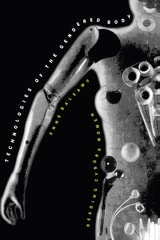
Technologies of the Gendered Body combines close readings of popular texts—such as Margaret Atwood’s novel The Handmaid’s Tale, the movie Pumping Iron II: The Women, cyberpunk magazines, and mass media—with analyses of medical literature, public policy documents, and specific technological practices. Balsamo describes the ways in which certain biotechnologies are ideologically shaped by gender considerations and other beliefs about race, physical abilities, and economic and legal status. She presents a view of the conceptual system that structures individuals’ access to and participation in these technologies, as well as an overview of individuals’ rights and responsibilities in this sometimes baffling area. Examining the ways in which the body is gendered in its interactions with new technologies of corporeality, Technologies of the Gendered Body counters the claim that in our scientific culture the material body has become obsolete. With ample evidence that the techno-body is always gendered and marked by race, this book sets the stage for a renewed feminist engagement with contemporary technological narratives.

[more]
cover of Technologies of the Self: A Seminar with Michel Foucault

Technologies of the Self

A Seminar with Michel Foucault

Luther H. Martin

University of Massachusetts Press, 1988

Shortly before his death in 1984, Michel Foucault spoke of an idea for a new book on “technologies of the self.” He described it as “composed of different papers about the self. . . . about the role of reading and writing in constituting the self. . . . and so on.” The book Foucault envisioned was based on a faculty seminar on “Technologies of the Self,” originally presented at the University of Vermont in the fall of 1982. This volume is a partial record of that seminar. 

In many ways, Foucault's project on the self was the logical conclusion to his historical inquiry over twenty-five years into insanity, deviancy, criminality, and sexuality. Because Foucault died before he completed the revisions of his seminar presentations, this volume includes a careful transcription instead...as a prolegomenon to that unfinished task.

Foucault was a French philosopher, historian of ideas, social theorist, philologist and literary critic.

This volume was edited by Luther H. Martin, Huck Gutman, and Patrick H. Hutton.

[more]
cover of The Book of American Windsor Furniture: Styles and Technologies

The Book of American Windsor Furniture

Styles and Technologies

John Kassay

University of Massachusetts Press, 1998

When John Kassay published The Book of Shaker Furniture in 1980, it was universally praised for its exquisitely rendered and finely detailed drawings of Shaker furniture. In the intervening years, Kassay has turned his attention to Windsor furniture and has now produced an elegant and informative guide to the Windsor style.

Combining comfort, simplicity, and craftsmanship, Windsor chairs have long been prized by collectors. Introduced from England in the early 1700s, the Windsor style took hold in America first as seating for the well-to-do and later as the favorite chair of the general population. Included in the Windsor family are stools, tables, settees, high chairs, cradles, and candle stands, but the greatest variety is found in the chairs, which range from comb-back to bow-back to step-down versions. Their makers took advantage of the natural properties of different woods for particular components of the chairs, employing hickory, red oak, or ash for bent parts, maple for turnings, and pine for seats.

Kassay meticulously documents all of these features and styles with drawings so accurate and precise that amateur furniture makers can use them as blueprints for creating Windsor reproductions. The drawings are complemented by narrative descriptions, photographs, and a list of measured parts for each of the pieces under discussion.
[more]
cover of The New Politics of Visibility: Spaces, Actors, Practices and Technologies in the Visible

The New Politics of Visibility

Spaces, Actors, Practices and Technologies in the Visible

Edited by Andrea Mubi Brighenti

Intellect Books, 2022

Nine interdisciplinary essays employ, explore, and critique the analytical category and the practical stakes of visibility.

Not only does visibility matter to politics, but it is an increasingly intrinsic constituent element and a crucial asset of it. Accordingly, the challenge to social science is that of understanding how the new institutional, urban, and technological settings are reshaping the organization of the visible.

Ranging from urban public space to the new media and social media platforms, a team of distinguished scholars and researchers here addresses a vast terrain of inquiry by joining together original theoretical elaboration with careful empirical studies. The result is a thoroughly interdisciplinary endeavor, conducted with passion and insight. The New Politics of Visibility comprises nine original interdisciplinary chapters that analyze topical areas in the newly emerging modes of governance and society. The transformations of urban space and the working of new media form a core concern recurring through many of the essays but is by no means the sole topic, as other essays address the politics of visibility in crucial cultural spheres, including gender relations and professional life.
[more]
cover of The Power of Large Language Models and AI in the Digital Age: Technologies, applications, security and ethics

The Power of Large Language Models and AI in the Digital Age

Technologies, applications, security and ethics

Neha Sharma

The Institution of Engineering and Technology, 2026
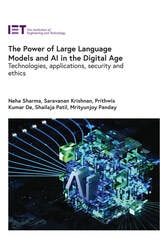
Large language models (LLMs) represent a profound breakthrough in artificial intelligence. More than just statistical tools, these vast neural networks undergo an intensive training process that unlocks unexpected, emergent abilities. Models like ChatGPT are now demonstrating a surprising grasp of reasoning, semantics, and real-world concepts, leading many researchers to ask: are we witnessing the first sparks of Artificial General Intelligence (AGI)?
[more]
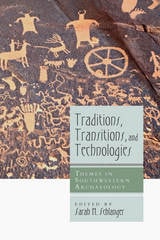
cover of Traditions, Transitions, and Technologies: Themes in Southwestern Archaeology

Traditions, Transitions, and Technologies

Themes in Southwestern Archaeology

Sarah H. Schlanger

University Press of Colorado, 2016
Traditions, Transitions, and Technologies offers diverse perspectives on the state of Southwestern archaeology at the end of the twentieth century, linking the legacies of the past to present trends by placing current research into historical context. Organized around classic themes central to the history of the discipline, this volume explores important new research avenues for understanding the connections between historic Pueblo communities and their distant ancestors, the origins of farming traditions, and the development of the Southwest's distinctive tools and technologies. Providing a unique overview of past and present work in this important region, Traditions, Transitions, and Technologies will be of interest to all doing archaeological research in the Southwestern United States.
[more]
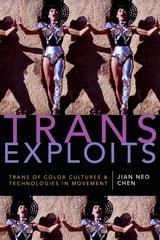
cover of Trans Exploits: Trans of Color Cultures and Technologies in Movement

Trans Exploits

Trans of Color Cultures and Technologies in Movement

Jian Neo Chen

Duke University Press, 2019
In Trans Exploits Jian Neo Chen explores the cultural practices created by trans and gender-nonconforming artists and activists of color. They argue for a radical rethinking of the policies and technologies of racial gendering and assimilative social programming that have divided LGBT communities and communities of color along the lines of gender, sexuality, class, immigration status, and ability. Focusing on performance, film/video, literature, digital media, and other forms of cultural expression and activism that track the displaced emergences of trans people of color, Chen highlights the complex and varied responses by trans communities to their social dispossession. Through these responses, trans of color cultural workers such as performance artist Yozmit, writer Janet Mock, and organizer Jennicet Gutiérrez challenge dominating perceptions and institutions that kill, confine, police, and discipline trans people.
[more]
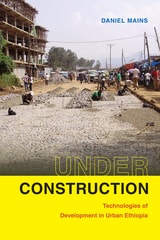
cover of Under Construction: Technologies of Development in Urban Ethiopia

Under Construction

Technologies of Development in Urban Ethiopia

Daniel Mains

Duke University Press, 2019

Over the past decade, Ethiopia has had one of the world's fastest growing economies, largely due to its investments in infrastructure, and it is through building dams, roads, and other infrastructure that the Ethiopian state seeks to become a middle-income country by 2025. Yet most urban Ethiopians struggle to meet their daily needs and actively oppose a ruling party that they associate with corruption and mismanagement. In Under Construction Daniel Mains explores the intersection of development and governance by examining the conflicts surrounding the construction of specific infrastructural technologies: asphalt and cobblestone roads, motorcycle taxis, and hydroelectric dams. These projects serve as sites for nation building and the means for the state to assert its legitimacy. The construction process—as well as Ethiopians' experience of living with the disruption of construction zones—reveals the tension and conflict between the promise of progress and the possibility of failure. Mains demonstrates how infrastructures as both ethnographic sites and as a means of theorizing such concepts as progress, development, and the state offer a valuable contrast to accounts of African abjection and decline.
[more]
cover of Water Societies and Technologies from the Past and Present

Water Societies and Technologies from the Past and Present

Edited by Mark Altaweel and Yijie Zhuang

University College London, 2018

Today, our societies face great challenges with water, both in terms of quantity and quality, but many of these challenges also existed at points in the past. Focusing on Asia, Water Societies and Technologies from the Past and Present seeks to highlight the issues that emerge or reemerge across different societies and periods and asks what they can tell us about water sustainability. Incorporating cutting-edge research and pioneering field surveys on past and present water management practices, the interdisciplinary contributors together identify how societies managed water resource challenges and utilized water in ways that allowed them to evolve, persist, or drastically alter their environment.
 
[more]
cover of When States Kill: Latin America, the U.S., and Technologies of Terror

When States Kill

Latin America, the U.S., and Technologies of Terror

Edited by Cecilia Menjívar and Néstor Rodríguez

University of Texas Press, 2005

Since the early twentieth century, technological transfers from the United States to Latin American countries have involved technologies of violence for social control. As the chapters in this book illustrate, these technological transfers have taken various forms, including the training of Latin American military personnel in surveillance and torture and the provision of political and logistic support for campaigns of state terror. The human cost for Latin America has been enormous—thousands of Latin Americans have been murdered, disappeared, or tortured, and whole communities have been terrorized into silence.

Organized by region, the essays in this book address the topic of state-sponsored terrorism in a variety of ways. Most take the perspective that state-directed political violence is a modern development of a regional political structure in which U.S. political interests weigh heavily. Others acknowledge that Latin American states enthusiastically received U.S. support for their campaigns of terror. A few see local culture and history as key factors in the implementation of state campaigns of political violence. Together, all the essays exemplify how technologies of terror have been transferred among various Latin American countries, with particular attention to the role that the United States, as a "strong" state, has played in such transfers.

[more]
cover of Wireless Power Transfer Technologies: Theory and technologies

Wireless Power Transfer Technologies

Theory and technologies

Naoki Shinohara

The Institution of Engineering and Technology, 2024

Wireless Power Transfer (WPT) serves to transfer power from a grid or storage unit to a device without the need for cable connections. This can be performed by induction, as well as by using radio or microwaves.
[more]