Results by title
2 books match the query 'Teilhard de Chardin, Pierre'
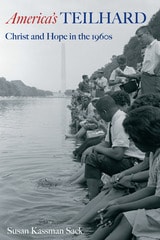
America's Teilhard
Susan Kassman Sack
Catholic University of America Press, 2019
America’s Teilhard: Christ and Hope in the 1960s is a study of the reception of Teilhard in the United States during this period and contributes to an awareness of the thought of this important figure and the impact of his work. Additionally, it further develops an understanding of U.S. Catholicism in all its dimensions during these years, and provides clues as to how it has unfolded over the past several decades. Susan Sack argues that the manner and intensity of the reception of Teilhard’s thought happened as it did at this point in history because of the confluence of the then developing social milieu, the disintegration of the immigrant Catholic subculture, and the opening of the church to the world through Vatican II. Additionally, as these social and historical events unfolded within U.S. culture during these years, the way Teilhard was read, and the contributions which his thought provided changed. This book considers his work as a carrier at times for an almost Americanist emphasis upon progress, energy and hope; in other years his teleological understanding of the value of suffering moves to center. Additionally, the stories of numerous persons – scientists, theologians, politicians, and scholars – who became involved in the American Teilhardian effort are detailed.
[more]
The Tribulations of Sophia
Etienne Gilson
St. Augustine's Press, 2021
The Tribulations of Sophia was the last of Étienne Gilson's books to appear during his lifetime (1967). French readers would have recognized the title's echo of a nineteenth century children's book by the Countess of Ségur, the Misfortunes of Sophia. Its disobedient protagonist, young Sophia (of whom the American Dennis the Menace was to be a very pale imitation) is the cause of a sequence of minor domestic catastrophes. One wonders if Gilson is proposing that the Catholic intellectual world of his day is fraught with her descendants.
The heart of the book is entitled, “Three Lectures on Thomism and its Current Situation.” During the Second Vatican Council and its immediate aftermath, the status of Thomism in Catholic intellectual circles and institutions was vigorously challenged. Once again, the problem of Thomism emerges: What is Thomism and where does it belong? Gilson’s devotion to elaborating the nature of Christian philosophy compels him to confront this question head-on. Indeed, because Gilson approaches Thomism as the veritable model for Christian philosophy he cannot ignore the attempts to suppress or supplant it.
And yet this section also contains a fourth lecture on Teilhard de Chardin, whom Gilson knew and held in high esteem. Was Teilhard's thought to become the new Christian philosophy and theology? Was it even appropriate to label his thought as proper philosophy and theology?
The second, somewhat shorter, portion of the book wrestles with the theme of dialogue that was very much in vogue in the 1960s. The central figure here is the French Marxist Roger Garaudy, internationally known for his call to dialogue with Christians. Gilson denies any possibility of such a dialogue, and certainly any usefulness in it. “I regret to say—not having myself any of the virtues of a skilled dialoguer, which are not to listen to what is being said and to take it in a sense that makes it easy to refute. It is a chimerical hope that there should be two people who proceed otherwise.” But specifically on the point of Christian and Marxist dialogue, from the massive ideological, bestial corpus of Marxism Gilson carves out its fundamental need for the world and serves it back to Garaudy, but without garnish, for among Marxists each has his own particular manner of impoverishing the concept of man.
What might be called the postscript of the book, “Wandering Amid the Ruins,” shares some of Gilson's own experiences and unease in the unsettled situation of the Catholic Church at that time. “The Council was the work of truly supernatural courage. For more than three centuries the Church was harshly blamed for not having taken the initiative to make necessary reforms in the sixteenth century.” Yet Gilson laments that perhaps the manner of enacting reform is confused and not in all cases simply intent on reversing the trends of empty churches and the vocations drought. Perhaps we have not understood the Council at all. Gilson’s kind but clear description of the turmoil in Catholic teaching and thought is for the reader essential to any understanding of the tension and transitions of this period of history.
[more]