Results by title
3 books match the query 'Television and state'
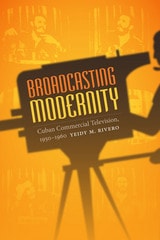
Broadcasting Modernity
Cuban Commercial Television, 1950-1960Yeidy M. Rivero
Duke University Press, 2015
The birth and development of commercial television in Cuba in the 1950s occurred alongside political and social turmoil. In this period of dramatic swings encompassing democracy, a coup, a dictatorship, and a revolution, television functioned as a beacon and promoter of Cuba’s identity as a modern nation. In Broadcasting Modernity, television historian Yeidy M. Rivero shows how television owners, regulatory entities, critics, and the state produced Cuban modernity for television. The Cuban television industry enabled different institutions to convey the nation's progress, democracy, economic abundance, high culture, education, morality, and decency. After nationalizing Cuban television, the state used it to advance Fidel Castro's project of creating a modern socialist country. As Cuba changed, television changed with it. Rivero not only demonstrates television's importance to Cuban cultural identity formation, she explains how the medium functions in society during times of radical political and social transformation.
[more]
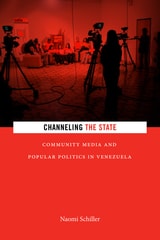
Channeling the State
Community Media and Popular Politics in VenezuelaNaomi Schiller
Duke University Press, 2018
Venezuela's most prominent community television station, Catia TVe, was launched in 2000 by activists from the barrios of Caracas. Run on the principle that state resources should serve as a weapon of the poor to advance revolutionary social change, the station covered everything from Hugo Chávez’s speeches to barrio residents' complaints about bureaucratic mismanagement. In Channeling the State, Naomi Schiller explores how and why Catia TVe's founders embraced alliances with Venezuelan state officials and institutions. Drawing on long-term ethnographic research among the station's participants, Schiller shows how community television production created unique openings for Caracas's urban poor to embrace the state as a collective process with transformative potential. Rather than an unchangeable entity built for the exercise of elite power, the state emerges in Schiller's analysis as an uneven, variable process and a contentious terrain where institutions are continuously made and remade. In Venezuela under Chávez, media activists from poor communities did not assert their autonomy from the state but rather forged ties with the middle class to question whose state they were constructing and who it represented.
[more]
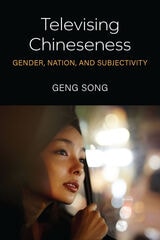
Televising Chineseness
Gender, Nation, and SubjectivityGeng Song
University of Michigan Press, 2022
The serial narrative is one of the most robust and popular forms of storytelling in contemporary China. With a domestic audience of one billion-plus and growing transnational influence and accessibility, this form of storytelling is becoming the centerpiece of a fast-growing digital entertainment industry and a new symbol and carrier of China’s soft power. Televising Chineseness: Gender, Nation, and Subjectivity explores how television and online dramas imagine the Chinese nation and form postsocialist Chinese gendered subjects. The book addresses a conspicuous paradox in Chinese popular culture today: the coexistence of increasingly diverse gender presentations and conservative gender policing by the government, viewers, and society. Using first-hand data collected through interviews and focus group discussions with audiences comprising viewers of different ages, genders, and educational backgrounds, Televising Chineseness sheds light on how television culture relates to the power mechanisms and truth regimes that shape the understanding of gender and the construction of gendered subjects in postsocialist China.
[more]