Results by title
8 books match the query 'Temples'
Bonds of the Dead
Temples, Burial, and the Transformation of Contemporary Japanese BuddhismMark Michael Rowe
University of Chicago Press, 2011
Despite popular images of priests seeking enlightenment in snow-covered mountain temples, the central concern of Japanese Buddhism is death. For that reason, Japanese Buddhism’s social and economic base has long been in mortuary services—a base now threatened by public debate over the status, treatment, and location of the dead. Bonds of the Dead explores the crisis brought on by this debate and investigates what changing burial forms reveal about the ways temple Buddhism is perceived and propagated in contemporary Japan.
Confiscation or Coexistence
Egyptian Temples in the Age of AugustusAndrew Connor
University of Michigan Press, 2022
The interpretative consensus developed after the publication of a handful of key documents—P.Tebt. 2.302 especially, alongside BGU 4.1198 and 1200, and P.Berl.Leihg. 1.5. Connor offers a fundamentally revised interpretation of these texts, building from a fresh examination of the papyri themselves. The book frames the interpretation in a wider discussion of Roman interactions with Egyptian religion, including material from inside and outside Egypt, and locates the development of an interpretative consensus in early 20th-century scholarship within the wider context of empire and colonization at the time. In doing so, Connor explores these papyri through their historical, intellectual, and linguistic contexts, alongside a number of other important texts bearing on the relationship between the temples and the Roman state.
Gods in Dwellings
Temples and Divine Presence in the Ancient Near EastMichael B. Hundley
SBL Press, 2013
In this book devoted exclusively to temples and perceptions of the divine presences that inhabit them, Michael B. Hundley focuses on the official religions of the ancient Near East and explores the interface between the human and the divine within temple environs.
Hundley identifies common ancient Near Eastern temple systems and examines issues that include what temple structures communicate, how temples were understood to function, temple ideology, the installation of divine presence in a temple, the connection between presence and physical representation, and human service to the deity.
Drawing on architectural and spatial theory, ritual theory, theories of language, art history, archaeology, sociocultural anthropology, and comparative studies, Hundley offers a single interpretive lens through which to view temple worship.
Features:
- A close examination of temples in Egypt, Mesopotamia, Hittite Anatolia, and Syria-Palestine
- An interdisciplinary treatment of architecture, language, ritual, and art
- A dual focus on how a deity's divine presence connects to space and art and how human service to the deity maintains the deity's active presence
Hallowed Stewards
Solon and the Sacred Treasurers of Ancient AthensWilliam S. Bubelis
University of Michigan Press, 2016
Hallowed Stewards closely examines those magistracies that were central to Athenian religious efforts, and which are best described as “sacred treasurers.” Given the extensive but fragmentary evidence available to us, which consists mainly of inscriptions but includes such texts as the ps.-Aristotelian Constitution of the Athenians, no catalog-like approach to these offices could properly encompass their details, much less their wider significance. By situating the sacred treasurers within a broader religious and historical framework, Hallowed Stewards not only provides an incisive portrait of the treasurers themselves but also elucidates how sacred property and public finance alike developed in ancient Athens.
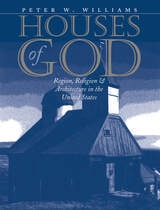
Houses of God
Region, Religion, and Architecture in the United StatesPeter W. Williams
University of Illinois Press, 1997
Karanis
Temples, Coin Hoards, Botanical and Zoological Reports: Seasons 1924-1931Edited by Arthur E.R. Boak
University of Michigan Press, 1933
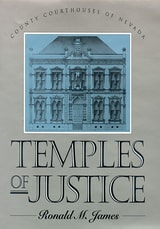
Temples Of Justice
County Courthouses Of NevadaRonald M. James
University of Nevada Press, 1994
From Storey County's High Victorian Italianate-styled courthouse to Lander County's former schoolhouse, now a Neo-classical courthouse, Temples of Justice provides an architectural history of the courthouses of Nevada. In Nevada's first published architectural history, Temples of Justice treats the state's buildings as a series of documents from the past. Presented collectively the courthouses illustrate the choices and influences that have affected Nevada's communities as the citizens have sought to project an image of themselves and their aspirations through public architecture. The courthouses are important local public facilities, and they provide an excellent opportunity to understand the history of attitudes and tastes in the state.
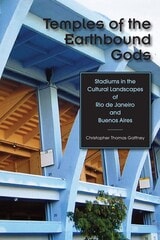
Temples of the Earthbound Gods
Stadiums in the Cultural Landscapes of Rio de Janeiro and Buenos AiresBy Christopher Thomas Gaffney
University of Texas Press, 2008
In Rio de Janeiro, the spiritual home of world football, and Buenos Aires, where a popular soccer club president was recently elected mayor, the game is an integral part of national identity. Using the football stadium as an illuminating cultural lens, Temples of the Earthbound Gods examines many aspects of urban culture that play out within these monumental architectural forms, including spirituality, violence, rigid social norms, anarchy, and also expressions of sexuality and gender.
Tracing the history of the game in Brazil and Argentina through colonial influences as well as indigenous ball courts in Mayan, Aztec, Zapotec, Mixtec, and Olmec societies, Christopher Gaffney's study spans both ancient and contemporary worlds, linking the development of stadiums to urbanization and the consolidation of nation building in two of Latin America's most intriguing megacities.