Results by title
80 books match the query 'Tennessee' and 2 start with a
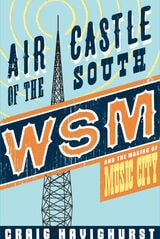
Air Castle of the South
WSM and the Making of Music CityCraig Havighurst
University of Illinois Press, 2013
Started by the National Life and Accident Insurance Company in 1925, WSM became one of the most influential and exceptional radio stations in the history of broadcasting and country music. WSM gave Nashville the moniker “Music City USA” as well as a rich tradition of music, news, and broad-based entertainment. With the rise of country music broadcasting and recording between the 1920s and ‘50s, WSM, Nashville, and country music became inseparable, stemming from WSM’s launch of the Grand Ole Opry, popular daily shows like Noontime Neighbors, and early morning artist-driven shows such as Hank Williams on Mother’s Best Flour.
Sparked by public outcry following a proposal to pull country music and the Opry from WSM-AM in 2002, Craig Havighurst scoured new and existing sources to document the station’s profound effect on the character and self-image of Nashville. Introducing the reader to colorful artists and businessmen from the station’s history, including Owen Bradley, Minnie Pearl, Jim Denny, Edwin Craig, and Dinah Shore, the volume invites the reader to reflect on the status of Nashville, radio, and country music in American culture.
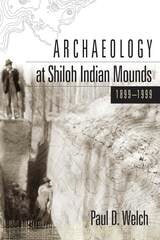
Archaeology at Shiloh Indian Mounds, 1899-1999
Paul D. Welch
University of Alabama Press, 2006
The Shiloh Indian Mounds archaeological site, a National Historic Landmark, is a late prehistoric community within the boundaries of the Shiloh National Military Park on the banks of the Tennessee River, where one of the bloodiest battles of the Civil War was fought in April 1862. Dating between AD 1000 and 1450, the archaeological site includes at least eight mounds and more than 100 houses. It is unique in that the land has never been plowed, so visitors can walk around the area and find the collapsed remains of 800-year-old houses and the 900-meter-long palisade with bastions that protected the village in prehistoric times. Although its location within a National Park boundary has protected the area from the recent ravages of man, riverbank erosion began to undermine the site in the 1970s. In the mid-1990s, Paul Welch began a four-year investigation culminating in a comprehensive report to the National Park Service on the Shiloh Indian Mounds.
These published findings confirm that the Shiloh site was one of at least fourteen Mississippian mound sites located within a 50 km area and that Shiloh was abandoned in approximately AD 1450. It also establishes other parameters for the Shiloh archaeological phase. This current volume is intended to make information about the first 100 years of excavations at the Shiloh site available to the archaeological community.