Results by title
17 books match the query 'Terminal care'
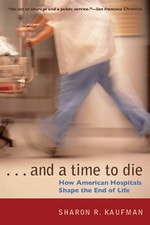
And a Time to Die
How American Hospitals Shape the End of LifeSharon R. Kaufman
University of Chicago Press, 2006
“An act of courage and a public service.”—San Francisco Chronicle
“This beautifully synthesized and disquieting account of how hospital patients die melds disciplined description with acute analysis, incorporating the voices of doctors, nurses, social workers, and patients in a provocative analysis of the modern American quest for a ‘good death.’”—Publishers Weekly
“Kaufman exposes the bureaucratic and ethical quandaries that hover over the modern deathbed.”—Psychology Today
“Kaufman’s analysis illuminates the complexity of the care of critically ill and dying patients [and] the ambiguity of slogans such as ‘death with dignity,’ ‘quality of life,’ and ‘stopping life support.’ . . . Thought-provoking reading for everyone contemplating the fate of us all.”—New England Journal of Medicine
Care of the Dying Patient
Edited by David A. Fleming & John C. Hagan III
University of Missouri Press, 2010
This collection encompasses diverse aspects of end-of-life care across multiple disciplines, offering a broad perspective on such central issues as control of pain and other symptoms, spirituality, the needs of caregivers, and special concerns regarding the elderly. In its pages, readers will find out how to:
- effectively utilize palliative-care services and activate timely referral to hospice,
- arrange for care that takes into account patients’ cultural beliefs, and
- respond to spiritual and psychological distress, including the loss of hope that often overshadows physical suffering.
While physicians have the ability to treat disease, they also help to determine the time and place of death, and they must recognize that end-of-life choices are made more complex than ever before by advances in medicine and at the same time increasingly important. Care of the Dying Patient addresses some of the challenges frequently confronted in terminal care and points the way toward a more compassionate way of death.
Consoling Ghosts
Stories of Medicine and Mourning from Southeast Asians in ExileJean M. Langford
University of Minnesota Press, 2013
In conversation with emigrants from Laos and Cambodia, Jean M. Langford repeatedly met with spirits: the wandering souls of the seriously ill, dangerous ghosts of those who died by violence, restless ancestors displaced from their homes. For these emigrants, the dead not only appear in memories, safely ensconced in the past, but also erupt with a physical force into the daily life and dreams of the present.
Inspired by these conversations, Consoling Ghosts is a sustained contemplation of relationships with the dying and the dead. At their heart, as Langford’s work reveals, emigrants’ stories are parables not of cultural difference but rather of life and death. Langford inquires how and why spirits become implicated in remembering and responding to violence, whether the bloody violence of war or the more structural violence of social marginalization and poverty. What is at stake, she asks, when spirits break out of their usual confinement as symbolic figures for history, heritage, or trauma to haunt the corridors of hospitals and funeral homes? Emigrants’ theories and stories of ghosts, Langford suggests, inherently question the metaphorical status of spirits, in the process challenging both contemporary bioethics of dying and dominant styles of mourning. Consoling Ghosts explores the possibilities opened up by a more literal existence of ghosts, from the confrontation of shades of past violence through bodily ritual to rites of mourning that unfold in acts of material care for the dead instead of memorialization.
Ultimately the book invites us to consider alternate ways of facing death, conducting relationships with the dead and dying, and addressing the effects of violence that continue to reverberate in bodies and social worlds.
Coping with Loss
A Guide to Death, Grief and Clinical Experiences with Dying PatientsErin Currey
Michigan Publishing Services, 2025
In a cure-focused profession, the death of a patient can often feel like a failure. Yet, every patient will inevitably transition from health to illness, independence to dependence, and life to death. These transitions often mark some of the most meaningful interactions between patients and care providers. Coping with Loss is a self-directed workbook that provides addresses common questions, concerns, and emotional responses to these interactions with dying patients. Each lesson opens with real stories of professional grief that will resonate with healthcare professionals at multiple stages of their careers. Critical topics covered include recognizing the diverse presentations of grief, identifying dying patients, decompressing individually, and debriefing as a team. Significant portions of the text discuss how challenging patient cases impact the formation of professional identity. Ultimately, this workbook provides a place for healthcare providers to reflect on their patient interactions and learn how to support themselves and their healthcare teams through grief.
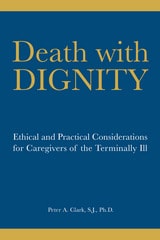
Death with Dignity
Ethical and Practical Considerations for Caregivers of the Terminally IllPeter A. Clark, S.J
University of Scranton Press, 2010
End-of-life issues and questions are complex and frequently cause confusion and anxiety. In Death with Dignity,theologian, medical ethicist, and pastoral caregiver Peter A. Clark examines numerous issues that are pertinent to patients, family members, and health care professionals, including physiology, consciousness, the definition of death, the distinction between extraordinary and ordinary means, medical futility, “Do Not Resuscitate” orders, living wills, power of attorney, pain assessment and pain management, palliative and hospice care, the role of spirituality in end-of-life care, and physicians’ communication with terminal patients. Patients, family members, medical students, and health care professionals will find in Death with Dignity thepractical and ethical knowledge they need to capably and confidently cope with end-of-life challenges.
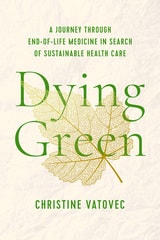
Dying Green
A Journey through End-of-Life Medicine in Search of Sustainable Health CareChristine Vatovec
Rutgers University Press, 2023
In Dying Green, award-winning educator Christine Vatovec offers an engaging study that asks us to consider the broader environmental sustainability of health care. Through a comparative analysis of the care provided to terminally ill patients in a conventional cancer ward, a palliative care unit, and an acute-care hospice facility, she shows how decisions made at a patient’s bedside govern the environmental footprint of the healthcare industry. Likewise, Dying Green offers insights on the many opportunities that exist for reducing the ecological impacts of medical practices in general, while also enhancing care for the dying in particular. By envisioning a more sustainable approach to care, this book offers a way forward that is better for both patients and the planet.
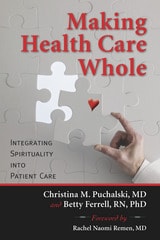
Making Health Care Whole
Integrating Spirituality into Patient CareChristina Puchalski
Templeton Press, 2021
In the last fifteen years, the field of palliative care has experienced a surge in interest in spirituality as an important aspect of caring for seriously ill and dying patients. While spirituality has been generally recognized as an essential dimension of palliative care, uniformity of spiritual care practice has been lacking across health care settings due to factors like varying understandings and definitions of spirituality, lack of resources and practical tools, and limited professional education and training in spiritual care.
Meaning in Suffering
Caring Practices in the Health ProfessionsEdited by Nancy Johnston and Alwilda Scholler-Jaquish
University of Wisconsin Press, 2007
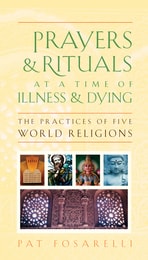
Prayers and Rituals at a Time of Illness and Dying
The Practices of Five World ReligionsPatricia Fosarelli
Templeton Press, 2008
In the course of caring for the ill or dying, health care professionals are sometimes the only ones available to provide spiritual comfort to their patients. In our modern pluralistic society, where patients could come from any number of religious traditions, it can often be difficult to find exactly the right words in these situations.
Prayers and Rituals at a Time of Illness and Dying: The Practices of Five World Religions by experienced physician and theologian Pat Fosarelli offers clear instructions for health care professionals on how to better understand the needs of their Buddhist, Hindu, Muslim, Christian, and Jewish patients during these difficult times. Devoting separate chapters to each tradition, Fosarelli briefly outlines the basic beliefs and then looks at the main tenets of each religion, exploring the varied approaches that they take to illness and end-of-life issues. For each tradition, she also describes practices and offers suitable prayers. Each chapter suggests modifications that may be necessary for Western hospitals, modifications for children, and specific suggestions about what not to do or say in respect to different faith traditions.
This easy-to-use, pocket-sized resource will be referenced again and again by physicians, paramedics, hospital and military chaplains, pastoral counselors, hospice providers, and other medical professionals.
Prelude to Hospice
Florence Wald, Dying People, and their FamiliesAbel, Emily K.
Rutgers University Press, 2018

So Far Away
A Daughter's Memoir of Life, Loss, and LoveChristine W. Hartmann
Vanderbilt University Press, 2011
Christine's father, as it turned out, prepared too slowly for old age. Before he had made any decision, fate disabled him through a series of strokes. Confined to a nursing home, severely impaired by dementia and frustrated by his circumstances, his life epitomized the predicament her mother wanted to avoid.
So Far Away gives us an intimate view of a person interacting with and reacting to her parents at the ends of their lives. In a richly detailed, poignant story of family members' separate yet interwoven journeys, it underscores the complexities and opportunities that life presents each one of us.
Social Aspects of the Prolongation of Life
Diana Crane
Russell Sage Foundation, 1969
Speaking for the Dying
Life-and-Death Decisions in Intensive CareSusan P. Shapiro
University of Chicago Press, 2019
Speaking for the Dying tells their story, drawing on daily observations over more than two years in two intensive care units in a diverse urban hospital. From bedsides, hallways, and conference rooms, you will hear, in their own words, how physicians really talk to families and how they respond. You will see how decision makers are selected, the interventions they weigh in on, the information they seek and evaluate, the values and memories they draw on, the criteria they weigh, the outcomes they choose, the conflicts they become embroiled in, and the challenges they face. Observations also provide insight into why some decision makers authorize one aggressive intervention after the next while others do not—even on behalf of patients with similar problems and prospects. And they expose the limited role of advance directives in structuring the process decision makers follow or the outcomes that result.
Research has consistently found that choosing life or death for another is one of the most difficult decisions anyone can face, sometimes haunting families for decades. This book shines a bright light on a role few of us will escape and offers steps that patients and loved ones, health care providers, lawyers, and policymakers could undertake before it is too late.
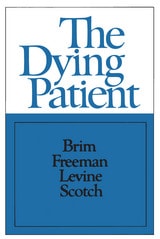
The Dying Patient
Orville G., Jr. Brim
Russell Sage Foundation, 1970
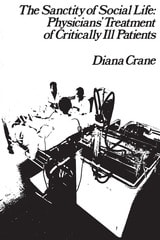
The Sanctity of Social Life
Physician's Treatment of Critically Ill PatientsDiana Crane
Russell Sage Foundation, 1975
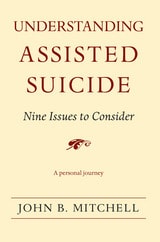
Understanding Assisted Suicide
Nine Issues to ConsiderJohn B. Mitchell
University of Michigan Press, 2007
Assisted suicide remains one of the most emotionally charged and controversial topics—and the issue isn’t going away any time soon. As the baby boomer generation ages, many of us will watch as our parents—and ourselves—grow older, and wonder at the decisions that lie ahead.
Understanding Assisted Suicide provides both a fresh take on this important topic and the framework for intelligent participation in the discussion. Uniquely, the author frames the issue using his own experience watching both his parents die, which led him to ask fundamental questions about death, dying, religion, and the role of medicine and technology in alleviating human suffering.
In concerns about assisted suicide, each person’s “big picture” has largely been created out of picking and choosing from nine separate snapshot albums.
Understanding this offers a perspective for quickly determining the sources of another’s opinion on assisted suicide, as well as the issues they are not considering. Most importantly, Understanding Assisted Suicide offers a clear, easy-to-traverse landscape over which those who are sincerely looking for their own answers can navigate. The “nine-issue structure” allows both careful exploration of separate issues and a view of the full spectrum of ideas involved.
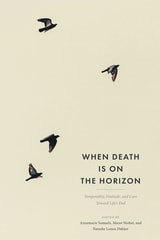
When Death Is on the Horizon
Temporality, Finitude, and Care Toward Life’s EndAnnemarie Samuels
Rutgers University Press, 2026
The urge to engage with finitude is increasingly central in our present apocalyptic time of political and ecological turmoil. Aging populations and the rapid development of advanced, but expensive, technologies to ever further postpone death pose significant healthcare challenges for societies around the world. In these times, how do people care when the end of life is near? How do they orient toward death? Do they see death as an absolute end, and if not, what sort of horizon does death present? Questioning taken for granted assumptions about end-of-life care, When Death Is on the Horizon analyzes how people approach death in a wide variety of geographical locations and social contexts. Through in-depth ethnographic case studies, it shows how people orient toward, beyond, and away from death, and how they do so within a world marked by historic and ongoing socio-political and structural inequalities.
This book is also freely available online as an open access digital edition.