Results by title
7 books match the query 'Their Own Words'
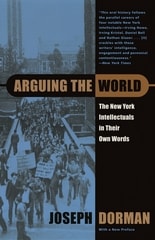
Arguing the World
The New York Intellectuals in their Own WordsJoseph Dorman
University of Chicago Press, 2001
Joseph Dorman's acclaimed documentary, Arguing the World, included stunning interviews with Irving Howe, Daniel Bell, Irving Kristol, and Nathan Glazer. Now with a new preface, Dorman converted the film into this book that includes an overview of the New York Intellectuals and a chapter on the future of the public intellectual. Expertly spliced together from the film and new material, this book gives the sense that these men are still engaged in their fiery debates that targeted everything from the Depression to McCarthyism to the rise of the New Left through the Age of Reagan.
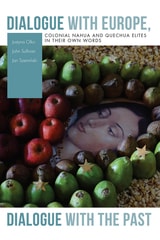
Dialogue with Europe, Dialogue with the Past
Colonial Nahua and Quechua Elites in Their Own WordsJustyna Olko
University Press of Colorado, 2018
In each chapter a particular document is transcribed exactly as it appears in the original manuscript or colonial printed document, with the editor placing it in historical context and considering the degree of European influence. These texts show the nobility through documents they themselves produced or caused to be produced—such as wills, land deeds, and petitions—and prioritize indigenous ways of expression, perspectives, and concepts. Together, the chapters demonstrate that native elites were independent actors as well as agents of social change and indigenous sustainability in colonial society. Additionally, the volume diversifies the commonly homogenous term “cacique” and recognizes the differences in elites throughout Mesoamerica and the Andes.
Showcasing important and varied colonial genres of indigenous writing, Dialogue with Europe, Dialogue with the Past reveals some of the realities, needs, strategies, behaviors, and attitudes associated with the lives of the elites. Each document and its accompanying commentary provide additional insight into how the nobility negotiated everyday life. The book will be of great interest to students and researchers of Mesoamerican and Andean history, as well as those interested in indigenous colonial societies in the Spanish Empire.
Contributors: Agnieszka Brylak, Maria Castañeda de la Paz, Katarzyna Granicka, Gregory Haimovich, Anastasia Kalyuta, Julia Madajczak, Patrycja Prządka-Giersz
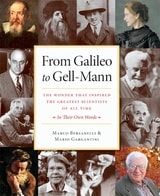
From Galileo to Gell-Mann
The Wonder that Inspired the Greatest Scientists of All Time: In Their Own WordsMarco Bersanelli
Templeton Press, 2009
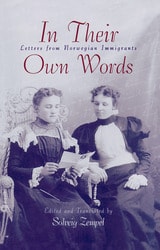
In Their Own Words
Letters from Norwegian ImmigrantsSolveig. Zempel
University of Minnesota Press, 1991
For most Norwegians in the nineteenth century, America was a remote and exotic place until the first immigrants began to write home. Their letters were among the most valuable, accessible, and reliable sources of information about the new world and the journey to it. For many immigrants, writing letters home was their most cherished opportunity to communicate their thoughts and feelings in their native language.
Through vivid translations of letters written to family and friends between 1870 and 1945, In Their Own Words traces the stories of nine Norwegian immigrants: farmer, fisherman, gold miner, politician, unmarried mother, housewife, businessman, railroad worker, contractor. Their common bond was the experience of immigration and acculturation, but their individual experiences were manifested in a wide variety of forms.
Solveig Zempel has thoughtfully selected and translated letters rich in personal description and observation to present each writer’s subjective view of historical events. Often focusing on the minutiae of daily life and the feelings of the individual immigrant, the letters form a complex, intimate, and colorful mosaic of the immigrant world.
In Their Own Words
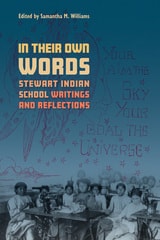
Stewart Indian School Writings and ReflectionsSamantha M. Williams
University of Nevada Press, 2027
In Their Own Words: Stewart Indian School Writings and Reflections examines Stewart Indian School through writings produced by its students. Stewart was established in 1890 in Carson City, Nevada, to educate and assimilate Native American children. Students from across the West attended the school, which evolved from a militaristic institution into one that, by the late 1960s and 1970s, emphasized academics and athletics. The U.S. government closed Stewart in 1980, citing financial and structural concerns.
In the book, student writings document daily lessons and activities, thoughts about academic and vocational training, and responses to life within the institution. The school’s publications also gave students a platform for expression, serving as a window into what it meant to be Native in a government-run boarding school system.
The book includes original interviews with Stewart alumni covering the 1950s, 1960s, and 1970s. These firsthand accounts provide new information about student life, including positive and negative perspectives, and offer context for the varied experiences of those who attended.
Together, the writings and interviews offer a fuller understanding of student life at Stewart.
Roots and Resilience
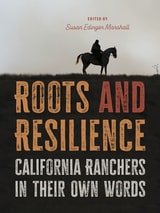
California Ranchers in Their Own WordsSusan Edinger Marshall
University of Nevada Press, 2024
The editors have drawn together these stories, poems, and musings from ranchers across the state, calling upon real people to share their experiences, and beckoning readers to find a shared understanding concerning often divisive land-use topics. Many perspectives are considered, including those of transplanted suburbanites to seventh-generation heirs. Notably, many women’s writings are including in the book, offering unique and valuable perspectives on ranching culture.
Roots and Resilience gives voice to California’s Indigenous, Mexican American, Basque and other European American ranchers, asking the reader to find common ground in the name of land stewardship and conservation.
Straight A's
Asian American College Students in Their Own WordsChristine R. Yano and Neal K. Adolph Akatsuka, editors
Duke University Press, 2018