Results by title
10 books match the query 'Theory Practice'
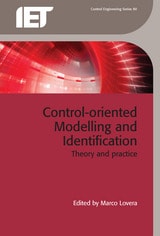
Control-oriented Modelling and Identification
Theory and practiceMarco Lovera
The Institution of Engineering and Technology, 2015

Feminist Locations
Global and Local, Theory and PracticeDeKoven, Marianne
Rutgers University Press, 2001
Contemporary feminist scholarship has done much to challenge the many binary constructions at the heart of Western culture: white/nonwhite, theory/practice, and, most notably, masculine/feminine. Feminist criticism has reshaped these conceptions by breaking them apart and reconfiguring them into intersecting, relational fields of difference. The contributors to this collection look to the future of feminist theory and practice, specifically in terms of their complex relationship with the global and local configurations of postmodernity.
In the first part of this book, current feminist theory is assessed for possible future directions. Part two focuses primarily on political issues and part three on questions of the body. Topics include feminist success versus social backlash, global womens human rights, postcolonial feminism, the politics of reproduction, and narratives of womens aging in postmodern culture.
Contributors: Karen Barad, Anne C. Bellows, Charlotte Bunch, Nao Bustamante, Elaine K. Chang, Marianne DeKoven, Leela Fernandes, Susan Stanford Friedman, Coco Fusco, Radha S. Hegde, Cheryl Johnson-Odim, E. Ann Kaplan, Debra J. Liebowitz, Rajeswari Sunder Rajan, Cynthia Saltzman, Lynne Segal

Jewish Rhetorics
History, Theory, PracticeEdited by Michael Bernard-Donals and Janice W. Fernheimer
Brandeis University Press, 2014
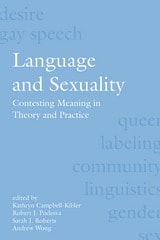
Language and Sexuality
Contesting Meaning in Theory and PracticeEdited by Kathryn Campbell-Kibler, Robert J. Podesva, Sarah Roberts, and Andrew
CSLI, 2001

Provoking Agents
GENDER AND AGENCY IN THEORY AND PRACTICEEdited by Judith Kegan Gardiner
University of Illinois Press, 1995
dealing with issues of agency. The authors raise issues that are very
important . . . and they raise them as they must be raised--by bridging
theory and action." -- Kathryn Pine Addelson, author of Moral
Passages: Toward a Collectivist Moral Theory
Both the women's liberation movement and those who have studied it characterize
agency as the capacity to make change in individual consciousness, personal
lives, and society. The seventeen contributors to Provoking Agents
explore whether--and how--feminist theory, writing, and other social practices
can help readers move beyond seeing women as a powerless group to effecting
changes in their own lives and, ultimately, becoming social activists.
Topics in this multi-disciplinary collection range from maternal surrogacy
to writing, from consciousness-raising to AIDS activism, from pornography
to local organizing
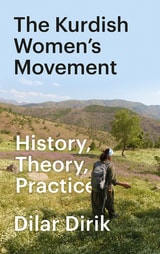
The Kurdish Women’s Movement
History, Theory, PracticeDilar Dirik
Pluto Press, 2021
'One the foremost writers and participants in the Kurdish women's movement' - Harsha Walia
The Kurdish women's movement is at the heart of the most exciting revolutionary experiment in the world today: Rojava. Forged over decades of struggle, most recently in the fight against ISIS, Rojava embodies a radical commitment to ecology, democracy and gender equality. But while striking images of Kurdish women in desert fatigues proliferate, a true understanding of the women's movement remains elusive.
Taking apart the superficial and Orientalist frameworks that dominate, Dilar Dirik offers instead an empirically rich account of the women's movement in Kurdistan. Drawing on original research and ethnographic fieldwork, she surveys the movement's historical origins, ideological evolution, and political practice over the past forty years. Going beyond abstract ideas, Dirik locates the movement's culture and ideology in its concrete work for women's liberation and radical democracy.
Taking the reader from the guerrilla camps in the mountains to radical women's academies and self-organized refugee camps, the book invites readers around the world to engage with the revolution in Kurdistan, both theoretically and practically, as a vital touchstone in the wider struggle for a militant anti-fascist, anti-capitalist feminist internationalism.
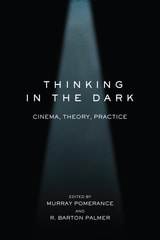
Thinking in the Dark
Cinema, Theory, PracticePomerance, Murray
Rutgers University Press, 2015
Thinking in the Dark introduces readers to twenty-one key theorists whose work has made a great impact on film scholarship today, including Rudolf Arnheim, Sergei Eisenstein, Michel Foucault, Siegfried Kracauer, and Judith Butler. Rather than just discussing each theorist’s ideas in the abstract, the book shows how those concepts might be applied when interpreting specific films by including an analysis of both a classic film and a contemporary one. It thus demonstrates how theory can help us better appreciate films from all eras and genres: from Hugo to Vertigo, from City Lights to Sunset Blvd., and from Young Mr. Lincoln to A.I. and Wall-E.
The volume’s contributors are all experts on their chosen theorist’s work and, furthermore, are skilled at explaining that thinker’s key ideas and terms to readers who are not yet familiar with them. Thinking in the Dark is not only a valuable resource for teachers and students of film, it’s also a fun read, one that teaches us all how to view familiar films through new eyes.
Theorists examined in this volume are: Rudolf Arnheim, Béla Balázs, Roland Barthes, André Bazin, Walter Benjamin, Judith Butler, Stanley Cavell, Michel Chion, Gilles Deleuze, Jean Douchet, Sergei Eisenstein, Jean Epstein, Michel Foucault, Siegfried Kracauer, Jacques Lacan, Vachel Lindsay, Christian Metz, Hugo Münsterberg, V. F. Perkins, Jacques Rancière, and Jean Rouch.
Time Warps, String Edits, and Macromolecules
The Theory and Practice of Sequence ComparisionDavid Sankoff and Joseph Kruskal
CSLI, 1983
Transforming the Personal, Political, Historical and Sacred in Theory and Practice
Personal, Political, Historical, and SacredManfred Halpern
University of Scranton Press, 2009
Women and Welfare
Theory and Practice in the United States and EuropeHirschmann, Nancy J
Rutgers University Press, 2001
The social welfare state is believed by many to be one of the great achievements of Western democracy in the twentieth century. It institutionalized for the first time a collective commitment to improving individual life chances and social well-being. However, as we move into a new century, the social welfare state everywhere has come under increasing pressure, raising serious doubts about its survival.
Featuring essays by experts from a variety of fields, including law, comparative politics, sociology, economics, cultural studies, philosophy, and political theory, Women and Welfare represents an interdisciplinary, multimethodological and multicultural feminist approach to recent changes in the welfare system of Western industrialized nations. The broad perspective, from the philosophical to the quantitative, provides an excellent overview of the subject and the most recent scholarly literature. The volume offers a crosscultural analysis of welfare “reform” in the 1990s, visions of what a “woman-friendly” welfare state requires, and an examination of theoretical and policy questions feminists and concerned others should be asking.