Results by title
6 books match the query 'There's'

Jane Fonda
There's a Great Deal to SayMarilyn S. Greenwald
Rutgers University Press, 0
Since the late 1960s, Jane Fonda has identified as an activist first and an actor second, using her celebrity as a vehicle to convey her views and her advocacy. Few stars of her stature have been as simultaneously acclaimed and vilified as Fonda. Even as she won two Academy Awards and was a major box office draw of the 1970s and 1980s, she received reams of hate mail for her political activism and antiwar stances. This book explores Fonda’s devotion to movement politics—sometimes at the expense of her career and her personal safety.
Digging deep into rare material from cinema archives and Fonda’s own personal papers, journalist Marilyn Greenwald tells the story of how Fonda came to view acting as a “side gig” that gives her a worldwide platform to convey her personal and political views. Charting the evolution of her activism and the merging of her acting and producing with her advocacy, Greenwald focuses on the years from 1968—when she was jarred out of complacency by the Vietnam War—to 1980, after the release of The China Syndrome and the advent of the Three Mile Island nuclear crisis, which brought to light the possible dangers of nuclear energy. Greenwald details how three of her films—Klute (1971), Coming Home (1978), and The China Syndrome (1979)—were designed to further her personal beliefs. She also considers how Fonda has weathered changes in the entertainment industry and public tastes to produce and star in decades' worth of socially conscious projects. Charting Fonda’s personal and professional growth while offering a candid account of her struggles, this book shows how Fonda viewed movies as an influential storytelling tool that can influence public opinion, change minds, and trigger social change.
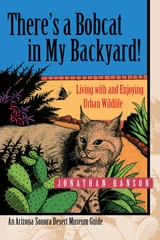
There's a Bobcat in My Backyard
Living with and Enjoying Urban WildlifeJonathan Hanson
University of Arizona Press, 2004
Human residents of the Sonoran Desert are sometimes not completely comfortable when confronted by the wild creatures with whom they share this fragile habitat. But have no fear—please! Not only do these critters mean you no harm, they can also be a source of immense delight.
In this entertaining guidebook, naturalist Jonathan Hanson introduces readers to the satisfaction of attracting and enjoying desert wildlife. Whether your home is deep within the city limits or on what is (currently) the edge of human settlement, you can turn your backyard into a miniature wildlife refuge by providing a simple combination of food, water, and habitat. An appropriately landscaped yard can become a home for a bevy of birds, beasts, and bugs, while even a condo patio can attract colorful hummingbirds and butterflies. Hanson advises you on what kind of birdseed to put out to attract the most interesting avian species, how to tell the difference between rabbits and jackrabbits, and when to worry about roving reptiles—which really isn't all that often. He'll even help you pick out a pair of binoculars to heighten your enjoyment.
Not all desert creatures offer people a positive experience, and Hanson tells how to cope with those that are sometimes considered pests—whether it's the Gila woodpecker announcing its presence on your roof at five in the morning, the rattlesnake slithering unconcerned across your porch, the coyote running amok with a taste for wandering housecats, or the aforementioned woodrat homesteading in a major appliance or car engine. From bears to bees to "creepy crawlies"—scorpions, spiders, and the like—he lets you know when you need to be cautious . . . and when you simply need to give a wild animal its space.
If you live in the desert, you're part of the desert. This book, generously laced with humor and brimming with helpful information, can turn you from a mere bystander into an active participant in an environment in which we all—people and wildlife—must coexist.
There's a Disco Ball Between Us
A Theory of Black Gay LifeJafari S. Allen
Duke University Press, 2021
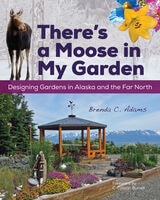
There's a Moose in My Garden
Designing Gardens in Alaska and the Far NorthBrenda C. Adams
University of Alaska Press, 2013
Adams provides helpful tips for Far Northern gardeners on how to design and implement successful landscape environments. The book outlines the entire planning and planting process, covering such aspects as handling low-angled sun, soft light, expansive vistas, and a cool climate.
There’s No Place Like Home Video
James M. Moran
University of Minnesota Press, 2002
Defines, examines, and elevates home video to its rightful place
From its recording of family events to its influence on filmmaking, home video defies easy categorization and demands serious consideration. In There’s No Place Like Home Video, James Moran takes on this neglected aspect of popular culture. He offers a cultural history of amateur home video, exploring its technological and ideological predecessors, the development of event videography, and its symbiotic relationship with television and film. He also investigates the broader field of video, taking on the question of medium specificity: the attempt to define its unique identity, to capture what constitutes its pure practice.
In Moran’s discussion of video, he argues that previous scholars have not sufficiently dealt with its nature as hybrid, varied, and mutable. He argues that such a medium shouldn’t be conceived as pure in and of itself; it is neither autonomous from other media nor entirely dependent on any other, but instead has a chameleonlike interface with films, television, computers, telephones, and even architecture. Rather than look for a grand narrative to define its specificity, Moran places video and home video at the intersections of multiple forms of communication.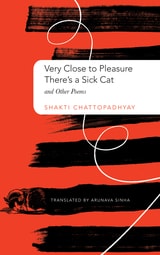
Very Close to Pleasure, There's a Sick Cat
And Other PoemsShakti Chattopadhyay
Seagull Books, 2018
This book presents more than one hundred of Chattopadhyay’s poems, introducing an international audience to one of the most prominent and important Bengali poets of the twentieth century.