Results by title
2 books match the query 'Third Space'
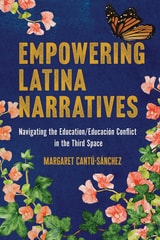
Empowering Latina Narratives
Navigating the Education/Educación Conflict in the Third SpaceMargaret Cantú-Sánchez
University of Arizona Press, 2025
In this groundbreaking book, author Margaret Cantú-Sánchez takes on the U.S. educational system. Cantú-Sánchez introduces the concept of the education/educación conflict, where Latinas navigate the clash between home and school epistemologies under Anglocentric, assimilationist pedagogies.
By analyzing literature, such as Barbara Renaud González’s Golondrina, Why Did You Leave Me?, and education testimonios from seminal works like This Bridge Called My Back and Telling to Live, Cantú-Sánchez reveals how Latina/Chicana protagonists and students negotiate this conflict through a mestizaje of epistemologies—blending elements of both home and school cultures within the third space of education.
Cantú-Sánchez utilizes an interdisciplinary approach, deploying critical race theory, Chicana third-space feminism, and other pedagogical theories like sentipensante (a sensing/thinking) pedagogy employed by education scholar Laura Rendon, among others. By providing pivotal insights and strategies, she demonstrates how educators can implement culturally relevant pedagogies in their classrooms from K–12 through higher education, fostering environments where Latina/Chicana students can thrive without forsaking their cultural identities.
Empowering Latina Narratives not only identifies the challenges Latina/Chicana students face but also offers a roadmap for overcoming them, making this book an essential resource for scholars, educators, and students committed to culturally inclusive education.
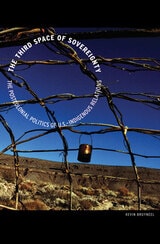
The Third Space of Sovereignty
The Postcolonial Politics of U.S.–Indigenous RelationsKevin Bruyneel
University of Minnesota Press, 2007
The imposition of modern American colonial rule has defined U.S.–indigenous relations since the time of the American Civil War. In resistance, Kevin Bruyneel asserts, indigenous political actors work across American spatial and temporal boundaries, demanding rights and resources from the government while also challenging the imposition of colonial rule over their lives. This resistance engenders what he calls a “third space of sovereignty,” which resides neither inside nor outside the U.S. political system but rather exists on its boundaries, exposing both the practices and limitations of American colonial rule.
The Third Space of Sovereignty offers fresh insights on such topics as the crucial importance of the formal end of treaty-making in 1871, indigenous responses to the prospect of U.S. citizenship in the 1920s, native politics during the tumultuous civil rights era of the 1960s, the question of indigenousness in the special election of California’s governor in 2003, and the current issues surrounding gaming and casinos.
In this engaging and provocative work, Bruyneel shows how native political actors have effectively contested the narrow limits that the United States has imposed on indigenous people’s ability to define their identity and to develop economically and politically on their own terms.
Kevin Bruyneel is assistant professor of politics at Babson College.