Results by title
4 books match the query 'Third World'

Peripheral Visions
Deterrence Theory and American Foreign Policy in the Third World, 1965-1990Ted Hopf
University of Michigan Press, 1994
This book challenges the classical Cold War assumption that aggressive military force was necessary to project resolve against Soviet expansionism. By analyzing historical data from geopolitical flashpoints, Hopf demonstrates that military interventions were frequently counterproductive, whereas non-military mechanisms like diplomacy and economic statecraft were far more effective.
[more]
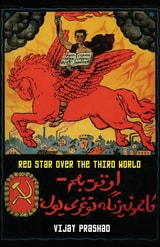
Red Star Over the Third World
Vijay Prashad
Pluto Press, 2019
“An original and much needed analysis of an important but neglected aspect of the legacy of the Russian Revolution…. Essential reading.”—Mary Davis, Marx Memorial Library
From Cuba to Vietnam, China to South Africa, the October Revolution of 1917 inspired millions of people beyond the territory of Russia. It proved that the masses could not only overthrow autocratic governments, but that they could also form an opposing government in their own image.
The new idea that the working class and the peasantry could be allied, combined with the clear strength and necessity of a vanguard party, guided multiple revolutions across the globe. Here is much-needed antidote to all the glum histories written on the demise of the Soviet Union. Vijay Prashad throws a spotlight on the way the Russian Revolution was seen and received in the countries colonized by European empires. With Russia as an inspiration and providing support, suddenly workers and peasants, those left out of capitalist prosperity, organized and attempted to create for themselves real socialist revolution. Prashad’s chapters include:
*Eastern Graves
*Red October
*Follow the Path of the Russians
*The Lungs of Russia
*Soviet Asia
*Enemy of Imperialism
*Eastern Marxism
*Colonial Fascism
*Polycentric Communism
*Memories of Communism
The author writes in this Preface, “It has been a quarter-century since the demise of the USSR. And yet, the marks of the October Revolution remain—not just in the territories of the USSR but more so in what used to be known as the Third World. From Cuba to Vietnam, from China to South Africa, the October Revolution remains as an inspiration. After all, that Revolution proved that the working class and the peasantry could not only overthrow an autocratic government but it could form its own government.”
This book explains the power of the October Revolution in the Global South. From Ho Chí Minh to Fidel Castro, reflections on polycentric communism, and collective memories of communism, it shows how, for a brief moment, another world was possible.
[more]

The Democratisation of Disempowerment
The Problem of Democracy in the Third WorldJochen Hippler
Pluto Press, 1995
[more]

The Third World
A Vital New Force in International AffairsPeter Worsley
University of Chicago Press, 1970
Today the colonial empires of the world are shrinking, and the new nations which have emerged from the colonial past are rapidly developing into an important force in international affairs—the "third world." They are faced by a common problem, the urgent necessity to transform a peasant society into a modern industrial economy, and they are united by a common outlook, absolute opposition to all forms of colonialism and neocolonialism.
In this work Peter Worsley analyzes the unique political forms that have evolved as a result of these two basic conditions. In his view the third world has rejected both of the great ideologies of today. Their new solutions are unique in world history, being based on populism, socialism, and, often, the one-party state, which, although anathema to the Western liberal, is a natural development in societies united by the common enemy of colonialism.
"No one seriously concerned with the greatest problem of our time, the division of the world between the developed, industrialized, 'affluent' countries and les nations prolétaires, can afford to miss this book. . . . Professor Worsley has succeeded in giving us more solid information about underdeveloped parts of the world than can be found in any other book of comparable length."—The Times Literary Supplement
"Peter Worsley . . . has written an excellent descriptive analysis of the evolution and present state of a third force in world politics. Africa, Asia, and the Middle East have . . . given society not only a new philosophy with new goals but charismatic philosophers who have the potential to make the philosophy of the third world a vital presence to be reckoned with. . . . a brilliant book."—Peter Schwab, Journal of Modern African Studies
[more]