Results by title
2 books match the query 'Thompson, Willie'

Ideologies in the Age of Extremes
Liberalism, Conservatism, Communism, Fascism 1914-1991Willie Thompson
Pluto Press, 2010
This is a history of political ideologies during the period famously described by Eric Hobsbawn as ‘The Age of Extremes’ - from the First World War to the collapse of the Soviet Union.
Ideologies in the Age of Extremes introduces the key ideologies of the age; liberalism, conservatism, communism and fascism. Willie Thompson identifies the political influence of mass movements as a key feature. He uses a powerful approach that considers the different ideologies in relation to each other. This allows him to shows that they often emerged from a common root or merged into a common future, stealing each other’s clothes and reinventing themselves as the stark opposite of a competing ideology.
This sophisticated yet accessible analysis will be of great interest to students of 20th century history and political theory.
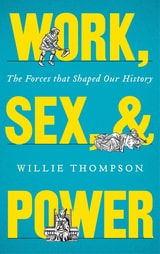
Work, Sex, and Power
The Forces that Shaped Our HistoryWillie Thompson
Pluto Press, 2015
It expertly explores the foundations of our developing society by showing how these grand themes have recurred throughout the various phases of global history. From communities of Palaeolithic hunter-gatherers, through feudalism and onto the capitalistic machine-civilisation of recent centuries, Willie Thompson takes us on a journey that is fundamentally opposed to mainstream histories which concentrate on monarchs, politicians and military commanders.
At the centre of this book lies the interaction between humans and their environment. By exploring history in this way, it reveals a simple yet powerful materialist understanding of how we got to where we are today, and opens a door to a different reading of our world.