Results by title
27 books match the query 'Through'
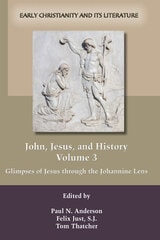
John, Jesus, and History, Volume 3
Glimpses of Jesus Through the Johannine LensPaul N. Anderson
SBL Press, 2016
A critical analysis of the historicity of the Gospel of John
Since it began in 2002, the John, Jesus, and History Project has assessed critically the modern disparaging of John's historicity and has found this bias wanting. In this third volume, an international group of experts demonstrate over two dozen ways in which John contributes to an enhanced historical understanding of Jesus and his ministry. This volume does not simply argue for a more inclusive quest for Jesus—one that embraces John instead of programmatically excluding it. It shows that such a quest has already indeed begun. Contributors include Paul N. Anderson, Jo-Ann A. Brant, Peder Borgen, Gary M. Burge, Warren Carter, R. Alan Culpepper, James D. G. Dunn, Robert T. Fortna, Jörg Frey, Steven A. Graham, Colin J. Humphreys, Craig Keener, Andreas Köstenberger, Tim Ling, William Loader, Linda McKinnish Bridges, James S. McLaren, Annette Merz, Wendy E. S. North, Benjamin E. Reynolds, Udo Schnelle, Donald Senior, C.P., Tom Thatcher, Michael Theobald, Jan van der Watt, Robert Webb, Stephen Witetscheck, and Jean Zumstein.
Features
- A state-of-the-art analysis of John’s contributions to the quest for the historical Jesus, including evaluative responses by leading Jesus scholars
- •An overview of paradigm shifts in Jesus scholarship and recent approaches to the Johannine riddles
- Detailed charts that illuminates John's similarities and differences form the Synoptic Gospels as well as the gospel's contributions to the historical Jesus research
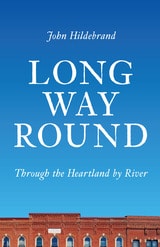
Long Way Round
Through the Heartland by RiverJohn Hildebrand
University of Wisconsin Press, 2022
Wisconsin is in the midst of an identity crisis, torn by new political divisions and the old gulf between city and countryside. Cobbling rivers together, from the burly Mississippi to the slender wilds of Tyler Forks, Hildebrand navigates the beautiful but complicated territory of home. In once prosperous small towns, he discovers unsung heroes—lockmasters, river rats, hotelkeepers, mechanics, environmentalists, tribal leaders, and perennial mayors—struggling to keep their communities afloat.
While history doesn't flow in a circle, it doesn't always move in a straight line either. Hildebrand charts the improbable ox-bows along its course. Long Way Round shows us the open road as a river with possibility around the next bend.
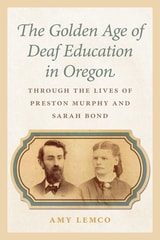
The Golden Age of Deaf Education in Oregon
Through the Lives of Preston Murphy and Sarah BondAmy Lemco
Oregon State University Press, 2027
Preston Murphy and Sarah Bond traveled west to Oregon on separate wagon trains in the 1850s. Both were children of Protestant minister fathers who followed the Oregon Trail to claim land and establish towns and institutions. Preston and Sarah married in 1874 and went on to build their lives in Oregon’s Willamette Valley, running a boot shop and raising six children. They were also both deaf.
The Golden Age of Deaf Education in Oregon is one of the first books to explore Deaf history in the Pacific Northwest. Drawing from primary sources, Amy Lemco explores the history of Deaf culture in early Oregon through the lives of Preston Murphy and Sarah Bond. Their stories offer a glimpse into the growth of Deaf education in the developing American West and provide a unique lens to explore the intertwining of global, national, and regional histories and their effect on Deaf culture at the turn of the century.
While Preston became deaf after a childhood illness in Illinois, Sarah, along with two of her brothers, was born deaf in Iowa. In Oregon their varied deaf experiences would pave the way for the Oregon School for the Deaf but also illuminate how deaf Oregonians navigated daily life and remained closely connected to their hearing communities. It is the hidden experiences of Preston and Sarah’s ordinary lives that make their stories extraordinary.
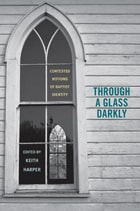
Through a Glass Darkly
Contested Notions of Baptist IdentityKeith Harper
University of Alabama Press, 2012
Rethinking what it means to be Baptist through four centuries of debate, belief, and identity.Normal0falsefalsefalseMicrosoftInternetExplorer4
Through a Glass Darkly is a collection of essays by scholars who argue that Baptists are frequently misrepresented, by outsiders as well as insiders, as members of an unchanging monolithic sect. In contemporary discussions of religious denominations, it is often fashionable and easy to make bold claims regarding the history, beliefs, and practices of certain groups. Select versions of Baptist history have been used to vindicate incomplete or inaccurate assertions, attitudes, and features of Baptist life and thought. Historical figures quickly become saints, and overarching value systems can minimize the unsavory realities that would contribute to a truer interpretation of Baptist life.
The essays in this volume use the term Baptist in the broadest sense to refer to those Christians who identify themselves as Baptists and who baptize by immersion as a non-sacramental church rite. Over the past four hundred years, Baptists have grown from a persecuted minority to a significant portion of America’s religious population. They have produced their fair share of controversies and colorful characters that have, in turn, contributed to a multifaceted history.
But what does it mean to be a “real Baptist”? Some look to historical figures as heroic exemplars of Baptist core values. Others consider cultural, social, or political issues to be guideposts for Baptist identity. Through a Glass Darkly dives deeper into history for answers, revealing a more complete version of the expansive and nuanced history of one of America’s most influential religious groups.
Normal0falsefalsefalseMicrosoftInternetExplorer4
Contributors:
James P. Byrd / John G. Crowley / Edward R. Crowther / Christopher H. Evans / Elizabeth H. Flowers / Curtis W. Freeman / Barry G. Hankins / Paul Harvey / Bill J. Leonard / James A. Patterson / Jewel L. Spangler / Alan Scot Willis
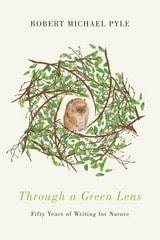
Through a Green Lens
Fifty Years of Writing for NatureRobert Michael Pyle
Oregon State University Press, 2016
Thus began a life path devoted to natural history, nature conservation, and the language, and how they all meet in the literature of the land. Working in a succession of far-flung jobs in biological conservation, teaching, and field research, Pyle eventually threw in a regular paycheck in favor of a freelance existence devoted to his mutual passions for nature study and writing.
All along, he wrote, and wrote: to date, twenty books and hundreds of essays, stories, papers, and poems. But it is the occasional prose--the deeply personal essays that explored and indulged his immediate fascinations--that make up this selection of never-before-collected testimonies. Beginning with that 1965 cri de coeur written on mountain motel stationery, Through a Green Lens ranges across broad territory of topic, vehicle, geography, populace, and politics, concluding with powerful forewords for two 2015 books, Earth and Eros and Nerves and Numbers. Pyle's half-century long view, acute and uncommonly attuned to the physical world, gives readers a remarkable window on the natural setting of our life and times.
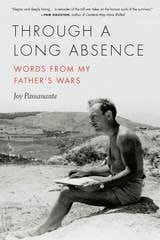
Through a Long Absence
Words from My Father's WarsJoy Passanante
The Ohio State University Press, 2017
Against the backdrop of World War II, Joy Passanante’s touching new book, Through a Long Absence: Words from My Father’s Wars, is the saga of a wartime medical unit, a passionate long-distance love, the making of a surgeon, and two first-generation American families. Told through her father’s eyes—drawing on hundreds of his letters to his beloved wife, his four-volume wartime diary, and his paintings—Passanante masterfully recreates his wartime journey and physically retraces his steps more than sixty years later in an attempt to understand a time in her parents’ lives that they’d spoken about very little.
More than just a World War II story, Through a Long Absence delves into one man’s past to explore his personal wars: a stint as a child bootlegger, a marriage between newlyweds separated by continents and strained by years apart, and his struggle late in life with his own mind. The narrative propels readers to surprising places—from a freight train through North Africa to an underground St. Louis distillery during Prohibition, from a young couple’s forbidden courtship to the chaos of surgical tents under fire in Normandy, from an underground trove of priceless artwork hidden by the Nazis to Jewish New Year services in Paris a week after its liberation. Through a Long Absence is a love story, an honest look into one man’s life, and a daughter’s moving quest to rediscover her father years later through his own words.
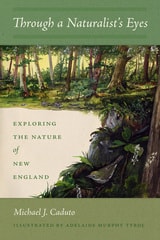
Through a Naturalist's Eyes
Exploring the Nature of New EnglandMichael J. Caduto
University Press of New England, 2016
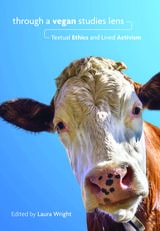
Through a Vegan Studies Lens
Textual Ethics and Lived ActivismLaura Wright
University of Nevada Press, 2019
Veganism is a practice that allows for environmentally responsible consumer choices that are viewed, particularly in the West, as oppositional to an economy that is largely dependent upon big agriculture. This groundbreaking collection exposes this disruption, critiques it, and offers a new roadmap for navigating and reimaging popular culture representations on veganism. These essays engage a wide variety of political, historical, and cultural issues, including contemporary political and social circumstances, emergent veganism in Eastern Europe, climate change, and the Syrian refugee crisis, among other topics.
Through a Vegan Studies Lens significantly furthers the conversation of what a vegan studies perspective can be and illustrates why it should be an integral part of cultural studies and critical theory. Vegan studies is inclusive, refusing to ignore the displacement, abuse, and mistreatment of nonhuman animals. It also looks to ignite conversations about cultural oppression.
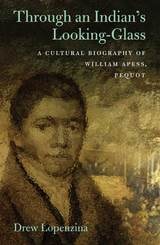
Through an Indian's Looking-Glass
A Cultural Biography of William Apess, PequotDrew Lopenzina
University of Massachusetts Press, 2017
The life of William Apess (1798–1839), a Pequot Indian, Methodist preacher, and widely celebrated writer, provides a lens through which to comprehend the complex dynamics of indigenous survival and resistance in the era of America's early nationhood. Apess's life intersects with multiple aspects of indigenous identity and existence in this period, including indentured servitude, slavery, service in the armed forces, syncretic engagements with Christian spirituality, and Native struggles for political and cultural autonomy. Even more, Apess offers a powerful and provocative voice for the persistence of Native presence in a time and place that was long supposed to have settled its “Indian question” in favor of extinction.
Through meticulous archival research, close readings of Apess's key works, and informed and imaginative speculation about his largely enigmatic life, Drew Lopenzina provides a vivid portrait of this singular Native American figure. This new biography will sit alongside Apess's own writing as vital reading for those interested in early America and indigeneity.
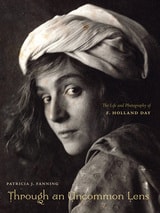
Through an Uncommon Lens
The Life and Photography of F. Holland DayPatricia J. Fanning
University of Massachusetts Press, 2008
Through the Archival Looking Glass
A Reader on Diversity and InclusionMary A. Caldera
Society of American Archivists, 2014

Through the Archival Looking Glass
A Reader on Diversity and InclusionMary Caldera
American Library Association, 2017
Through the Boondocks and Back
A NovellaAlex DiFrancesco
Northwestern University Press, 2027
A queer, rollicking retelling of The Odyssey
Zane Viaggio’s life has been fraught since leaving New York City for Cleveland. Uprooted and missing his life in the city, he escapes into parties and pills. When he wakes up vomiting several days in a row, he’s convinced by his three drag queen roommates and his best trans-femme friend to get a pregnancy test, learning that not only is he pregnant, but pregnant in an Ohio that has just outlawed abortion. Zane must then embark on an epic journey around Lake Erie and its surrounding towns on a stolen jet ski to find the man who impregnated him, get the money to go back to New York City for an abortion, and get his life back to normal. In this queer and trans retelling of The Odyssey, Zane encounters all sorts of strange and challenging characters—including one-eyed cats, force-femmed prophets, and his own chosen family—who help him discover that, perhaps, finding home is the greatest journey of all.
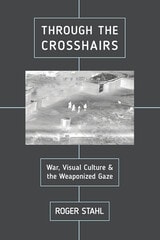
Through the Crosshairs
War, Visual Culture, and the Weaponized GazeStahl, Roger
Rutgers University Press, 2018
Through the Crosshairs traces the genealogy of this weapon’s-eye view across a wide range of genres, including news reports, military public relations images, action movies, video games, and social media posts. As he tracks how gun-camera footage has spilled from the battlefield onto the screens of everyday civilian life, Roger Stahl exposes how this raw video is carefully curated and edited to promote identification with military weaponry, rather than with the targeted victims. He reveals how the weaponized gaze is not only a powerful propagandistic frame, but also a prime site of struggle over the representation of state violence.
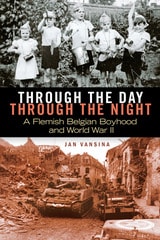
Through the Day, through the Night
A Flemish Belgian Boyhood and World War IIJan Vansina
University of Wisconsin Press, 2014
Within the vast literature on World War II, a much smaller body of work treats the everyday experiences of civilians, particularly in smaller countries drawn into the conflict. Recalling the war in Belgium from a child’s-eye perspective, Vansina describes pangs of hunger so great as to make him crave the bitter taste of cod-liver oil. He vividly remembers the shock of seeing severely wounded men on the grounds of a field hospital, the dangers of crossing fields and swimming in ponds strafed by planes, and his family’s interactions with occupying and escaping soldiers from both sides. After the war he recalls emerging numb from the cinema where he first saw the footage of the Nazi death camps, and he describes a new phase of unrest marked by looting, vigilante justice, and the country’s efforts at reunification.
Vansina, a historian and anthropologist best known for his insights into oral tradition and social memory, draws on his own memories and those of his siblings to reconstruct daily life in Belgium during a tumultuous era.
Best Special Interest Books, selected by the American Association of School Librarians
Best Books for General Audiences, selected by the Public Library Reviewers
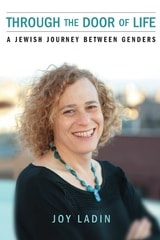
Through the Door of Life
A Jewish Journey between GendersJoy Ladin
University of Wisconsin Press, 2012
Professor Jay Ladin made headlines around the world when, after years of teaching literature at Yeshiva University, he returned to the Orthodox Jewish campus as a woman—Joy Ladin. In Through the Door of Life, Joy Ladin takes readers inside her transition as she changed genders and, in the process, created a new self.
With unsparing honesty and surprising humor, Ladin wrestles with both the practical problems of gender transition and the larger moral, spiritual, and philosophical questions that arise. Ladin recounts her struggle to reconcile the pain of her experience living as the “wrong” gender with the pain of her children in losing the father they love. We eavesdrop on her lifelong conversations with the God whom she sees both as the source of her agony and as her hope for transcending it. We look over her shoulder as she learns to walk and talk as a woman after forty-plus years of walking and talking as a man. We stare with her into the mirror as she asks herself how the new self she is creating will ever become real.
Ladin’s poignant memoir takes us from the death of living as the man she knew she wasn’t, to the shattering of family and career that accompanied her transition, to the new self, relationships, and love she finds when she opens the door of life.
2012 Finalist for the National Jewish Book Award for Biography, Autobiography, or Memoir
“Given her high-profile academic position, Ladin’s transition was a major news story in Israel and even internationally. But behind the public story was a private struggle and learning experience, and Ladin pulls no punches in telling that story. She offers a peek into how daunting it was to learn, with little support from others, how to dress as a middle-aged woman, to mu on make-up, to walk and talk like a female. She provides a front-row seat for observing how one person confronted a seemingly impossible situation and how she triumphed, however shakingly, over the many adversities, both societal and psychological, that stood in the way.”—The Gay and Lesbian Review Worldwide
Through the Grapevine
Socially Transmitted Information and Distorted DemocracyTaylor N. Carlson
University of Chicago Press, 2024
An enlightening examination of what it means when Americans rely on family and friends to stay on top of politics.
Accurate information is at the heart of democratic functioning. For decades, researchers interested in how information is disseminated have focused on mass media, but the reality is that many Americans today do not learn about politics from direct engagement with the news. Rather, about one-third of Americans learn chiefly from information shared by their peers in conversation or on social media. How does this socially transmitted information differ from that communicated by traditional media? What are the consequences for political attitudes and behavior?
Drawing on evidence from experiments, surveys, and social media, Taylor N. Carlson finds that, as information flows first from the media then person to person, it becomes sparse, more biased, less accurate, and more mobilizing. The result is what Carlson calls distorted democracy. Although socially transmitted information does not necessarily render democracy dysfunctional, Through the Grapevine shows how it contributes to a public that is at once underinformed, polarized, and engaged.
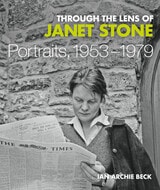
Through the Lens of Janet Stone
Portraits, 1953-1979Ian Archie Beck
Bodleian Library Publishing, 2018
Included between these pages are portraits of the composers, actors, novelists, poets, and philosophers in the Stones’ milieu—from Benjamin Britten to Siegfried Sassoon and Frances Partridge—as well as members of the Stone family. Although not a trained photographer, Janet instinctively knew to click the shutter when her subjects were off-guard and at their most informal, capturing an array of candid shots—like one of John Bayley trying on a headscarf and a young Daniel Day-Lewis dressed up as a knight.
These unique portraits offer beguiling insight into a special set of circumstances: an idyllic place and time and a group of people drawn together by two contrasting but complimentary personalities, the shy genius of Reynolds met by the outgoing style and glamour of Janet Stone.
Through the Open Door
A New Look at C.S. LewisDabney Adams Hart
University of Alabama Press, 1984
Unlocking the imagination, language, and vision that shaped C. S. Lewis's enduring legacy.
Through the Open Door: A New Look at C. S. Lewis offers a fresh and illuminating examination of one of the twentieth century's most beloved writers, scholars, and Christian thinkers. In this insightful study, Dabney Adams Hart moves beyond familiar assessments of C. S. Lewis as the creator of The Chronicles of Narnia to explore the intellectual foundations that shaped his work as a literary critic, educator, and defender of the Christian faith. Drawing on Lewis's essays, criticism, fiction, and apologetic writings, Hart reveals the central importance of imagination, language, myth, and meaning in Lewis's understanding of literature and human experience.
Rather than treating Lewis's diverse writings as separate endeavors, Hart demonstrates how they reflect a coherent and unified vision of truth, beauty, and morality. The book shows how Lewis used story and symbolism to address enduring questions about faith, reason, and the search for purpose in a modern world. Accessible to general readers while engaging for scholars, this volume provides valuable insight into the ideas that continue to make Lewis a significant figure in literary and religious studies. An important contribution to Lewis scholarship, Through the Open Door invites readers to discover anew the imagination and intellect behind one of the most influential Christian authors of the modern era.
Through the Past Darkly
History and Memory in François Mauriac’s Bloc-notesNathan Bracher
Catholic University of America Press, 2004
Through the Poet’s Eye
The Travels of Zagajewski, Herbert, and BrodskyBozena Shallcross
Northwestern University Press, 2009
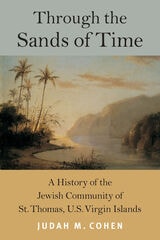
Through the Sands of Time
A History of the Jewish Community of St. Thomas, U.S. Virgin IslandsJudah M. Cohen
Brandeis University Press, 2012
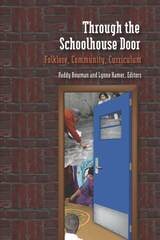
Through the Schoolhouse Door
Folklore, Community, CurrriculumPaddy Bowman and Lynne Hamer
Utah State University Press, 2011
The creative traditions and expressive culture of students' families, neighborhoods, towns, religious communities, and peer groups provide opportunities to extend classrooms, sustain learning beyond school buildings, and better connect students and schools with their communities. Folklorists and educators have long worked together to expand curricula through engagement with local knowledge and informal cultural arts-folk arts in education is a familiar rubric for these programs-but the unrealized potential here, for both the folklore scholar and the teacher, is large. The value folklorists "place on the local, the vernacular, and the aesthetics of daily life does not reverberate" throughout public education, even though, in the words of Paddy Bowman and Lynne Hamer, "connecting young people to family and community members and helping them to develop self-identity are vital to civic well-being and to school success."
Through the Schoolhouse Door offers a collection of experiences from exemplary school programs and the analysis of an expert group of folklorists and educators who are dedicated not only to getting students out the door and into their communities to learn about the folk culture all around them but also to honoring the culture teachers and students bring to the classroom.
Through the Stonecutter's Window
PoemsIndigo Moor
Northwestern University Press, 2010
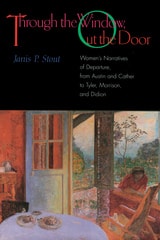
Through the Window, Out the Door
Women's Narratives of Departure, from Austin and Cather to Tyler, Morrison, and DidionJanis P. Stout
University of Alabama Press, 1998
This informative and provocative study focuses on the centrality of departure in the texts of five major American women novelists.
An important moment in many novels and poems by American women writers occurs when a central character looks out a window or walks out the door of a house. These acts of departure serve to convey such values as the rejection of constraining social patterns, the search for individual fulfillment, and the entry into the political.
Janis Stout examines such moments and related patterns of venture and travel in the fiction of five major American novelists of the 20th century: Mary Austin, Willa Cather, Anne Tyler, Toni Morrison, and Joan Didion. Stout views these five writers within a spectrum of narrative engagements with issues of home and departure—a spectrum anchored at one end by Sarah Orne Jewett and at the other by Marilynne Robinson, whose Housekeeping posits a vision of female transience.
Through the Window, Out the Door ranges over an expansive territory. Moving between texts as well as between texts and contexts, Stout shows how women writers have envisioned the walls of physical and social structures (including genres) as permeable boundaries, drawing on both a rhetoric of liberation and a rhetoric of domesticity to construct narrative arguments for women's right to move freely between the two. Stout concludes with a personal essay on the dilemmas of domesticity and the ambivalence of departure.
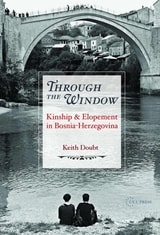
Through the Window
Kinship and Elopement in Bosnia-HerzegovinaKeith Doubt
Central European University Press, 2014
This book is not about war crimes, crimes against humanity, genocide, evil, or the killing of a society. It is about a cultural heritage, something vital to a society as a society, something that was not killed in the previous war, something that is resilient.
Through the Window brings an original perspective to folklore of Bosnians at a certain period of time and the differences and similarities of the three main ethnic groups in Bosnia and Herzegovina. It examines the transethnic character of cultural heritage, against divisions that dominate their tragic recent past.
The monograph focuses in particular on customs shared by different ethnic groups, specifically elopement, and affinal visitation. The elopement is a transformative rite of passage where an unmarried girl becomes a married woman. The affinal visitation, which follows, is a confirmatory ceremony where ritualized customs between families establish in-lawships These customs reflect a transethnic heritage shared by people in Bosnia as a national group, including Bosniaks, Serbs and Croats.
Yellowstone National Park
Through the Lens of TimeBradly J. Boner
University Press of Colorado, 2017
Pioneer photographer William Henry Jackson’s photographs from the 1871 Hayden Survey were instrumental in persuading Congress to designate Yellowstone as a national park—America’s first and greatest experiment in the preservation of an extraordinary landscape. Yellowstone National Park: Through the Lens of Time is an extended visual essay presenting Jackson’s images paired with breathtaking color rephotographs of each view from photojournalist Bradly J. Boner. These contemporary comparisons to Jackson’s originals reveal just how well that experiment has stood the test of time.
Yellowstone is always changing. The Grand Canyon is getting deeper and wider as the Yellowstone River carves a chasm into the earth. The flows of the great hot springs at Mammoth are creating new layers of delicate, colorful cascades and leaving the old terraces to crumble in decay. Roads, bridges, and pathways wind through the park, and there are restaurants, campgrounds, and hotels. Yet even with the impact of humanity, Yellowstone remains remarkably intact, evidence that the effort to preserve and sustain the park for future generations has been a success.
Combining more than 100 gorgeous “then and now” sets of photographs—the first complete published collection of Jackson’s images from the 1871 Hayden Survey and a result of Boner's three years of work rephotographing them—with history, extensive notes, and personal tales, Yellowstone National Park: Through the Lens of Time pays homage to the park’s early history and its present state, and offers a glimpse into the future. The great experiment of Yellowstone—which captivates millions of visitors from all corners of the globe each year—has transcended generations and should be maintained for generations to come.
The University Press of Colorado and the author gratefully acknowledge the generous contributions of the many donors to the Kickstarter campaign supporting the publication of this book.