Results by title

11 books match the query 'Tibet Autonomous Region (China)'
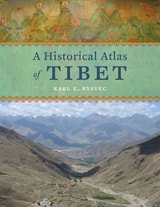
cover of A Historical Atlas of Tibet

A Historical Atlas of Tibet

Karl E. Ryavec

University of Chicago Press, 2015

Cradled among the world’s highest mountains—and sheltering one of its most devout religious communities—Tibet is, for many of us, an ultimate destination, a place that touches the heavens, a place only barely in our world, at its very end. In recent decades Western fascination with Tibet has soared, from the rise of Tibetan studies in academia to the rock concerts aimed at supporting its independence to the simple fact that most of us—far from any base camp—know exactly what a sherpa is. And yet any sustained look into Tibet as a place, any attempt to find one’s way around its high plateaus and through its deep history, will yield this surprising fact: we have barely mapped it. With this atlas, Karl E. Ryavec rights that wrong, sweeping aside the image of Tibet as Shangri-La and putting in its place a comprehensive vision of the region as it really is, a civilization in its own right. And the results are absolutely stunning.

The product of twelve years of research and eight more of mapmaking, A Historical Atlas of Tibet documents cultural and religious sites across the Tibetan Plateau and its bordering regions from the Paleolithic and Neolithic times all the way up to today. It ranges through the five main periods in Tibetan history, offering introductory maps of each followed by details of western, central, and eastern regions. It beautifully visualizes the history of Tibetan Buddhism, tracing its spread throughout Asia, with thousands of temples mapped, both within Tibet and across North China and Mongolia, all the way to Beijing. There are maps of major polities and their territorial administrations, as well as of the kingdoms of Guge and Purang in western Tibet, and of Derge and Nangchen in Kham. There are town plans of Lhasa and maps that focus on history and language, on population, natural resources, and contemporary politics.

Extraordinarily comprehensive and absolutely gorgeous, this overdue volume will be a cornerstone in cartography, Asian studies, Buddhist studies, and in the libraries or on the coffee tables of anyone who has ever felt the draw of the landscapes, people, and cultures of the highest place on Earth. 

[more]
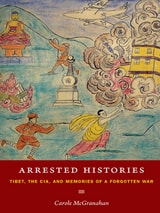
cover of Arrested Histories: Tibet, the CIA, and Memories of a Forgotten War

Arrested Histories

Tibet, the CIA, and Memories of a Forgotten War

Carole McGranahan

Duke University Press, 2010

In the 1950s, thousands of ordinary Tibetans rose up to defend their country and religion against Chinese troops. Their citizen army fought through 1974 with covert support from the Tibetan exile government and the governments of India, Nepal, and the United States. Decades later, the story of this resistance is only beginning to be told and has not yet entered the annals of Tibetan national history. In Arrested Histories, the anthropologist and historian Carole McGranahan shows how and why histories of this resistance army are “arrested” and explains the ensuing repercussions for the Tibetan refugee community.

Drawing on rich ethnographic and historical research, McGranahan tells the story of the Tibetan resistance and the social processes through which this history is made and unmade, and lived and forgotten in the present. Fulfillment of veterans’ desire for recognition hinges on the Dalai Lama and “historical arrest,” a practice in which the telling of certain pasts is suspended until an undetermined time in the future. In this analysis, struggles over history emerge as a profound pain of belonging. Tibetan cultural politics, regional identities, and religious commitments cannot be disentangled from imperial histories, contemporary geopolitics, and romanticized representations of Tibet. Moving deftly from armed struggle to nonviolent hunger strikes, and from diplomatic offices to refugee camps, Arrested Histories provides powerful insights into the stakes of political engagement and the cultural contradictions of everyday life.
[more]
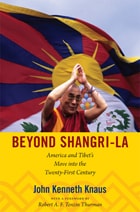
cover of Beyond Shangri-La: America and Tibet's Move into the Twenty-First Century

Beyond Shangri-La

America and Tibet's Move into the Twenty-First Century

John Kenneth Knaus

Duke University Press, 2012

Beyond Shangri-La chronicles relations between the Tibetans and the United States since 1908, when a Dalai Lama first met with U.S. representatives. What was initially a distant alliance became more intimate and entangled in the late 1950s, when the Tibetan people launched an armed resistance movement against the Chinese occupiers. The Tibetans fought to oust the Chinese and to maintain the presence of the current Dalai Lama and his direction of their country. In 1958, John Kenneth Knaus volunteered to serve in a major CIA program to support the Tibetans. For the next seven years, as an operations officer working from India, from Colorado, and from Washington, D.C., he cooperated with the Tibetan rebels as they utilized American assistance to contest Chinese domination and to attain international recognition as an independent entity.

Since the late 1950s, the rugged resolve of the Dalai Lama and his people and the growing respect for their efforts to free their homeland from Chinese occupation have made Tibet's political and cultural status a pressing issue in international affairs. So has the realization by nations, including the United States, that their geopolitical interests would best be served by the defeat of the Chinese and the achievement of Tibetan self-determination. Beyond Shangri-La provides unique insight into the efforts of the U.S. government and committed U.S. citizens to support a free Tibet.
[more]
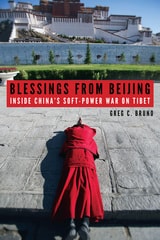
cover of Blessings from Beijing: Inside China's Soft-Power War on Tibet

Blessings from Beijing

Inside China's Soft-Power War on Tibet

Greg C. Bruno

University Press of New England, 2018
As we approach the sixtieth anniversary of China’s 1959 invasion of Tibet—and the subsequent creation of the Tibetan exile community—the question of the diaspora’s survival looms large. Beijing’s foreign policy has grown more adventurous, particularly since the post-Olympic expansion of 2008. As the pressure mounts, Tibetan refugee families that have made their homes outside China—in the mountains of Nepal, the jungles of India, or the cold concrete houses high above the Dalai Lama’s monastery in Dharamsala—are migrating once again. Blessings from Beijing untangles the chains that tie Tibetans to China and examines the political, social, and economic pressures that are threatening to destroy Tibet’s refugee communities. Journalist Greg Bruno has spent nearly two decades living and working in Tibetan areas. Bruno journeys to the front lines of this fight: to the high Himalayas of Nepal, where Chinese agents pay off Nepali villagers to inform on Tibetan asylum seekers; to the monasteries of southern India, where pro-China monks wish the Dalai Lama dead; to Asia’s meditation caves, where lost souls ponder the fine line between love and war; and to the streets of New York City, where the next generation of refugees strategizes about how to survive China’s relentless assault. But Bruno’s reporting does not stop at well-worn tales of Chinese meddling and political intervention. It goes beyond them—and within them—to explore how China’s strategy is changing the Tibetan exile community forever.
[more]
cover of Cultural Genocide

Cultural Genocide

Davidson, Lawrence

Rutgers University Press, 2012

Most scholars of genocide focus on mass murder. Lawrence Davidson, by contrast, explores the murder of culture. He suggests that when people have limited knowledge of the culture outside of their own group, they are unable to accurately assess the alleged threat of others around them. Throughout history, dominant populations have often dealt with these fears through mass murder. However, the shock of the Holocaust now deters today’s great powers from the practice of physical genocide. Majority populations, cognizant of outside pressure and knowing that they should not resort to mass murder, have turned instead to cultural genocide as a “second best” politically determined substitute for physical genocide.

In Cultural Genocide, this theory is applied to events in four settings, two events that preceded the Holocaust and two events that followed it: the destruction of American Indians by uninformed settlers who viewed these natives as inferior and were more intent on removing them from the frontier than annihilating them; the attack on the culture of Eastern European Jews living within Russian-controlled areas before the Holocaust; the Israeli attack on Palestinian culture; and the absorption of Tibet by the People’s Republic of China.

In conclusion, Davidson examines the mechanisms that may be used to combat today’s cultural genocide as well as the contemporary social and political forces at work that must be overcome in the process.
[more]
cover of Forms of Knowledge in Early Modern Asia: Explorations in the Intellectual History of India and Tibet, 1500-1800

Forms of Knowledge in Early Modern Asia

Explorations in the Intellectual History of India and Tibet, 1500-1800

Sheldon Pollock, ed.

Duke University Press, 2011

In the past two decades, scholars have transformed our understanding of the interactions between India and the West since the consolidation of British power on the subcontinent around 1800. While acknowledging the merits of this scholarship, Sheldon Pollock argues that knowing how colonialism changed South Asian cultures, particularly how Western modes of thought became dominant, requires knowing what was there to be changed. Yet little is known about the history of knowledge and imagination in late precolonial South Asia, about what systematic forms of thought existed, how they worked, or who produced them. This pioneering collection of essays helps to rectify this situation by addressing the ways thinkers in India and Tibet responded to a rapidly changing world in the three centuries prior to 1800. Contributors examine new forms of communication and conceptions of power that developed across the subcontinent; changing modes of literary consciousness, practices, and institutions in north India; unprecedented engagements in comparative religion, autobiography, and ethnography in the Indo-Persian sphere; and new directions in disciplinarity, medicine, and geography in Tibet. Taken together, the essays in Forms of Knowledge in Early Modern Asia inaugurate the exploration of a particularly complex intellectual terrain, while gesturing toward distinctive forms of non-Western modernity.

Contributors. Muzaffar Alam, Imre Bangha, Aditya Behl, Allison Busch, Sumit Guha, Janet Gyatso, Matthew T. Kapstein, Françoise Mallison, Sheldon Pollock, Velcheru Narayana Rao, Kurtis R. Schaeffer, Sunil Sharma, David Shulman, Sanjay Subrahmanyam, Mohamad Tavakoli-Targhi

[more]
cover of Geopolitical Exotica: Tibet in Western Imagination

Geopolitical Exotica

Tibet in Western Imagination

Dibyesh Anand

University of Minnesota Press, 2008

Geopolitical Exotica examines exoticized Western representations of Tibet and Tibetans and the debate over that land’s status with regard to China. Concentrating on specific cultural images of the twentieth century—promulgated by novels, popular films, travelogues, and memoirs—Dibyesh Anand lays bare the strategies by which “Exotica Tibet” and “Tibetanness” have been constructed, and he investigates the impact these constructions have had on those who are being represented.

Although images of Tibet have excited the popular imagination in the West for many years, Geopolitical Exotica is the first book to explore representational practices within the study of international relations. Anand challenges the parochial practices of current mainstream international relations theory and practice, claiming that the discipline remains mostly Western in its orientation. His analysis of Tibet’s status with regard to China scrutinizes the vocabulary afforded by conventional international relations theory and considers issues that until now have been undertheorized in relation to Tibet, including imperialism, history, diaspora, representation, and identity.

In this masterfully synthetic work, Anand establishes that postcoloniality provides new insights into themes of representation and identity and demonstrates how IR as a discipline can meaningfully expand its focus beyond the West.

Dibyesh Anand is a reader in international relations at the University of Westminster, London.
[more]
cover of Grains of Gold: Tales of a Cosmopolitan Traveler

Grains of Gold

Tales of a Cosmopolitan Traveler

Gendun Chopel

University of Chicago Press, 2013
In 1941, philosopher and poet Gendun Chopel (1903–51) sent a large manuscript by ship, train, and yak across mountains and deserts to his homeland in the northeastern corner of Tibet. He would follow it five years later, returning to his native land after twelve years in India and Sri Lanka. But he did not receive the welcome he imagined: he was arrested by the government of the regent of the young Dalai Lama on trumped-up charges of treason. He emerged from prison three years later a broken man and died soon after.
 
Gendun Chopel was a prolific writer during his short life. Yet he considered that manuscript, which he titled Grains of Gold, to be his life’s work, one to delight his compatriots with tales of an ancient Indian and Tibetan past, while alerting them to the wonders and dangers of the strikingly modern land abutting Tibet’s southern border, the British colony of India. Now available for the first time in English, Grains of Gold is a unique compendium of South Asian and Tibetan culture that combines travelogue, drawings, history, and ethnography. Gendun Chopel describes the world he discovered in South Asia, from the ruins of the sacred sites of Buddhism to the Sanskrit classics he learned to read in the original. He is also sharply, often humorously critical of the Tibetan love of the fantastic, bursting one myth after another and finding fault with the accounts of earlier Tibetan pilgrims. Exploring a wide range of cultures and religions central to the history of the region, Gendun Chopel is eager to describe all the new knowledge he gathered in his travels to his Buddhist audience in Tibet.
 
At once the account of the experiences of a tragic figure in Tibetan history and the work of an extraordinary scholar, Grains of Gold is an accessible, compelling work animated by a sense of discovery of both a distant past and a strange present.
[more]
cover of My Tibetan Childhood: When Ice Shattered Stone

My Tibetan Childhood

When Ice Shattered Stone

Natksang Nulo

Duke University Press, 2014

In My Tibetan Chldhood, Naktsang Nulo recalls his life in Tibet's Amdo region during the 1950s. From the perspective of himself at age ten, he describes his upbringing as a nomad on Tibet's eastern plateau. He depicts pilgrimages to monasteries, including a 1500-mile horseback expedition his family made to and from Lhasa. A year or so later, they attempted that same journey as they fled from advancing Chinese troops. Naktsang's father joined and was killed in the little-known 1958 Amdo rebellion against the Chinese People’s Liberation Army, the armed branch of the Chinese Communist Party. During the next year, the author and his brother were imprisoned in a camp where, after the onset of famine, very few children survived.

The real significance of this episodic narrative is the way it shows, through the eyes of a child, the suppressed histories of China's invasion of Tibet. The author's matter-of-fact accounts cast the atrocities that he relays in stark relief. Remarkably, Naktsang lived to tell his tale. His book was published in 2007 in China, where it was a bestseller before the Chinese government banned it in 2010. It is the most reprinted modern Tibetan literary work. This translation makes a fascinating if painful period of modern Tibetan history accessible in English.
[more]
cover of Ocean, as Much as Rain: Stories, Lyrical Prose, and Poems from Tibet

Ocean, as Much as Rain

Stories, Lyrical Prose, and Poems from Tibet

Tsering Woeser. Edited and Translated by Fiona Sze-Lorrain with Dechen Pemba.

Duke University Press, 2026
Ocean, as Much as Rain presents for the first time in the English-language world a collection of masterfully translated literary writings by prominent Tibetan writer Tsering Woeser. In these stories, lyrical essays, and poetry, Woeser interweaves texts, photographs, silences, and documentary details. Featuring a distinctively imaginative use of satire and digressive rhetoric, Woeser’s stories bring to life Tibetan characters whose lives are entwined with politics, history, and religion. Woeser illuminates the ruins and places that she has come across during her various sojourns in Chinese-ruled Tibet, reviving sites from the past of her parents and their generation. These writings range from ingenious retellings of cultural encounters and confrontation to insightful commentaries on ecological issues and tourism in Tibet that never shun contradictions, dilemmas, or questions about the future. With an introduction by Fiona Sze-Lorrain and an author interview by editors-translators Sze-Lorrain and Dechen Pemba, Ocean, as Much as Rain is a landmark publication that celebrates the work of a steadfast dissident and a leading Tibetan literary figure of our times.
[more]
cover of The Holy Land Reborn: Pilgrimage and the Tibetan Reinvention of Buddhist India

The Holy Land Reborn

Pilgrimage and the Tibetan Reinvention of Buddhist India

Toni Huber

University of Chicago Press, 2008

The Dalai Lama has said that Tibetans consider themselves “the child of Indian civilization” and that India is the “holy land” from whose sources the Tibetans have built their own civilization. What explains this powerful allegiance to India? In The Holy Land Reborn¸ Toni Huber investigates how Tibetans have maintained a ritual relationship to India, particularly by way of pilgrimage, and what it means for them to consider India as their holy land.
Focusing on the Tibetan creation and recreation of India as a destination, a landscape, and a kind of other, in both real and idealized terms, Huber explores how Tibetans have used the idea of India as a religious territory and a sacred geography in the development of their own religion and society. In a timely closing chapter, Huber also takes up the meaning of India for the Tibetans who live in exile in their Buddhist holy land.
A major contribution to the study of Buddhism, The Holy Land Reborn describes changes in Tibetan constructs of India over the centuries, ultimately challenging largely static views of the sacred geography of Buddhism in India.
[more]