Results by title
4 books match the query 'To 647'
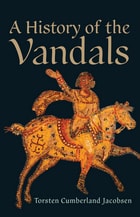
A History of the Vandals
Torsten Cumberland Jacobsen
Westholme Publishing, 2012
The First General History in English of the Germanic People Who Sacked Rome in the Fifth Century AD and Established a Kingdom in North Africa
The fifth century AD was a time of great changes in the Mediterranean world. In the early 400s, the Roman Empire ranged from the lowlands of Scotland to the Upper Nile and from Portugal to the Caucasus. It was almost at its widest extent, and although ruled by two emperors—one in the West and one in the East—it was still a single empire. One hundred years later, Roman control of Western Europe and Western North Africa had been lost. In its place, a number of Germanic kingdoms had been established in these regions, with hundreds of thousands of Germanic and other peoples settling permanently inside the former borders of the Western Roman Empire.
One of the most fascinating of these tribes of late antiquity were the Vandals, who over a period of six hundred years had migrated from the woodland regions of Scandinavia across Europe and ended in the deserts of North Africa. In A History of the Vandals, the first general account in English covering the entire story of the Vandals from their emergence to the end of their kingdom, historian Torsten Cumberland Jacobsen pieces together what we know about the Vandals, sifting fact from fiction. In the middle of the fifth century the Vandals, who professed Arianism, a form of Christianity considered heretical by the Roman emperor, created the first permanent Germanic successor state in the West and were one of the deciding factors in the downfall of the Western Roman Empire. Later Christian historians described their sack of Rome in 455 and their vehement persecution of Catholics in their kingdom, accounts that were sensationalized and gave birth to the term “vandalism.”
In the mid-sixth century, the Vandals and their North African kingdom were the first target of Byzantine Emperor Justinian’s ambitious plan to reconquer the lost territories of the fallen Western Empire. In less than four months, what had been considered one of the strongest Germanic kingdoms had been defeated by a small Roman army led by the general Belisarius. Despite later rebellions, this was the end of the Germanic presence in North Africa, and in many ways the end of the Arian heresy of Christianity. For the Romans it was the incredibly successful start of the reconquest of the lost lands of the Western Empire.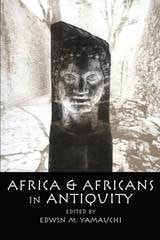
Africa & Africans in Antiquity
Edwin M. Yamauchi
Michigan State University Press, 2001
Africa and Africans in Antiquity assesses recent historical research and archaeology under way in Egypt, North Africa, the Sudan, and the Horn of Africa. Whereas many European and American scholars of earlier generations believed that Egyptian contacts with Africa to the south were not culturally significant, research contained in this important collection rejects such notions. At the same time, the volume takes issue with Afrocentric scholars who argue that most Egyptians were 'black' and that blacks are the rightful heirs to Egypt's past grandeur. These ten thought-provoking essays demonstrate that this large region was an ethnic and cultural mosaic in antiquity, a place where Phoenicians, Berbers, Greeks, as well as Egyptians and Nubians interacted.
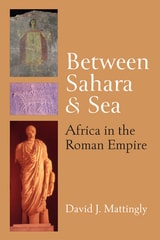
Between Sahara and Sea
Africa in the Roman EmpireDavid J. Mattingly
University of Michigan Press, 2023
Winner of the 2024 Association of American Publishers PROSE Award for Classics
- Winner of the 2025 Vinson Sutlive Book Prize and Lecture
Between Sahara and Sea: Africa in the Roman Empire challenges orthodox views of the story of Africa under Roman domination. It presents a new framework for understanding this and other territories incorporated in the Roman Empire. Based on decades of research in North Africa, David Mattingly’s book is a cleverly constructed and innovative account of the history and archaeology of ancient North Africa (roughly equivalent to Morocco, Algeria, Tunisia, and Libya) from the first century BCE to the third century CE. He charts a new path toward a bottom-up understanding of North African archaeology, exploring in turn the differing material cultures and experiences of the Roman communities of the military and the urban and rural areas. Regional and societal differences emerge as significant and of long duration in the fascinating story of one of the most important sectors of the Roman Empire.
This important book is the most comprehensive in English on Roman North Africa. It is remarkably rich, with up-to-date references and a host of new ideas and perspectives. Well written and illustrated, with a plethora of maps, it will be required reading for anyone interested in the subject. Rather than emphasizing the role of external actors, as studies of “Roman Africa” have traditionally done, Between Sahara and Sea focuses on local contributions to the making of Africa in the Roman Empire. The author demonstrates that the multiple populations encountered by Rome were not an indistinct bloc, but had different identities and cultures.
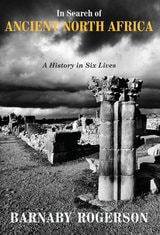
In Search of Ancient North Africa
A History in Six LivesBarnaby Rogerson
Haus Publishing, 2019
In Search of Ancient North Africa sheds new light on a time and place at the crossroads of numerous histories and cultures. It offers the first history of ancient North Africa told through the lives of North Africans themselves.