Results by title

10 books match the query 'Told'
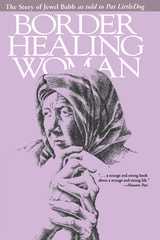
cover of Border Healing Woman: The Story of Jewel Babb as told to Pat LittleDog (second edition)

Border Healing Woman

The Story of Jewel Babb as told to Pat LittleDog (second edition)

By Jewel Babb as told to Pat Littledog

University of Texas Press, 1994

The story of Jewel Babb, from her early years as a tenderfoot ranch wife to her elder years as a desert healing woman, has enthralled readers since Border Healing Woman was first published in 1981. In this second edition, Pat LittleDog adds an epilogue to conclude the story, describing the mixed blessings that publicity brought to Jewel Babb before her death in 1991.
[more]
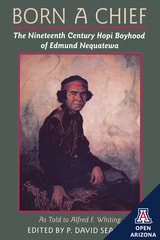
cover of Born a Chief: The Nineteenth Century Hopi Boyhood of Edmund Nequatewa, as told to Alfred F. Whiting

Born a Chief

The Nineteenth Century Hopi Boyhood of Edmund Nequatewa, as told to Alfred F. Whiting

Edmund Nequatewa

University of Arizona Press, 1993

"Extraordinary memoir. . . . His story will break your heart."—El Palacio

"This story was fascinating. . . . One worth the telling and one which will stay with the reader."—American Desert Magazine

"Recommended."—Choice
[more]
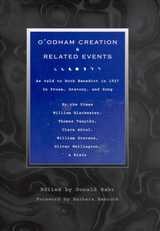
cover of O'odham Creation and Related Events: As Told to Ruth Benedict in 1927

O'odham Creation and Related Events

As Told to Ruth Benedict in 1927

Edited by Donald Bahr; Foreword by Barbara Babcock

University of Arizona Press, 2001

The origin stories of the O’odham (Pima) Indians of Arizona are renowned for their beauty and complexity but have been collected in only a handful of books. This volume—the third full O’odham telling of ancientness to appear in print—brings together dozens of stories collected in 1927 by anthropologist Ruth Benedict during her only visit to the Pimas. Never before published, they helped inspire Benedict to write her groundbreaking book Patterns of Culture.

The Pimas represented a way of life that Benedict at first called “Dionysian” after hearing the stories, narratives, songs, and oratory collected from various tellers during her three-month stay. The oral literature concerns the creation of the world and its transformations over time, the creation of the O’odham people, and other cultural traditions. Featuring a pair of man-gods, a female monster born of woman, and a conquest of Pimas by Pimas, they serve to mark the O’odham as a people distinct from their neighbors near and far.

The present volume contains more stories than any other source of Pima tales, plus more of the songs and orations that accompanied a telling. It includes “The Rafter,” a host of ancillary stories, numerous Coyote tales, and additional speeches tied to the narratives of ancientness. One long story, “The Feud,” found only in this collection, shows similarities to the Maya Popol Vuh.

Donald Bahr, a preeminent authority on the O’odham, has not only clarified the text but has also written an introduction that provides the background to the collection and analyzes Benedict’s probable reasons for never having published it. He has also included a previously unpublished text by Benedict, “Figures of Speech among the Pima.” O’odham Creation and Related Events represents an invaluable sourcebook of a people’s oral literature as well as a tribute to a singular scholar’s dedication and vision.
[more]
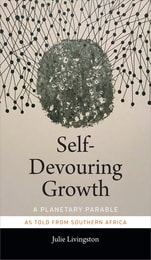
cover of Self-Devouring Growth: A Planetary Parable as Told from Southern Africa

Self-Devouring Growth

A Planetary Parable as Told from Southern Africa

Julie Livingston

Duke University Press, 2019
Under capitalism, economic growth is seen as the key to collective well-being. In Self-Devouring Growth Julie Livingston upends this notion, showing that while consumption-driven growth may seem to benefit a particular locale, it produces a number of unacknowledged, negative consequences that ripple throughout the wider world. Structuring the book as a parable in which the example of Botswana has lessons for the rest of the globe, Livingston shows how fundamental needs for water, food, and transportation become harnessed to what she calls self-devouring growth: an unchecked and unsustainable global pursuit of economic growth that threatens catastrophic environmental destruction. As Livingston notes, improved technology alone cannot stave off such destruction; what is required is a greater accounting of the web of relationships between humans, nonhuman beings, plants, and minerals that growth entails.  Livingston contends that by failing to understand these relationships and the consequences of self-devouring growth, we may be unknowingly consuming our future. 
[more]
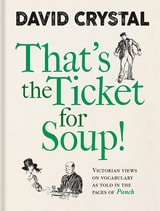
cover of That’s the Ticket for Soup!: Victorian Views on Vocabulary as Told in the Pages of Punch

That’s the Ticket for Soup!

Victorian Views on Vocabulary as Told in the Pages of Punch

David Crystal

Bodleian Library Publishing, 2020

The vocabulary of the past is always intriguing, especially when it is no longer used in modern English. Many of the words and phrases that were popular in Victorian England may sound foreign today, but looking to original sources and texts can yield fascinating insight, especially when we see how vocabulary was pilloried by the satirists of the day. 

In That’s the Ticket for Soup!, the renowned language expert David Crystal returns to the pages of Punch magazine, England’s widely read satirical publication. Crystal has pored through the pages of Punch between its first issue in 1841 and the death of Queen Victoria in 1901 and extracted the articles and cartoons that poked fun at the jargon of the day. Here we have Victorian high and low society, with its fashionable and unfashionable slang, its class awareness on display in the vocabulary of steam engines, motor cars, and other products of the Industrial Revolution. Then, as now, people had strong feelings about the flood of new words entering English. Swearing, new street names, and the many borrowings from French provoked continual irritation and mockery, as did the Americanisms increasingly encountered in the British press. In addition to these entertaining examples, Crystal includes commentary on the context of the times and informative glossaries. This original and amusing collection reveals how many present-day feelings about words can be traced to the satire of a century ago. 
[more]
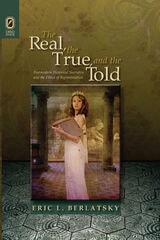
cover of The Real, the True, and the Told: Postmodern Historical Narrative and the Ethics of Representation

The Real, the True, and the Told

Postmodern Historical Narrative and the Ethics of Representation

Eric L. Berlatsky

The Ohio State University Press, 2011
The Real, The True, and The Told: Postmodern Historical Narrative and the Ethics of Representation, by Eric L. Berlatsky, intervenes in contemporary debates over the problems of historical reference in a postmodern age. It does so through an examination of postmodern literary practices and their engagement with the theorization of history. The book looks at the major figures of constructivist historiography and at postmodern fiction (and memoir) that explicitly presents and/or theorizes “history.” It does so in order to suggest that reading such fiction can intervene substantially in debates over historical reference and the parallel discussion of redefining contemporary ethics.
 
Much theorization in the wake of Hayden White suggests that history is little better than fiction in its professed goal of representing the “truth” of the past, particularly because of its reliance on the narrative form.While postmodern fiction is often read as reflecting and/or repeating such theories, this book argues that, in fact, such fiction proposes alternative models of accurate historical reference, based on models of nonnarrativity. Through a combination of high theory andnarrative theory, the book illustrates how the texts examined insist upon the possibility of accessing the real by rejecting narrative as their primary mode of articulation. Among the authors examined closely in The Real, The True, and The Told are Virginia Woolf, Graham Swift, Salman Rushdie, Art Spiegelman, and Milan Kundera.
[more]
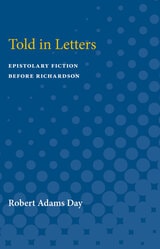
cover of Told in Letters: Epistolary Fiction Before Richardson

Told in Letters

Epistolary Fiction Before Richardson

Robert Adams Day

University of Michigan Press, 1966
Told in Letters is a study of the English novel before it came of age with Richardson's Pamela. The first book to trace the history and methods of using letters to tell a story, it draws on more than 200 little-known works written before Pamela. Many of these were designed for a public that had little concern with art.Here we see the origins of the psychological novel in its most primitive form. We also discover the achievements of early letter fiction such as the "familiar letter" and the widely imitated innovations of French fiction. In addition, Told in Letters portrays the Grub Street world that gave birth to popular literature, and describes the power that booksellers and popular taste had over these early novels.Finally, Richardson is reassessed in the light of his predecessors' writing, and we understand better the origins of a literary technique that did so much to revolutionize English fiction in the middle of the eighteenth century.
[more]
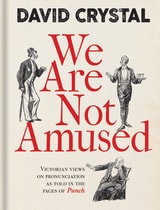
cover of We Are Not Amused: Victorian Views on Pronunciation as Told in the Pages of Punch

We Are Not Amused

Victorian Views on Pronunciation as Told in the Pages of Punch

David Crystal

Bodleian Library Publishing, 2017

Have you ever cringed while hearing someone mispronounce a word—or, worse, been tripped up by a wily silent letter yourself? Consider yourself lucky that you do not live in Victorian England, when the way you pronounced a word was seen as a sometimes-damning index of who you were and how you should be treated. No wonder then that jokes about English usage provided one of Punch magazine’s most fruitful veins of humor for sixty years, from its first issue in 1841 to 1900.

For We Are Not Amused, renowned English-language expert David Crystal has explored the most common pronunciation-related controversies during the reign of Queen Victoria and brought together the cartoons and articles that poked fun at them, adding insightful commentary on the context of the times. The collection brings to light a society where class distinctions ruled. Crystal explains why people felt so strongly about accents and identifies which accents were the main sources of jokes, from the dropped h’s of the Cockney working class to the upper-class tendency to drop the final g in words like “huntin’” and “fishin’.”
           
In this fascinating and highly entertaining book, Crystal shows that outrage over proper pronunciation is nothing new—our feelings today have their origins in the ways our Victorian predecessors thought about the subject.
 
[more]
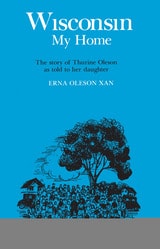
cover of Wisconsin, My Home: The Story of Thurine Oleson as Told to Her Daughter

Wisconsin, My Home

The Story of Thurine Oleson as Told to Her Daughter

Erna Oleson Xan

University of Wisconsin Press, 1975

Wisconsin My Home is the story of Thurine Oleson, born in Wisconsin in 1866 to parents who had emigrated from Telemarken, Norway. This much-loved book was first published in 1950 when Thurine was a spry octogenarian. In it she not only vividly recalls the pioneer life of her childhood in a Norwegian American settlement but also tells her parents’ stories of their life in Norway and their reasons for emigration. This new edition restores the twenty-nine photographs that appeared in the original 1950 hardcover edition and includes an introduction by emigration historian Odd Lovell.
[more]
cover of Woman at Work: The Autobiography of Mary Anderson as told to Mary N. Winslow

Woman at Work

The Autobiography of Mary Anderson as told to Mary N. Winslow

Mary Anderson

University of Minnesota Press, 1951

Woman at Work was first published in 1951. Minnesota Archive Editions uses digital technology to make long-unavailable books once again accessible, and are published unaltered from the original University of Minnesota Press editions.This is the story of a remarkable woman whose life has been devoted to the betterment of working conditions for women. Mary Anderson was director of the Women’s Bureau of the U.S. Department of Labor for twenty-five years, from shortly after its inception until her retirement in 1944. Her autobiography encompasses almost every movement in this country, and international efforts as well, for the benefit of women workers.In her own simple diction, as told to Mary Winslow, who was associated in many of the same movements, Miss Anderson reveals an almost incredible life story. She recounts her arrival in America as a Swedish immigrant of sixteen and her early years as domestic worker, exploited factory hand, and trade union organizer. She describes her bitter struggles for unionization of the garment, shoe, and other industries in Chicago, and the activities of the Chicago and National Women’s Trade Union leagues in helping factory and mine workers gain a start toward living wages, shorter hours, and safer working conditions. She tells, finally, of a quarter-century of federal service – setting standards for women’s employment during two world wars, and serving the cause of labor effectively under five presidents. As the first U.S. government representative to the International Labor Organization, Miss Anderson championed principles of equality for women that were subsequently embodied in the United Nations Charter.Through the story there are sidelights and appraisals of such notables as Frances Perkins, Franklin D. Roosevelt, Mrs. Roosevelt, Woodrow Wilson, John L. Lewis, and many others. It is an absorbing book, and one that documents an important aspect of our country’s social development.
[more]