Results by title

11 books match the query 'Tolerance'
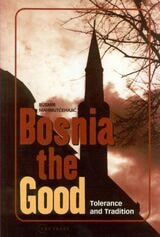
cover of Bosnia the Good: Tolerance and Tradition

Bosnia the Good

Tolerance and Tradition

Rusmir Mahmutcehajic

Central European University Press, 2000
Bosnia the Good is an indictment of the partition of Bosnia, formalized in 1995 by the Dayton Accord. This unequalled volume is a plea from one of Bosnia-Herzegovina's most prominent dissidents appealing for Bosnia's communities to reject ethnic segregation and restore mutual trust. The author argues for the history and reality of a Bosnia-Herzegovina based upon a model of 'unity in diversity'. He shows that ethnic and religious cultures co-existed in Bosnia for centuries and that Croatian and Serbian leaders determined to enact their own nationalist programs are to be blamed for the conflicts that devastated a nation. He points out the decisive moment when the international community accepted the Serb/Croat argument that ancient ethnic hatreds were endemic to Bosnia and that ethnic segregation became not only acceptable but desirable. He examines the reasons why Western liberal democracies have regarded with sympathy the struggles of Serbia and Croatia for national recognition, while viewing Bosnia's multicultural society with suspicion. Bosnia the Good confronts the religious dimension of the Bosnian dilemmas from the perspective of a Bosniak committed to inter-religious dialogue. The author argues that the only way Bosnia will reclaim its unique civilization is more than simple tolerance among Serbs, Croats and Bosnians. They have to recognize that Judaism, Christianity and Islam all share the same deity and it is this common transcendent perspective that should open the door to the acceptance and celebration of religious diversity. Bosnia is at present divided and shaken to its foundations, but the author argues it could become a model for European progress. The greatest danger is for Bosnia to be declared just another ethnoreligious entity, in this case a 'Muslim State' ghettoized inside Europe. If protected and allowed to develop however, the author explains how Bosnia could find a place in a new European order.
[more]
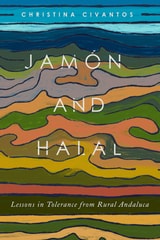
cover of Jamón and Halal: Lessons in Tolerance from Rural Andalucía

Jamón and Halal

Lessons in Tolerance from Rural Andalucía

Christina Civantos

Amherst College Press, 2022

Contemporary Spain reflects broader patterns of globalization and has been the site of tensions between nationalists and immigrants. This case study examines a rural town in Spain’s Andalucía in order to shed light on the workings of coexistence. The town of Órgiva’s diverse population includes hippies from across Europe, European converts to Sufi Islam, and immigrants from North Africa. Christina Civantos combines the analysis of written and visual cultural texts with oral narratives from residents. In this book, we see that although written and especially televisual narratives about the town highlight tolerance and multiculturalism, they mask tensions and power differentials. Toleration is an ongoing negotiation, and this book shows us how we can identify the points of contact that create robust, respect-based tolerance.

“This is a book that is both a personal account and a rigorous academic study. It is a model for the kind of engaged humanistic work we are now beginning to see as a hallmark of the post-theory moment, and one that remembers the hard lessons of ethnographic fieldwork as well as the challenging foundational work from philosophically-tinged theory.” —Debra A. Castillo, Cornell University

“Filled with rich descriptions and interwoven personal anecdotes of both Civantos and her interlocuters that complement scholarly analysis.” —Jessica R. Boll, Carroll University
[more]
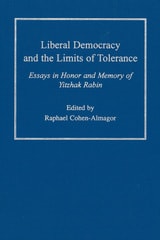
cover of Liberal Democracy and the Limits of Tolerance: Essays in Honor and Memory of Yitzhak Rabin

Liberal Democracy and the Limits of Tolerance

Essays in Honor and Memory of Yitzhak Rabin

Raphael Cohen-Almagor, Editor

University of Michigan Press, 2000
An irony inherent in all political systems is that the principles that underlie and characterize them can also endanger and destroy them. This collection examines the limits that need to be imposed on democracy, liberty, and tolerance in order to ensure the survival of the societies that cherish them. The essays in this volume consider the philosophical difficulties inherent in the concepts of liberty and tolerance; at the same time, they ponder practical problems arising from the tensions between the forces of democracy and the destructive elements that take advantage of liberty to bring harm that undermines democracy.
Written in the wake of the assasination of Yitzhak Rabin, this volume is thus dedicated to the question of boundaries: how should democracies cope with antidemocratic forces that challenge its system? How should we respond to threats that undermine democracy and at the same time retain our values and maintain our commitment to democracy and to its underlying values?
All the essays here share a belief in the urgency of the need to tackle and find adequate answers to radicalism and political extremism. They cover such topics as the dilemmas embodied in the notion of tolerance, including the cost and regulation of free speech; incitement as distinct from advocacy; the challenge of religious extremism to liberal democracy; the problematics of hate speech; free communication, freedom of the media, and especially the relationships between media and terrorism.
The contributors to this volume are David E. Boeyink, Harvey Chisick, Irwin Cotler, David Feldman, Owen Fiss, David Goldberg, J. Michael Jaffe, Edmund B. Lambeth, Sam Lehman-Wilzig, Joseph Eliot Magnet, Richard Moon, Frederick Schauer, and L.W. Sumner. The volume includes the opening remarks of Mrs.Yitzhak Rabin to the conference--dedicated to the late Yitzhak Rabin--at which these papers were originally presented. These studies will appeal to politicians, sociologists, media educators and professionals, jurists and lawyers, as well as the general public.
[more]
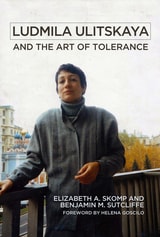
cover of Ludmila Ulitskaya and the Art of Tolerance

Ludmila Ulitskaya and the Art of Tolerance

Elizabeth Skomp and Benjamin M. Sutcliffe, Foreword by Helena Goscilo

University of Wisconsin Press, 2015

Novelist Ludmila Ulitskaya is a crucial cultural figure in contemporary Russia, garnering both literary awards and best-seller status. Engaging with the past to combat the creeping authoritarianism of the Putin era, she has become the latest in a long line of Russian dissident authors championing the values of liberalism and tolerance while critiquing the state. Ludmila Ulitskaya and the Art of Tolerance is the first English-language book about this influential writer, contextualizing her in the shifting landscape of post-Soviet society and culture.
            Drawing on interviews with Ulitskaya and sources not readily available to Western scholars, Elizabeth A. Skomp and Benjamin M. Sutcliffe explore the ethical ideals that make Ulitskaya’s novels resonate in today’s Russia—tolerance, sincerity, and diversity—and examine how she uses innovative imagery to personalize history through a focus on body and kinship. This is essential reading for anyone interested in contemporary Russian literature and society.
[more]
cover of Redefining Heresy and Tolerance: Governance of Muslims and Christians in the Qing Empire before 1864

Redefining Heresy and Tolerance

Governance of Muslims and Christians in the Qing Empire before 1864

Tak Wai Hung

Hong Kong University Press, 2024

Insight into the Qing dynasty’s policies towards Muslims and Christians traveling to East Asia.

Redefining Heresy and Tolerance demonstrates how the political philosophies of toleration developed in the context of late Imperial China were different from the theories that emerged in the West during their time. Focusing on religious policy in the Qing Empire, Hung attempts to clarify the Qing toleration policies and the reasoning behind them. He also demonstrates how the Qing government prevented Confucian bureaucrats from interfering in the religious life of Christians and Muslims, and how the Confucians’ understanding of “religion” was reshaped in the period.
 
[more]
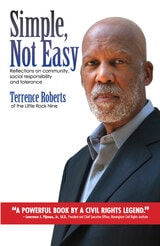
cover of Simple Not Easy: Reflections on community social responsibility and tolerance

Simple Not Easy

Reflections on community social responsibility and tolerance

Terrence Roberts

Parkhurst Brothers, Inc., 2010

HE MADE  HISTORY. HE TELLS THE TRUTHS HE  KNOWS.
 LEAD TITLE/Our  National Conversation Series

"Terrence Roberts is in the truest sense an upstander - an individual whose voice and actions compel us to explore difficult topics and challenge us to face our shared history, honestly. His words and reflections celebrate the notion of difference, model socially responsible behavior and promote tolerance in our daily lives. Reading this book, you will be inspired, in Dr. Roberts's words, to 'think  beyond the ordinary."
----Margot  Stern Strom, Executive  Director, Facing History and Ourselves, Inc.

"Terrence  Roberts  challenges  all of  us to make the world  more inclusive  by adjusting  our 'mental maps.'  He reminds  us that we will not achieve that long-sought  beloved  community  until we  recognize   the  value  of  each  individual-until  we  affirm  each  other.  Simple,  NotEasy is one trailblazer's  mingling  of  history  and  contemporary  mattersto engage a new conversations on community, social responsibility and tolerance. A powerful  book  by  a civil rights  legend."
--
- Lawrence J. Pijeaux, Jr., Ed.D.,
[more]
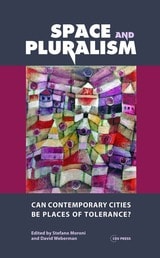
cover of Space and Pluralism: Can Contemporary Cities Be Places of Tolerance?

Space and Pluralism

Can Contemporary Cities Be Places of Tolerance?

Stefano Moroni

Central European University Press, 2016
This book addresses the social, functional and symbolic dimensions of urban space in today's world. The twelve essays are grouped in three parts, ranging from a conceptual framework to case descriptions rich with illustrations. They provide a valuable service in exploring the nature and significance of social space and particular aspects of its contemporary distribution and contestation. The book addresses a topic that is intrinsically interdisciplinary. Questions of space are examined from a rich variety of disciplinary perspectives in a welcome range from urban planning to political philosophy, shedding a good deal of light in the process. The issues in focus include the dichotomies of public and private space, discussion of rights and duties with regard to the use of space, or conflicts over its allocation. Well reasoned and presented discussion is offered from the perspective of basic values and rights. The policy issue of institutional recognition of the specifics of (minority community) identity is raised in opposition to abstract distributive accounts of justice.
[more]
cover of The Dimensions of Tolerance: What Americans Believe About Civil Liberties

The Dimensions of Tolerance

What Americans Believe About Civil Liberties

Herbert McClosky

Russell Sage Foundation, 1983

Reaching well beyond traditional categories of analysis, McClosky and Brill have surveyed civil libertarian attitudes among the general public, opinion leaders, lawyers and judges, police officials, and academics. They analyze levels of tolerance in a wide range of civil liberties domains—first amendment rights, due process, privacy, and such emerging areas as women's and homosexual rights—and along numerous variables including political participation, ideology, age, and education. The authors explore fully the differences between civil libertarian values in the abstract and applying them in specific instances. They also examine the impact of tensions between liberties (free press and privacy, for example) and between tolerance and other values (such as public safety). They probe attitudes toward recently expanded liberties, finding that even the more informed and sophisticated citizen is often unable to read on through complex new civil liberties issues. This remarkable study offers a comprehensive assessment of the viability—and vulnerability—of beliefs central to the democratic system. It makes an invaluable contribution to the study of contemporary American institutions and attitudes.
[more]
cover of The End of Tolerance: Racism in 21st Century Britain

The End of Tolerance

Racism in 21st Century Britain

Arun Kundnani

Pluto Press, 2007

Is Britain becoming a more racist society? Arun Kundnani looks behind the media hysteria to show how multicultural Britain is under attack by government policies and vitriolic press campaigns that play upon fear and encourage racism.

Exacerbated by the attacks of 9/11 and 7/7, Kundnani argues that a new form of racism is emerging that is based on a systematic failure to understand the causes of forced migration, global terrorism and social segregation. The result is a climate of hatred, especially against Muslims and asylum seekers, and the erosion of the human rights of those whose cultures and values are perceived as 'alien'. 

Communities are more divided than ever. Yet the government presses ahead with flawed immigration and 'integration' policies and anti-terrorist legislation that creates further resentment, alienation and criminalisation. Behind it all lies a refusal to grasp the ways in which the world has been changed by neoliberal globalisation.

What can be done? This timely and precise analysis is a useful account of why racism is now thriving -- and what can be done to stop it. It will be of interest to anyone who is appalled by the current state of race relations in Britain and it should be required reading for all policy-makers.
[more]
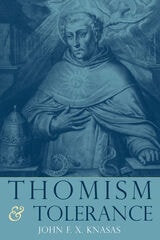
cover of Thomism and Tolerance

Thomism and Tolerance

John F. X. Knasas

University of Scranton Press, 2010

In this incisive study, John F. X. Knasas grounds the ideal of tolerance in Aquinas’s natural law ethics and connects the virtue of civic tolerance to the concept of being. If God is the source of being, argues Knasas, then we are the articulation of being, and it is in this capacity that we recognize our bond with other people and thus acknowledge our duty to be tolerant of one another. An important contribution to practical metaphysics and the philosophical foundations of political theory, Thomism and Tolerance will appeal to philosophy scholars and students at the undergraduate and graduate level.
[more]
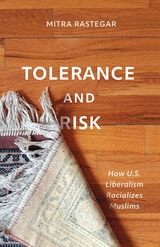
cover of Tolerance and Risk: How U.S. Liberalism Racializes Muslims

Tolerance and Risk

How U.S. Liberalism Racializes Muslims

Mitra Rastegar

University of Minnesota Press, 2021

How apparently positive representations of Muslims in U.S. media cast Muslims as a racial population

Portrayals of Muslims as the beneficiaries of liberal values have contributed to the racialization of Muslims as a risky population since the September 11 attacks. These discourses, which hold up some Muslims as worthy of tolerance or sympathy, reinforce an unstable good Muslim/bad Muslim binary where any Muslim might be moved from one side to the other. In Tolerance and Risk, Mitra Rastegar explores these discourses as a component of the racialization of Muslims—where Muslims are portrayed as a highly diverse population that nevertheless is seen to contain within it a threat that requires constant vigilance.

Tolerance and Risk brings together several case studies to examine the interrelation of representations of Muslims abroad and in the United States. These include human-interest stories and opinion polls of Muslim Americans, media representations of education activist Malala Yousafzai, LGBTQ activist discourses, local New York controversies surrounding Muslim-led public projects, and social media discourses of the Syrian refugee crisis. Tolerance and Risk demonstrates how representations of tolerable or sympathetic Muslims produce them as a population with distinct characteristics, capacities, and risks, and circulate standards by which the trustworthiness or threat of individual Muslims must be assessed.

Tolerance and Risk examines the ways that discourses of liberal rights, including feminist and LGBTQ rights discourses, are mobilized to racialize Muslims as uncivilized, even as they garner sympathy and identification with some Muslims. 

[more]