Results by title

5 books match the query 'Toni Morrison'
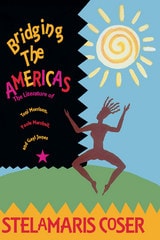
cover of Bridging The Americas: The Literature of Paule Marshall, Toni Morrison, and Gayl Jones

Bridging The Americas

The Literature of Paule Marshall, Toni Morrison, and Gayl Jones

Stelamaris Coser

Temple University Press, 1994

A literary study of three important black women writers, this book examines the "inter-American" characteristics in the work of Marshall, Morrison, and Jones, including detailed discussions of Morrison's Song of Solomon and Tar Baby, Jones's Corregidora and Song of Anninho, and Marshall's The Chose Place, The Timeless People.

Coser defines the inter-American characteristics in these authors' novels as a connection based on a common African heritage and a shared legacy of colonialism and racism. These three authors redefine the boundaries between the Americas, bridging the "extended Caribbean" that stretches from the U.S. Atlantic coast to Brazil. Their work reinterprets ethnic and sexual identity. Issues of race, class, and nationality overlap. History and identity are reinvented. 

To explore the collective forms of resistance and cultural processes in Brazil, the Caribbean, and the United States, Coser also makes provocative connections between the visibility of black women writers and the popularity of male Latin American novelists like Carlos Fuentes and Gabriel Garcia Marquéz.
[more]
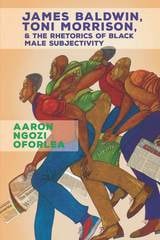
cover of James Baldwin, Toni Morrison, and the Rhetorics of Black Male Subjectivity

James Baldwin, Toni Morrison, and the Rhetorics of Black Male Subjectivity

Aaron Ngozi Oforlea

The Ohio State University Press, 2017

In James Baldwin, Toni Morrison, and the Rhetorics of Black Male Subjectivity, Aaron Ngozi Oforlea explores the rhetorical strategies that Baldwin’s and Morrison’s black male characters employ as they negotiate discourses of race, class, gender, and sexuality. According to Oforlea, these characters navigate a discursive divide that separates limiting representations of black males in dominant discourses from a decolonized and empowered subjectivity. Specifically, the discursive divide creates an invisible boundary between how black subjects are seen, imagined, and experienced in dominant culture on the one hand, and how they understand themselves on the other.
 
Oforlea’s book offers new analyses of the character dynamics in Baldwin’s Go Tell It on the Mountain, Tell Me How Long the Train’s Been Gone, and If Beale Street Could Talkand Morrison’s Beloved, Song of Solomon, and Tar Baby. The black male characters in these novels encounter the discursive divide, or a cultural dissonance, when they encounter dominant representations of black male identities. They use these opportunities to construct a counter-discourse about black male subjectivity. Ultimately, Oforlea argues, these characters are strategic about when and how they want to appropriate and subvert dominant ideologies. Their awareness that post-racial discourses perpetuate racial inequality serves as a gateway toward participation in collective struggles for racial justice.

 
[more]
cover of Maternal Body and Voice in Toni Morrison, Bobbie Ann Mason, and Lee Smith

Maternal Body and Voice in Toni Morrison, Bobbie Ann Mason, and Lee Smith

Paula Gallant Eckard

University of Missouri Press, 2002
Throughout human history, motherhood and maternal experience have been largely defined and written by patriarchal culture. Religion, art, medicine, psychoanalysis, and other bastions of male power have objectified the maternal and have disregarded female subjectivity. As a result, maternal perspectives have been ignored and the mother’s voice silenced. In recent literary texts, however, more substantial attention has been given to motherhood and to the physical, psychological, social, and cultural dynamics affecting maternal experience. In Maternal Body and Voice in Toni Morrison, Bobbie Ann Mason, and Lee Smith, Paula Gallant Eckard examines how maternal experience is depicted in selected novels by three American writers, emphasizing how they focus on the body and the voice of the mother. These novels include: The Bluest Eye, Sula, and Beloved by Morrison; In Country, Spence + Lila, and Feather Crowns by Mason; and Oral History, Fair and Tender Ladies, and Saving Grace by Smith.
By employing this focus, these writers lessen the objectification the maternal has received and restore a rich subjectivity that foregrounds the mother’s perspective. Moreover, their fiction reflects a deep concern for history and culture and for a woman’s experience of her world. They challenge the traditional representations of black and white motherhood that have appeared in southern literature and society, rendering complex portrayals of motherhood that defy cultural stereotypes.
Eckard incorporates historical perspectives on African American and southern motherhood, utilizing the works of Elizabeth Fox-Genovese, Sally McMillen, Deborah White, Jacqueline Jones, and others. She draws upon the feminist criticism of Adrienne Rich, Elaine Showalter, Naomi Schor, Tillie Olsen, Karla F. C. Holloway, Barbara Christian, and others, and the linguistic and psychoanalytic theories of Julia Kristeva, Hélène Cixous, and Luce Irigaray. The author also addresses the cross-cultural connections shared by Morrison, Mason, and Smith, showing that, despite their racial and cultural differences, striking similarities can be found in their renderings of maternity.
The three women writers employ related image patterns, metaphors, and symbols involving the maternal body. By centering maternity so strongly in their novels, Morrison, Mason, and Smith establish the primacy of the mother and obviate the neglect to which maternal perspectives have been subjected. They restore the mother’s lost voice and her diminished subjectivity. Together they depict the maternal as a powerful force that shapes human lives and communities.
[more]
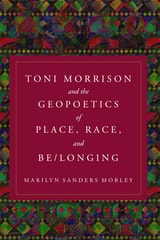
cover of Toni Morrison and the Geopoetics of Place, Race, and Be/longing

Toni Morrison and the Geopoetics of Place, Race, and Be/longing

Marilyn Sanders Mobley

Temple University Press, 2024

Toni Morrison’s readers and critics typically focus more on the “what” than the “how” of her writing. In Toni Morrison and the Geopoetics of Place, Race, and Be/longing, Marilyn Sanders Mobley analyzes Morrison’s expressed narrative intention of providing “spaces for the reader” to help us understand the narrative strategies in her work.

Mobley’s approach is as interdisciplinary, intersectional, nuanced, and complex as Morrison’s. She combines textual analysis with a study of Morrison’s cultural politics and narrative poetics and describes how Morrison engages with both history and the present political moment.

Informed by research in geocriticism, spatial literary studies, African American literary studies, and Black feminist studies at the intersection of poetics and cultural politics, Mobley identifies four narrative strategies that illuminate how Morrison creates such spaces in her fiction; what these spaces say about her understanding of place, race, and belonging; and how they constitute a way to read and re-read her work.
[more]
cover of Toni Morrison: PLAYING WITH DIFFERENCE

Toni Morrison

PLAYING WITH DIFFERENCE

Lucille P. Fultz

University of Illinois Press, 2003

[more]