Results by title
23 books match the query 'Tools'

Cataloging Correctly for Kids
An Introduction to the ToolsSheila S. Intner
American Library Association, 2011
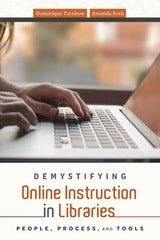
Demystifying Online Instruction in Libraries
People, Process, and ToolsDominique Turnbow and Amanda Roth
American Library Association, 2019
The design of information literacy instruction and the building of it are two distinct skillsets and processes; yet all too often everything gets mashed together, creating needless confusion and stress. In this book Turnbow, an instructional designer, and Roth, an instructional technologist, suggest a better way to organize the work. They shed light on the people, processes, and resources required to create a sustainable portfolio of online instruction. With the goal of fostering conversations in your library about the most streamlined and effective ways to get the work done, they provide guidance on such topics as
- design and development processes, complete with “I.D. in Action” examples and sample design documents;
- thumbnail descriptions of ADDIE, SAM, and design thinking methods;
- creating learning objects;
- types of software tools and how to evaluate them;
- crafting the best documentation of your work for efficient maintenance and reuse;
- adapting assessment to your learning outcomes and purpose;
- when to design for performance support, an underutilized method in libraries; and
- starting points for those interested in developing instructional design and development skills.
Demystifying the instructional design and development process used to create online learning objects, this book will help you understand how instructional design principles and approaches can benefit your learners.
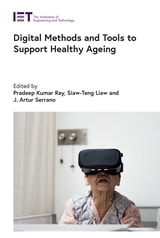
Digital Methods and Tools to Support Healthy Ageing
Pradeep Kumar Ray
The Institution of Engineering and Technology, 2021
Embedded Librarianship
Tools and PracticesBuffy J. American Library Association
American Library Association, 0
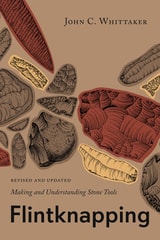
Flintknapping
Making and Understanding Stone ToolsJohn C. Whittaker
University of Texas Press, 2026
An updated edition of the classic guide to the ancient skill of flintknapping.
Flintknapping, the art of making stone tools, is an ancient craft generating renewed interest among both amateurs and professional students of prehistoric cultures. John C. Whittaker’s best-selling guide is a foundational and highly regarded handbook that combines practical instruction with the archaeological perspective of interpreting as well as making stone tools.
This updated edition provides clear, step-by-step guidance on tools, materials, and techniques for producing basic stone tool types. Diagrams and illustrations help readers visualize each stage and model their work. Whittaker also introduces the history of the field, the role of stone tools in human technological development, and experimental archaeology, concluding with an accessible discussion of how archaeologists study stone tools to understand the lives of our ancestors. For more than thirty years, Flintknapping has been essential for knappers, archaeologists, and teachers. This expanded and revised edition adds new insights, illustrations, and guidance for a new generation of readers.
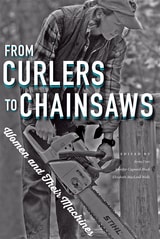
From Curlers to Chainsaws
Women and Their MachinesJoyce Dyer
Michigan State University Press, 2016
From Curlers to Chainsaws is a groundbreaking collection of lyrical and illuminating essays about the serious, silly, seductive, and sometimes sorrowful relationships between women and their machines. This collection explores in depth objects we sometimes take for granted, focusing not only on their functions but also on their powers to inform identity.
For each writer, the device moves beyond the functional to become a symbolic extension of the writer’s own mind—altering and deepening each woman’s concept of herself.
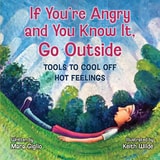
If You're Angry and You Know It, Go Outside
Tools to Cool Off Hot FeelingsMara Giglio and Keith Wilde
Ohio University Press, 2025
Children have big feelings that are sometimes difficult to manage. In If You’re Angry and You Know It, Go Outside, Mari is struggling with the death of her beloved dog and trying to deal with anger, sadness, and loss. Written simply for young children and illustrated with vibrant colors to reflect the range of Mari’s emotions, this book introduces self-regulation skills for both kids and adults. It emphasizes staying in or returning to our resilient zone—a state where we feel like our best selves and maintain a sense of agency.
The book highlights three key strategies for staying in the resilient zone or returning to it when emotions run high:
(1) Notice sensations. Recognizing physical sensations in the body helps us respond to feelings constructively rather than impulsively.
(2) Practice grounding. Grounding involves physical activities that anchor us in the present and calm our nervous system. Techniques include deep breathing, pushing against objects, stretching, dancing, or even playing video games.
(3) Focus on joy and love. Shifting attention to positive and joyful experiences can foster resilience. Ideas include writing a gratitude journal, creating a photo collage, or spending time with loved ones and pets.
Mari’s story is followed by a section for adults that explains the evidence-backed Community Resiliency Model (CRM), developed by the Trauma Resource Institute, and helps grown-ups guide children through big feelings.

Inclusive Musical Theatre
Tools and Curriculum for Rehearsal and PerformanceJamie Cacciola-Price
Intellect Books, 2025
A comprehensive guide to creating inclusive and accessible musical theater at the high school level.
This book is a comprehensive guide that presents a research-backed curriculum and strategies for creating an inclusive and accessible musical theater rehearsal and performance process for high schoolers. It draws on the author's doctoral research and extensive teaching experience to provide practical tools, assessments, and process modifications to support students of all learning needs and backgrounds.
The book begins by exploring the historical context and legal frameworks surrounding special education in public schools, as well as the intersection of drama education and disability studies. It then delves into an in-depth analysis of traditional actor training methods, highlighting their ableist origins and the need for adaptations to foster radical inclusion.
The core of the text outlines a twenty-nine-week rehearsal and performance curriculum, broken into three distinct phases, that is designed to scaffold skill development, promote ensemble collaboration, and empower diverse learners. Accompanying the unit plans are detailed assignments, assessments, and grading rubrics that align with national and state arts standards. Additionally, the author provides a wealth of supporting documents, such as student contracts, production resources, and a sample warm-up guide.
By championing inclusive practices rooted in the principles of Universal Design for Learning and culturally responsive pedagogy, this book equips drama educators with the tools to create transformative theatrical experiences for all students.
Intelligent Multimedia Technologies for Financial Risk Management
Trends, tools and applicationsSimon Grima
The Institution of Engineering and Technology, 2023
Lincoln and the Tools of War
Robert V. Bruce
University of Illinois Press, 1989
Personal Knowledge Graphs (PKGs)
Methodology, tools and applicationsSanju Tiwari
The Institution of Engineering and Technology, 2023
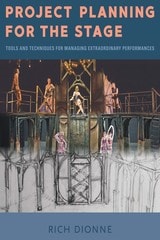
Project Planning for the Stage
Tools and Techniques for Managing Extraordinary PerformancesRich Dionne
Southern Illinois University Press, 2018
Project Planning for the Stage is organized into four sections corresponding to the life cycle of a theatre production: defining the goals and scope of the production and assembling the crew; planning, estimating, and scheduling; executing and managing; and closing and strike. Each section focuses on relevant concepts and skills and outlines the application of effective project-planning procedures and techniques—including critical path analysis and Gantt charts.
This book will be a valuable addition to the libraries of technical managers in live entertainment. Technical directors, costume shop managers, master electricians, properties masters, and video supervisors—anyone managing even part of a production—need to understand project-planning concepts such as the boundaries of authority and responsibility, parametric and bottom-up estimates, and precedence diagrams. The incredibly useful and powerful tools outlined in this book allow any technical manager to deliver the best possible outcome for a production.
Rainy Day Ready
Financial Literacy Programs and ToolsMelanie Welch
American Library Association, 2020
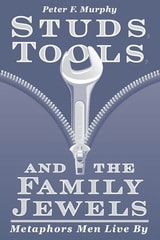
Studs, Tools, and the Family Jewels
Metaphors Men Live ByPeter F. Murphy
University of Wisconsin Press, 2001
Peter F. Murphy's purpose in this book is not to shock but rather to educate, provoke discussion, and engender change. Looking at the sexual metaphors that are so pervasive in American culture—jock, tool, shooting blanks, gang bang, and others even more explicit—he argues that men are trapped and damaged by language that constantly intertwines sexuality and friendship with images of war, machinery, sports, and work.
These metaphors men live by, Murphy contends, reinforce the view that relationships are tactical encounters that must be won, because the alternative is the loss of manhood. The macho language with which men cover their fear of weakness is a way of bonding with other men. The implicit or explicit attacks on women and gay men that underlie this language translate, in their most extreme forms, into actual violence. Murphy also believes, however, that awareness of these metaphorical power plays is the basis for behavioral change: "How we talk about ourselves as men can alter the way we live as men."
Talk, Tools, and Texts
A Logic-in-Use for Studying Lifespan Literate Action DevelopmentRyan J. Dippre
University Press of Colorado, 2020
Talk, Tools, and Texts tackles a perplexing issue: how can we envision writing as developing throughout a lifetime, from the first purposeful marks made on paper to the last? How can we make accounts of writing development that keep the complexity of our lives in mind while also providing useful insight to researchers, teachers, and writers?
Drawing on eleven accounts of writers at different points in the lifespan (ages 12 to 80) and in different social circumstances (from a middle-school classroom to a bird-sanctuary newsletter), Talk, Tools, and Texts constructs a “logic-in-use” for following writers and their writing development at a variety of points in the lifespan. It also offers several strategies scholars can use in pursuit of their own research into lifespan writing.
Teaching with Digital Humanities
Tools and Methods for Nineteenth-Century American LiteratureJennifer Travis, Jessica DeSpain
University of Illinois Press, 2018
Travis and DeSpain curate conversations on the value of project-based, collaborative learning; examples of real-world assignments where students combine close, collaborative, and computational reading; how digital humanities aids in the consideration of marginal texts; the ways in which an ethics of care can help students organize artifacts; and how an activist approach affects debates central to the study of difference in the nineteenth century.
A supplemental companion website with substantial appendixes of syllabi and assignments is now available for readers of Teaching with Digital Humanities.
The Dramatic Writer's Companion, Second Edition
Tools to Develop Characters, Cause Scenes, and Build StoriesWill Dunne
University of Chicago Press, 2017
Having spent decades working with dramatists to refine and expand their existing plays and screenplays, Dunne effortlessly blends condensed dramatic theory with specific action steps—over sixty workshop-tested exercises that can be adapted to virtually any individual writing process and dramatic script. Dunne’s in-depth method is both instinctual and intellectual, allowing writers to discover new actions for their characters and new directions for their stories. The exercises can be used by those just starting the writing process and by those who have scripts already in development. With each exercise rooted in real-life issues from Dunne’s workshops, readers of this companion will find the combined experiences of more than fifteen hundred workshops in a single guide.
This second edition is fully aligned with a brand-new companion book, Character, Scene, and Story, which offers forty-two additional activities to help writers more fully develop their scripts. The two books include cross-references between related exercises, though each volume can also stand alone.
No ordinary guide to plotting, this handbook centers on the principle that character is key. “The character is not something added to the scene or to the story,” writes Dunne. “Rather, the character is the scene. The character is the story.” With this new edition, Dunne’s remarkable creative method will continue to be the go-to source for anyone hoping to take their story to the stage.
The Dramatic Writer's Companion
Tools to Develop Characters, Cause Scenes, and Build StoriesWill Dunne
University of Chicago Press, 2009
Moss Hart once said that you never really learn how to write a play; you only learn how to write this play. Crafted with that adage in mind, The Dramatic Writer’s Companion is designed to help writers explore their own ideas in order to develop the script in front of them. No ordinary guide to plotting, this handbook starts with the principle that character is key. “The character is not something added to the scene or to the story,” writes author Will Dunne. “Rather, the character is the scene. The character is the story.”
Having spent decades working with dramatists to refine and expand their existing plays and screenplays, Dunne effortlessly blends condensed dramatic theory with specific action steps—over sixty workshop-tested exercises that can be adapted to virtually any individual writing process and dramatic script. Dunne’s in-depth method is both instinctual and intellectual, allowing writers to discover new actions for their characters and new directions for their stories.
Dunne’s own experience is a crucial element of this guide. His plays have been selected by the Eugene O’Neill Theatre Center for three U.S. National Playwrights Conferences and have earned numerous honors, including a Charles MacArthur Fellowship, four Bay Area Theatre Critics Circle Awards, and two Drama-Logue Playwriting Awards. Thousands of individuals have already benefited from his workshops, and The Dramatic Writer’s Companion promises to bring his remarkable creative method to an even wider audience.
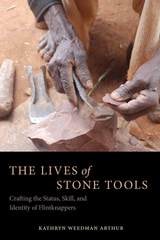
The Lives of Stone Tools
Crafting the Status, Skill, and Identity of FlintknappersKathryn Weedman Arthur
University of Arizona Press, 2018
Anthropologist Kathryn Weedman Arthur offers insights from her more than twenty years working with the Gamo. She deftly addresses historical and present-day experiences and practices, privileging the Gamo’s perspectives. Providing a rich, detailed look into the world of lithic technology, Arthur urges us to follow her into a world that recognizes Indigenous theories of material culture as valid alternatives to academic theories. In so doing, she subverts long-held Western perspectives concerning gender, skill, and lifeless status of inorganic matter.
The book offers the perspectives that, contrary to long-held Western views, stone tools are living beings with a life course, and lithic technology is a reproductive process that should ideally include both male and female participation. Only individuals of particular lineages knowledgeable in the lives of stones may work with stone technology. Knappers acquire skill and status through incremental guided instruction corresponding to their own phases of maturation. The tools’ lives parallel those of their knappers from birth (procurement), circumcision (knapping), maturation (use), seclusion (storage), and death (discardment).
Given current expectations that the Gamo’s lithic technology may disappear with the next generation, The Lives of Stone Tools is a work of vital importance and possibly one of the last contemporaneous books about a population that engages with the craft daily.

Tips, Tools, and Techniques to Care for Antiques, Collectibles, and Other Treasures
Georgia Kemp Caraway
University of North Texas Press, 2012
Tools and Tips for Using ELT Materials
A Guide for TeachersRuth Epstein and Mary Ormiston
University of Michigan Press, 2007
The book begins by addressing basic considerations in selecting and designing materials for classroom use. Textbooks themselves are covered in depth, which is very helpful for teachers choosing or assessing a textbook. An abundance of information is provided on how to use written texts from different genres (including teacher- and student-created texts), teacher-created resources, audio-visual aids, computers and the Internet, and how to provide community and service learning.
This resource aims to help instructors choose the most effective, appropriate, and flexible materials for their students and their programs. Teachers and teachers-in-training will find this to be a practical and comprehensive guide to integrating ELT materials and resources into a curriculum.
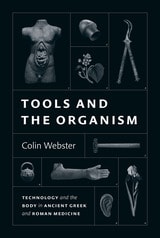
Tools and the Organism
Technology and the Body in Ancient Greek and Roman MedicineColin Webster
University of Chicago Press, 2023
Medicine is itself a type of technology, involving therapeutic tools and substances, and so one can write the history of medicine as the application of different technologies to the human body. In Tools and the Organism, Colin Webster argues that, throughout antiquity, these tools were crucial to broader theoretical shifts. Notions changed about what type of object a body is, what substances constitute its essential nature, and how its parts interact. By following these changes and taking the question of technology into the heart of Greek and Roman medicine, Webster reveals how the body was first conceptualized as an “organism”—a functional object whose inner parts were tools, or organa, that each completed certain vital tasks. He also shows how different medical tools created different bodies.
Webster’s approach provides both an overarching survey of the ways that technologies impacted notions of corporeality and corporeal behaviors and, at the same time, stays attentive to the specific material details of ancient tools and how they informed assumptions about somatic structures, substances, and inner processes. For example, by turning to developments in water-delivery technologies and pneumatic tools, we see how these changing material realities altered theories of the vascular system and respiration across Classical antiquity. Tools and the Organism makes the compelling case for why telling the history of ancient Greco-Roman medical theories, from the Hippocratics to Galen, should pay close attention to the question of technology.
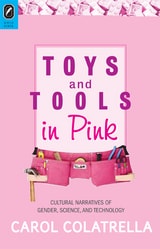
Toys and Tools in Pink
Cultural Narratives of Gender, Science, and TechnologyCarol Colatrella
The Ohio State University Press, 2011