Results by title
5 books match the query 'Top'
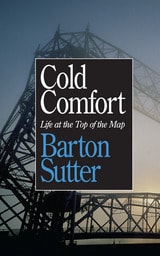
Cold Comfort
Life at the Top of the MapBarton Sutter
University of Minnesota Press, 2000
A whimsical look at the pleasures and challenges of living in the far north-now in paperback!
A whimsical look at the pleasures and challenges of living in the far north-now in paperback!
"Sutter knows Duluth and the hinterlands to the North the way Garrison Keillor knows Lake Wobegon and the prairies. With a nimble wit and a roving eye for detail, Sutter goes beneath the veneer of the North Country to expose its attraction, its quirks, and its characters. There isn’t a clinker in the collection, and even if you’ve lived your entire life in Duluth or the North Country, you’ll see your home place with new insight after reading Cold Comfort." Duluth News-Tribune"Mostly whimsical, sometimes meditative, but most often warmhearted, these essays explore Lake Superior, its neighboring rivers and streams, duck hunting, cross-country skiing, bridges, cider-pressing parties, and camping out in the family car. Sutter’s prose is clean, straightforward, and sometimes mirthful." Chicago New City "An oddly brilliant and lovely little book. . . . Resonant, evocative, and splendidly written." Jim HarrisonTemperatures that dive to forty degrees below zero are only part of life in northern Minnesota, according to award-winning writer Barton Sutter. Cold Comfort is his temperamental tribute to the city of Duluth, Minnesota, where bears wander the streets and canoe racks are standard equipment. Winner of a 1998 Northeast Minnesota Book AwardWinner of a 1998 Minnesota Book Award for Creative Nonfiction
From the Top
Brief Transmissions from Tent Show RadioMichael Perry
Wisconsin Historical Society Press, 2013
“Bottom line is, I’m the kind of guy who’s happy to go to the opera, but I should like to be allowed to wear steel-toed boots with my evening suit. I like to read Harper’s with a chaser of Varmint Hunter Magazine. Maybe that’s why I enjoy a good show under canvas. Here we sit, brain-deep in arts and culture, but we’re also just people hanging out in a tent, some of us wearing boots, a few of us wearing Birkenstocks, but best of all we’re breathing free fresh air filled with music.”
From Scandihoovian Spanglish to snickering chickens, New York Times bestselling author and humorist Michael Perry navigates a wide range of topics in this collection of brief essays drawn from his weekly appearances on the nationally syndicated Tent Show Radio program. Fatherhood, dumpster therapy, dangerous wedding rings, Christmas trees, used cars, why you should have bacon in your stock portfolio, loggers in clogs—whatever the subject, Perry has a rare ability to touch both the funny bone and the heart.
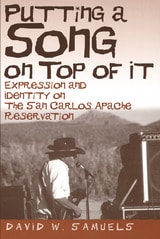
Putting a Song on Top of It
Expression and Identity on the San Carlos Apache ReservationDavid W. Samuels
University of Arizona Press, 2004
For many people on the San Carlos reservation, both the traditional calls of the Mountain Spirits and the hard edge of a country, rock, or reggae song can evoke the feeling of being Apache. Using insights gained from both linguistic and musical practices in the community—as well as from his own experience playing in an Apache country band—David W. Samuels explores the complex expressive lives of these people to offer new ways of thinking about cultural identity.
Samuels analyzes how people on the reservation make productive use of popular culture forms to create and transform contemporary expressions of Apache cultural identity. As Samuels learned, some popular songs—such as those by Bob Marley—are reminiscent of history and bring about an alignment of past and present for the Apache listener. Thinking about Geronimo, for instance, might mean one thing, but “putting a song on top of it” results in a richer meaning. Samuels also proposes that the concept of the pun, as both a cultural practice and a means of analysis, helps us understand the ways in which San Carlos Apaches are able to make cultural symbols point in multiple directions at once. Through these punning, layered expressions, people on the reservation express identities that resonate with the complicated social and political history of the Apache community.
This richly detailed study challenges essentialist notions of Native American tribal and ethnic identity by revealing the turbulent complexity of everyday life on the reservation. Samuels’s work is a multifaceted exploration of the complexities of sound, of language, and of the process of constructing and articulating identity in the twenty-first century.
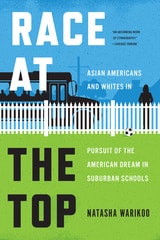
Race at the Top
Asian Americans and Whites in Pursuit of the American Dream in Suburban SchoolsNatasha Warikoo
University of Chicago Press, 2022
The American suburb conjures an image of picturesque privilege: manicured lawns, quiet streets, and—most important to parents—high-quality schools. These elite enclaves are also historically white, allowing many white Americans to safeguard their privileges by using public schools to help their children enter top colleges. That’s changing, however, as Asian American professionals increasingly move into wealthy suburban areas to give their kids that same leg up for their college applications and future careers.
As Natasha Warikoo shows in Race at the Top, white and Asian parents alike will do anything to help their children get to the top of the achievement pile. She takes us into the affluent suburban East Coast school she calls “Woodcrest High,” with a student body about one-half white and one-third Asian American. As increasing numbers of Woodcrest’s Asian American students earn star-pupil status, many whites feel displaced from the top of the academic hierarchy, and their frustrations grow. To maintain their children’s edge, some white parents complain to the school that schoolwork has become too rigorous. They also emphasize excellence in extracurriculars like sports and theater, which maintains their children’s advantage.
Warikoo reveals how, even when they are bested, white families in Woodcrest work to change the rules in their favor so they can remain the winners of the meritocracy game. Along the way, Warikoo explores urgent issues of racial and economic inequality that play out in affluent suburban American high schools. Caught in a race for power and privilege at the very top of society, what families in towns like Woodcrest fail to see is that everyone in their race is getting a medal—the children who actually lose are those living beyond their town’s boundaries.
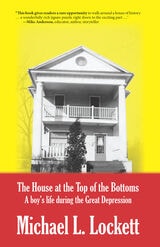
The House at the Top of the Bottoms
A Depression-Era StoryMichael L. Lockett
Parkhurst Brothers, Inc., 2021