Results by title

7 books match the query 'Tower'
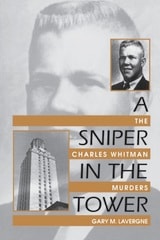
cover of A Sniper in the Tower: The Charles Whitman Murders

A Sniper in the Tower

The Charles Whitman Murders

Gary M. Lavergne

University of North Texas Press, 1997
[more]
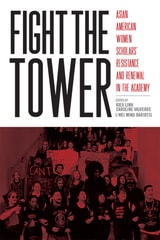
cover of Fight the Tower: Asian American Women Scholars’  Resistance and Renewal in the Academy

Fight the Tower

Asian American Women Scholars’ Resistance and Renewal in the Academy

Kieu Linh Caroline Valverde

Rutgers University Press, 2020

Asian American women scholars experience shockingly low rates of tenure and promotion because of the particular ways they are marginalized by the intersectionalities of race and gender in academia. Although Asian American studies critics have long since debunked the model minority myth that constructs Asian Americans as the ideal academic subject, university administrators still treat Asian American women in academia as though they will simply show up and shut up. Consequently, because silent complicity is expected, power holders will punish and oppress Asian American women severely when they question or critique the system.

However, change is in the air. Fight the Tower is a continuation of the Fight the Tower movement, which supports women standing up for their rights to claim their earned place in academia and to work for positive change for all within academic institutions. The essays provide powerful portraits, reflections, and analyses of a population often rendered invisible by the lies that sustain intersectional injustices in order to operate an oppressive system.

[more]
cover of The Man on the Tower: Poems

The Man on the Tower

Poems

Charles Rafferty

University of Arkansas Press, 1995

Charles Rafferty works in masks, voices, and personae. Winner of the fifth annual Arkansas Poetry Award, The Man on the Tower consists of dramatic monologues and fables about “the man” the many incarnations of our lives that are not allowed, cannot be lived, or are kept darkly hidden. Made believable in the lines of Rafferty’s poems, his characters show us their desires, complaints, and obsessions, often revealing what they would want to keep concealed, the shameful and the wild.
[more]
cover of The Tower of Myriad Mirrors: A Supplement to <em>Journey to the West</em>

The Tower of Myriad Mirrors

A Supplement to <em>Journey to the West</em>

Tung Yüeh; Translated from the Chinese by Shuen-fu Lin and Larry J. Schulz

University of Michigan Press, 2000

China’s most outrageous character—the magical Monkey who battles a hundred monsters—returns to the fray in this seventeenth-century sequel to the Buddhist novel Journey to the West. In The Tower of Myriad Mirrors, he defends his claim to enlightenment against a villain who induces hallucinations that take Monkey into the past, to heaven and hell, and even through a sex change. The villain turns out to be the personification of his own desires, aroused by his penetration of a female adversary’s body in Journey to the West.
The Tower of Myriad Mirrors is the only novel of Tung Yüeh (1620–1686), a monk and Confucian scholar. Tung picks up the slapstick of the original tale and overlays it with Buddhist theory and bitter satire of the Ming government’s capitulation to the Manchus. After a nod to Journey’s storyteller format, Tung carries Monkey’s quest into an evocation of shifting psychological states rarely found in premodern fiction. An important though relatively unknown link in the development of the Chinese novel, and a window into late Ming intellectual history, The Tower of Myriad Mirrors further rewards by being a wonderful read.
[more]
cover of The Tower: and other stories

The Tower

and other stories

Janis Ezerins

Central European University Press, 2012

The Latvian Janis Ezerins's best work was created in the genre of the short story. Among his literary models were Boccaccio, Maupassant and Poe. During his active literary working life, which lasted approximately five to six years of his short life, Ezerins seemingly grasped an encyclopaedia of possibilities and subject matter, as well as the versatility of storytelling, not avoiding either classical subjects or the repetition of characters so traditional in short stories. For the twenty-first century reader his stories evoke the atmosphere of the post-war, newly independent, fairly multicultural Latvia, rural mysticism hued with the "fine neurosis" of the emerging modern era. In many of his stories Ezerins disputed the single-dimensional (e.g., good/evil) portrayal of a human being. The people in his prose are individuals with their own unique characteristics, often ambivalent, and subject to change in time and situations. As is common in modern literature, Ezerins often blurs the boundaries between reality and fantasy, frequently making his reader laugh about the serious while aching when reading the humorous.
[more]
cover of Troubled Mirror: A Study Of Yeats's "The Tower"

Troubled Mirror

A Study Of Yeats's "The Tower"

David Young

University of Iowa Press, 1987

 Despite the extensive critical attention that has been paid to the work of W. B. Yeats, we are still very much in the process of understanding both the greatness and the modernity of this poet. The assessment of his poetry has rested primarily on the scope, intensity, and memorability of his lyrics, but his romantic beginnings have made it problematic to acknowledge him as a modernist, while his failure to produce a long poem has for some time raised questions about his greatness. Don’t major poets, the argument runs, produce major poems?

            In this meticulous analysis of The Tower, David Young addresses both these issues, showing that this powerful volume represents Yeats at his best and most modern, and that its careful construction makes it the deliberate equivalent to the long poems of tradition.

            By tracing the careful ordering of the poems in The Tower, Young demonstrates the volume’s overall vision, giving careful readings of each poem and illustrating the growing repetition of images that create a whole which is both emotionally and dramatically greater than the sum of its parts. Young contends that the best way to read Yeat’s lyrics is through attention to the context he created for them. Their interdependence, he asserts, is the true key to their modernity.

            This eminently readable study appears at a time when most readers are in danger of losing touch with the particular achievement of Yeat’s individual volumes as he conceived them. Most students and readers now encounter Yeats in anthologies, in a volume of selected poems, or in a somewhat misleadingly presented complete Poems. Young convinces us that by persisting in this approach we will lose sight of a significant aspect of a foremost modern poet and the very elements that make him a true modern.
[more]
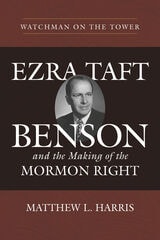
cover of Watchman on the Tower: Ezra Taft Benson and the Making of the Mormon Right

Watchman on the Tower

Ezra Taft Benson and the Making of the Mormon Right

Matthew L. Harris

University of Utah Press, 2020

Ezra Taft Benson is perhaps the most controversial apostle-president in the history of the Church of Jesus Christ of Latter-day Saints. For nearly fifty years he delivered impassioned sermons in Utah and elsewhere, mixing religion with ultraconservative right-wing political views and conspiracy theories. His teachings inspired Mormon extremists to stockpile weapons, predict the end of the world, and commit acts of violence against their government. The First Presidency rebuked him, his fellow apostles wanted him disciplined, and grassroots Mormons called for his removal from the Quorum of the Twelve. Yet Benson was beloved by millions of Latter-day Saints, who praised him for his stances against communism, socialism, and the welfare state, and admired his service as secretary of agriculture under President Dwight D. Eisenhower. Using previously restricted documents from archives across the United States, Matthew L. Harris breaks new ground as the first to evaluate why Benson embraced a radical form of conservatism, and how under his leadership Mormons became the most reliable supporters of the Republican Party of any religious group in America.
[more]