Results by title
5 books match the query 'Tracy, Steven C.'
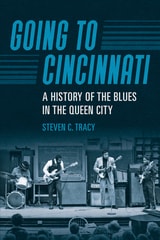
Going to Cincinnati
A History of the Blues in the Queen CitySteven C. Tracy
University of Illinois Press, 2025
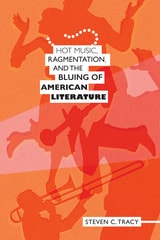
Hot Music, Ragmentation, and the Bluing of American Literature
Steven C. Tracy
University of Alabama Press, 2015
Exploring the deep and enduring relationship between music and literature, Hot Music, Ragmentation, and the Bluing of American Literature examines the diverse ways in which African American “hot” music influenced American culture—particularly literature—in early twentieth century America. Steven C. Tracy provides a history of the fusion of African and European elements that formed African American “hot” music, and considers how terms like ragtime, jazz, and blues developed their own particular meanings for American music and society. He draws from the fields of literature, literary criticism, cultural anthropology, American studies, and folklore to demonstrate how blues as a musical and poetic form has been a critical influence on American literature.
Hot Music, Ragmentation, and the Bluing of American Literature begins by highlighting instances in which American writers, including Herman Melville, Stephen Crane, and Gertrude Stein, use African American culture and music in their work, and then characterizes the social context of the Jazz Age, discussing how African American music reflected the wild abandon of the time. Tracy focuses on how a variety of schools of early twentieth century writers, from modernists to members of the Harlem Renaissance to dramatists and more, used their connections with “hot” music to give their own work meaning.
Tracy’s extensive and detailed understanding of how African American “hot” music operates has produced a fresh and original perspective on its influence on mainstream American literature and culture. An experienced blues musician himself, Tracy draws on his performance background to offer an added dimension to his analysis. Where another blues scholar might only analyze blues language, Tracy shows how the language is actually performed.
Hot Music, Ragmentation, and the Bluing of American Literature is the first book to offer such a refreshingly broad interdisciplinary vision of the influence of African American “hot” music on American literature. It is an essential addition to the library of serious scholars of American and African American literature and culture and blues aficionados alike.
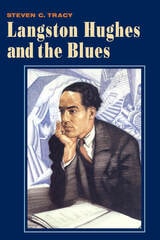
Langston Hughes and the Blues
Steven C. Tracy
University of Illinois Press, 2024
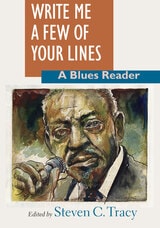
Write Me a Few of Your Lines
A Blues ReaderSteven C. Tracy
University of Massachusetts Press, 1999
Among the signal achievements of African American culture is the style of music known as the blues, an art form evolved from southern black songs of the late nineteenth century. From the field hollers and steel-bodied guitar of its early days to the electric amplification of today's performers, the visceral power of the blues has long been celebrated for its creativity, spontaneity, and ingenuity. It has served as a wellspring for other forms of music, including gospel, jazz, rhythm and blues, soul, rock, and rap, and has exerted an influence on literature and the visual arts as well.
This book brings together some of the most significant writings about the blues published between 1911 and 1998. Included are selections by folklorists, anthropologists, sociologists, literary artists, musicians, critics, and aficionados. The extraordinary appeal of the blues is reflected in the range of contributors to this volume, among them Howard W. Odum, Alan Lomax, Richard Alan Waterman, Langston Hughes, Paul Oliver, Sam Charters, Janheinz Jahn, James Baldwin, Leroi Jones, Charles Keil, Jeff Todd Titon, Houston Baker, Hazel Carby, and Angela Davis. From these various perspectives emerges a new understanding of the blues: its origins in African aesthetics; the impact of slavery and Reconstruction; its early folk manifestations; and the importance of religion, style, gender, audience, protest, and the record business in its development as an art form. Further context is provided by a comprehensive introduction, section overviews, and an extensive bibliography, discography, and videography of blues materials.
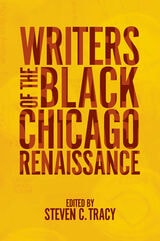
Writers of the Black Chicago Renaissance
Edited by Steven C. Tracy
University of Illinois Press, 2011
The volume covers a vast collection of subjects, including many important writers such as Richard Wright, Gwendolyn Brooks, and Lorraine Hansberry as well as cultural products such as black newspapers, music, and theater. The book includes individual entries by experts on each subject; a discography and filmography that highlight important writers, musicians, films, and cultural presentations; and an introduction that relates the Harlem Renaissance, the White Chicago Renaissance, the Black Chicago Renaissance, and the Black Arts Movement.
Contributors are Robert Butler, Robert H. Cataliotti, Maryemma Graham, James C. Hall, James L. Hill, Michael Hill, Lovalerie King, Lawrence Jackson, Angelene Jamison-Hall, Keith Leonard, Lisbeth Lipari, Bill V. Mullen, Patrick Naick, William R. Nash, Charlene Regester, Kimberly Ruffin, Elizabeth Schultz, Joyce Hope Scott, James Smethurst, Kimberly M. Stanley, Kathryn Waddell Takara, Steven C. Tracy, Zoe Trodd, Alan Wald, Jamal Eric Watson, Donyel Hobbs Williams, Stephen Caldwell Wright, and Richard Yarborough.