Results by title
81 books match the query 'Tradition' and 5 start with a
A cosmopolitan hermit
modernity and tradition in the philosophy of Josef PieperBernard N Schumacher
Catholic University of America Press, 2009

Agape Love
Tradition In Eight World ReligionsSir John Templeton
Templeton Press, 1999
The tradition of agape, or unconditional love, is not exclusive to any religion. It is a primary underlying principle found in religions worldwide. The concept of altruistic love challenges the spiritual person to "love your enemies" or to "love without thought of return." It is a love that flows out to others through compassion, kindness, tenderness, and charitable giving.
Buddhists have a path of compassion, where caring for others becomes the motivating force behind existence. Hindus have a branch of yoga, the heart-centered path, that leads to enlightenment through an overwhelming love for God that takes the form of loving all humanity. Eastern religions, such as Taoism and Confucianism, see transcendent love as essential to true wisdom.
Love is a universal theme of love found in all religious traditions, Buddhist, Christian, Islam, or others. As we realize that all religions have this spiritual principle of love at their core, we can develop a sense of shared humanity. The religious tradition of agape love examined in this book will inspire those who are learning to grow in compassion and love for all people.
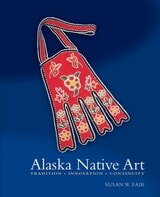
Alaska Native Art
Tradition, Innovation, ContinuitySusan W. Fair
University of Alaska Press, 2006
The rich artistic traditions of Alaska Natives are the subject of this landmark volume, which examines the work of the premier Alaska artists of the twentieth century. Ranging across the state from the islands of the Bering Sea to the interior forests, Alaska Native Art provides a living context for beadwork, ivory carving, basketry, and skin sewing. Examples of work from Tlingit, Aleutian Islanders, Pacific Eskimo, Athabaskan, Yupik, and Inupiaq artists make this volume the most comprehensive study of Alaskan art ever published.
Beautifully illustrated with full-color photographs of artists and their works, Alaska Native Art examines the concept of tradition in the modern world. Fair demonstrates that tradition is alive and well in Alaska through the words of Native artists and a multitude of examples, reproduced in color and accompanied by historic photographs.
Alaska Native Art is a volume to treasure, a tribute to the incredible vision of Alaska's artists and to the enduring traditions of all of Alaska's Native peoples.
Arguing with Tradition
The Language of Law in Hopi Tribal CourtJustin B. Richland
University of Chicago Press, 2008
Like many indigenous legal institutions across North America, the Hopi Tribal Court was created in the image of Anglo-American-style law. But Richland shows that in recent years, Hopi jurists and litigants have called for their courts to develop a jurisprudence that better reflects Hopi culture and traditions. Providing unprecedented insights into the Hopi and English courtroom interactions through which this conflict plays out, Richland argues that tensions between the language of Anglo-style law and Hopi tradition both drive Hopi jurisprudence and make it unique. Ultimately, Richland’s analyses of the language of Hopi law offer a fresh approach to the cultural politics that influence indigenous legal and governmental practices worldwide.
Arranged Marriage
The Politics of Tradition, Resistance, and ChangePéter Berta
Rutgers University Press, 2023