Results by title

5 books match the query 'Traditional'
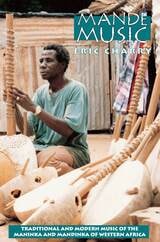
cover of Mande Music: Traditional and Modern Music of the Maninka and Mandinka of Western Africa

Mande Music

Traditional and Modern Music of the Maninka and Mandinka of Western Africa

Eric Charry

University of Chicago Press, 2000
With Mande Music, Eric Charry offers the most comprehensive source available on one of Africa's richest and most sophisticated music cultures. Using resources as disparate as early Arabic travel accounts, oral histories, and archival research as well as his own extensive studies in Mali, Guinea, Senegal, and the Gambia, Charry traces this music culture from its origins in the thirteenth-century Mali empire to the recording studios of Paris and New York. He focuses on the four major spheres of Mande music—hunter's music, music of the jelis or griots, jembe and other drumming, and guitar-based modern music—exploring how each evolved, the types of instruments used, the major artists, and how each sphere relates to the others. With its maps, illustrations, and musical transcriptions as well as an exhaustive bibliography, discography, and videography, this book is essential reading for those seeking an in-depth look at one of the most exciting, innovative, and deep-rooted phenomena on the world music scene. A compact disc is available separately.
[more]
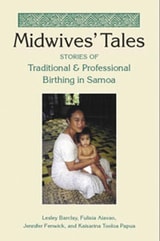
cover of Midwives' Tales: Stories of Traditional and Professional Birthing in Samoa

Midwives' Tales

Stories of Traditional and Professional Birthing in Samoa

Lesley Barclay

Vanderbilt University Press, 2005

The result of a ten-year collaboration between Australian and Samoan researchers and midwives, this book compiles the first-person stories of several generations of Samoan midwives, both those who use traditional techniques for home birth and those who use Western techniques in a hospital. The voices are vivid and varied, often displaying the Samoan gift for storytelling.


The overall picture of changing birthing practices is complex and sometimes tinged with ironies. As the introduction says, "These Samoan nurses and midwives did not immediately attempt to mediate new and old ways of birthing after the colonial leadership of their profession left. They themselves became cultural agents for change as they continued the role of 'colonizing' their own birth tradition and taught the fa'atosaga [Samoan for midwife] Western techniques, at the same time trying to provide a professional midwife for all women. Paradoxically they often chose a social midwife for their own births and supported or at least condoned the social midwives close to them. . . . Kaisarina, while working as the leading professional midwife in the country, and working almost totally in hospital practice herself, simultaneously assisted her mother-in-law with her social practice of midwifery. Vipulo's story shows how a professional midwife preferred to have her mother, a social midwife, deliver her at home."


A particular objective of the authors is to encourage a reconception of maternity care in countries where professional services are rare and not available to all women. The book challenges common assumptions, still held in many postcolonial countries, that a simple migration of Western-style, hospital-focused care is necessarily always an achievable or desirable goal. It also demonstrates the considerable progress that one group has made in rethinking and developing a model of maternity care that works within their society and culture. As these midwives' stories suggest, solutions to some of the problems caused by gaps in the kinds of resources that Westerners take for granted can be found in partnerships and cultural wisdom that already exist in Samoa and, by extension, other developing countries.

[more]
cover of Talking about Detective Fiction

Talking about Detective Fiction

P. D. James

Bodleian Library Publishing, 2009
[more]
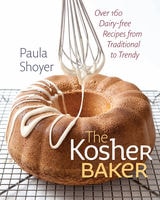
cover of The Kosher Baker: Over 160 Dairy-free Recipes from Traditional to Trendy

The Kosher Baker

Over 160 Dairy-free Recipes from Traditional to Trendy

Paula Shoyer

Brandeis University Press, 2010
Producing flavorful and appealing kosher desserts has been a challenge in Jewish households throughout the ages. Without access to butter, cream, milk, cheese, yogurt, or other dairy products, creating a tasty and memorable dessert for family and friends requires more than simple substitutions and compromises. Now pastry chef and teacher Paula Shoyer provides the inspiration and innovation to turn the age-old challenges of parve baking into delectable delights in her one-of-a-kind kosher cookbook. The Kosher Baker is your indispensable kitchen companion to a wide range of dairy-free desserts, from family favorites and time-honored holiday classics to stylish and delicious surprises of Shoyer’s own careful creation. It even includes desserts not usually found on a kosher table, such as creamy key lime pie, luscious flan, and rich tiramisu. You’ll find everything from cookies, biscotti, breads and muffins to pastries, tarts, fancy cakes, and mousses. Shoyer guides you through more than 160 mouth-watering recipes and expands every non-dairy baker’s repertoire with simple, clear instructions and a friendly yet authoritative voice. The Kosher Baker is organized as a tutorial into three primary sections—Quick and Elegant Desserts, Two Step Desserts, and Multiple Step Desserts—allowing the busy home baker to choose a dessert based on both taste and time constraints. The first section presents the fundamentals of simple kosher baking in the form of everyday treats like Amaretto Cookies, Orange Tea Cake, and Apple Pastry. The next two sections teach increasingly more challenging desserts, from a Challah Beer Bread Pudding with Caramel Sauce to Chocolate Babka. A special fourth section includes chapters on baking Challah, Passover desserts, and no-sugar-added desserts. The Kosher Baker has something for everyone in the Jewish household for any occasion or holiday. It spills over with detailed information, including tips on storage, freezing, and thawing; tools; must-have ingredients; and tips and techniques. Anyone baking for those with special dietary needs such as food allergies or diabetic concerns will also find recipes to love in this comprehensive collection. It even includes recipes for nut- and gluten-free desserts, and vegan desserts. No Jewish home should be without this essential cookbook!
[more]
cover of Traditional, National, and International Law and Indigenous Communities

Traditional, National, and International Law and Indigenous Communities

Edited by Marianne O. Nielsen and Karen Jarratt-Snider

University of Arizona Press, 2020

This volume of the Indigenous Justice series explores the global effects of marginalizing Indigenous law. The essays in this book argue that European-based law has been used to force Indigenous peoples to assimilate, has politically disenfranchised Indigenous communities, and has destroyed traditional Indigenous social institutions. European-based law not only has been used as a tool to infringe upon Indigenous human rights, it also has been used throughout global history to justify environmental injustices, treaty breaking, and massacres. The research in this volume focuses on the resurgence of traditional law, tribal–state relations in the United States, laws that have impacted Native American women, laws that have failed to protect Indigenous sacred sites, the effect of international conventions on domestic laws, and the role of community justice organizations in operationalizing international law.

While all of these issues are rooted in colonization, Indigenous peoples are using their own solutions to demonstrate the resilience, persistence, and innovation of their communities. With chapters focusing on the use and misuse of law as it pertains to Indigenous peoples in North America, Latin America, Canada, Australia, and New Zealand, this book offers a wide scope of global injustice. Despite proof of oppressive legal practices concerning Indigenous peoples worldwide, this book also provides hope for amelioration of colonial consequences.
 
[more]